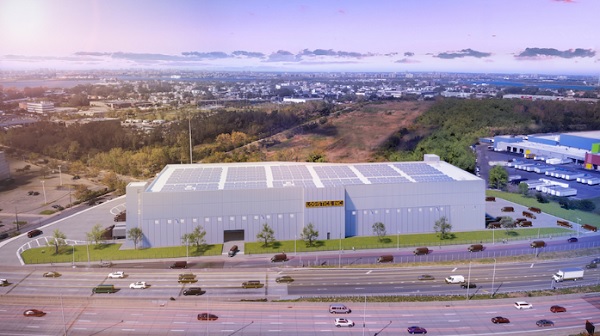




Sky Harbour Group Corporation (NYSE: SKYH), the developer behind a growing network of private aircraft hangar campuses across the United States, has taken a major step forward in its capital strategy with the closing of a $200 million tax-exempt warehouse drawdown facility from JPMorgan Chase Bank. This financing is not just a boost to the company’s near-term construction plans—it may also mark a turning point in how institutional capital views niche aviation infrastructure as a defensible, revenue-generating asset class.
Structured through Sky Harbour’s subsidiary Sky Harbour Capital II, LLC, and issued via the Public Finance Authority (Wisconsin), the facility is a tailored solution that combines flexibility with long-term cost efficiency. The instrument is expected to support the next wave of Sky Harbour’s Home Base Operator (HBO) projects—an alternative to traditional Fixed Base Operator (FBO) models that aims to redefine private aviation real estate.
With this deal, Sky Harbour joins a growing group of specialized infrastructure developers securing bespoke capital solutions that blend the rigor of municipal finance with the scale and ambition of private equity-backed growth models.
What is the significance of a tax-exempt warehouse drawdown facility for an aviation real estate company?
Sky Harbour’s facility reflects a strategic pivot toward infrastructure-style financing—a trend more common in energy or transportation than in aviation real estate. The structure is tailored for flexibility, allowing the American aviation infrastructure company to draw capital only when eligible projects reach development thresholds. This reduces cash drag and interest burden while offering certainty of funding.
Key terms include a 65% loan-to-cost leverage ratio, a five-year bullet maturity, and a floating tax-exempt interest rate pegged to 80% of SOFR plus a 200-basis-point margin. The effective cost of capital is currently around 5.60%, significantly below conventional construction loans for commercial real estate. Interest is capitalized monthly for the first three years, and notably, there is no prepayment penalty at the time of refinancing—a feature that aligns with Sky Harbour’s intent to eventually convert short-term debt into long-term municipal bonds as tenant lease-up stabilizes.
Analysts following the aviation infrastructure and real asset sectors suggest this structure could serve as a blueprint for other mid-cap infrastructure developers, particularly those in capital-intensive but stable-returns businesses like logistics terminals, airport infrastructure, and energy distribution.
How does Sky Harbour’s HBO model differ from traditional FBO operators like Signature Aviation or Atlantic Aviation?
Sky Harbour’s strategy is to build, own, and lease private hangar campuses directly to corporate and high-net-worth aircraft owners on a long-term basis. Unlike FBOs—which primarily serve transient aircraft with fuel sales, ad-hoc maintenance, and lounge services—Sky Harbour’s HBO model is tenant-centric, offering consistent occupancy, predictable lease revenue, and high renewal retention.
Each HBO campus is designed for a limited number of based tenants, featuring climate-controlled hangars, private terminal access, and tailored services to minimize “time-to-wheels-up”—a critical value proposition for time-sensitive business aviation clients.
This approach contrasts with operators like Signature Aviation or Atlantic Aviation, which derive a significant share of revenue from volatile fuel pricing and third-party vendor relationships. In contrast, Sky Harbour emphasizes physical infrastructure ownership and direct leasing economics, which offers better yield visibility and cap rate compression potential for long-term investors.
By emphasizing exclusivity, location advantages, and operational control, Sky Harbour positions itself more like a real estate operating company (REOC) than a service provider—something capital markets have begun to take notice of.
Why is JPMorgan’s involvement a validation of Sky Harbour’s business model?
JPMorgan’s dual role as lender and administrative agent on the $200 million facility signals deep institutional confidence in Sky Harbour’s underlying credit profile, asset strategy, and expansion roadmap. In a competitive process that included multiple banks and lending products, Sky Harbour selected JPMorgan’s tax-exempt drawdown facility as the most cost-efficient option.
Francisco Gonzalez, CFO of Sky Harbour, noted that the structure allows the company to “draw when we need to” and refinance into long-term bonds “at the optimal time”—an important strategic lever in a rising-rate environment.
This flexibility is key because each HBO campus progresses at a different pace in terms of land acquisition, permitting, and construction. By securing upfront commitment from a top-tier lender, Sky Harbour is now better positioned to bid for prime airport locations, confident that funding will not become a bottleneck.
Tal Keinan, Sky Harbour’s CEO, added that the facility was “creatively designed to meet Sky Harbour’s specific needs,” indicating that the deal may be the first of several structured finance instruments used to back the company’s national rollout.
The fact that Sky Harbour was able to unlock tax-exempt debt financing—typically reserved for essential municipal infrastructure—further affirms its positioning as a quasi-public benefit provider in the eyes of capital markets.
How does the JPMorgan facility improve Sky Harbour’s ability to scale in the current interest rate environment?
Rising interest rates have significantly tightened the capital environment for real estate and infrastructure developers in 2025. Many projects across logistics, data centers, and commercial real estate have been delayed due to lack of flexible, low-cost financing.
Sky Harbour’s ability to secure a floating-rate, tax-exempt instrument at sub-6% costs is therefore notable—especially given that commercial construction loans often exceed 8–10% with much tighter covenants and drawdown controls.
By using a warehouse drawdown model, Sky Harbour effectively mirrors the strategy used by logistics REITs and storage developers, who draw on warehouse lines to fund project build-outs and then term out the debt through asset-backed securitization or municipal bond issuance once revenue ramps up.
With this structure in place, Sky Harbour can now focus on expanding its national footprint without worrying about episodic capital raises or equity dilution. The structure allows better matching of cash flow generation with financing costs, which analysts believe will improve return on capital employed (ROCE) as new campuses become operational.
What future projects could be funded under the $200 million facility—and could it scale to $300 million?
Although specific project sites tied to the JPMorgan facility were not disclosed in the release, prior filings and press announcements indicate that Sky Harbour’s development pipeline includes major business aviation airports in Dallas, Houston, Miami, Nashville, Phoenix, and Denver. Each of these regions has seen steady demand for hangar space due to increasing corporate jet ownership and limited new supply.
The JPMorgan facility includes a clause allowing it to expand to $300 million, subject to future credit approvals. Analysts believe this flexibility may be tied to ground lease execution or construction permit finalization on 1–2 additional campuses.
Given the capital-intensive nature of each HBO campus—often requiring tens of millions in upfront investment for land prep, vertical construction, and service infrastructure—the ability to scale the facility without renegotiating a new instrument is a significant strategic advantage.
Moreover, Sky Harbour’s long-term vision includes becoming the dominant national player in private aviation basing infrastructure—a position that would allow it to eventually refinance its debt stack through investment-grade, asset-backed bonds or even REIT-style debt issuance in the future.
How are investors responding to Sky Harbour’s strategy and capital execution?
Sky Harbour’s stock (NYSE: SKYH) has remained relatively range-bound over the past 12 months, reflecting cautious optimism from public market investors. While the company’s valuation remains modest compared to larger infrastructure peers, institutional investors have taken note of its successful execution of long-term leases, its ability to secure non-dilutive capital, and the growing visibility into recurring lease revenues.
The closing of the JPMorgan facility is expected to improve Sky Harbour’s debt-to-equity mix, which could lower its weighted average cost of capital (WACC) over time. The company’s avoidance of dilution through secondary equity offerings, in favor of structured project finance, has also been viewed positively by long-term holders.
While no forward guidance was issued in conjunction with the deal, Sky Harbour’s track record of securing anchor tenants—including major corporations and ultra-high-net-worth individuals—provides some reassurance that new campuses will achieve stabilization targets within 12–24 months of launch.
If the company continues to execute well, institutional investors may begin to treat it more like a REOC or infrastructure developer than a speculative aviation play.
What’s next for Sky Harbour in 2025 and beyond?
The closing of the JPMorgan facility comes as Sky Harbour Group Corporation enters what it describes as a pivotal stage in its national buildout, with construction activity set to accelerate across multiple campuses through late 2025 and into 2026. The aviation infrastructure developer is expected to initiate new ground leases at both Tier 1 and Tier 2 business aviation airports, expanding its footprint into strategic high-demand regions. As projects reach stabilization, the company may refinance portions of the drawdown facility into long-term municipal bonds, optimizing its cost of capital while preserving balance sheet flexibility.
Additionally, Sky Harbour is likely to pursue new lease agreements aimed at increasing occupancy and extending tenant duration across existing campuses, further enhancing the predictability of its revenue base. Industry observers also suggest that potential mergers, acquisitions, or strategic partnerships with private equity firms or infrastructure investors may be on the horizon, as institutional interest in real-asset-backed aviation platforms continues to rise. With its early mover advantage in the Home Base Operator segment, access to tax-advantaged capital, and a differentiated model that stands apart from legacy FBO operators, Sky Harbour appears increasingly well-positioned to emerge as a category-defining platform in the private aviation infrastructure space over the next five years.
Discover more from Business-News-Today.com
Subscribe to get the latest posts sent to your email.