


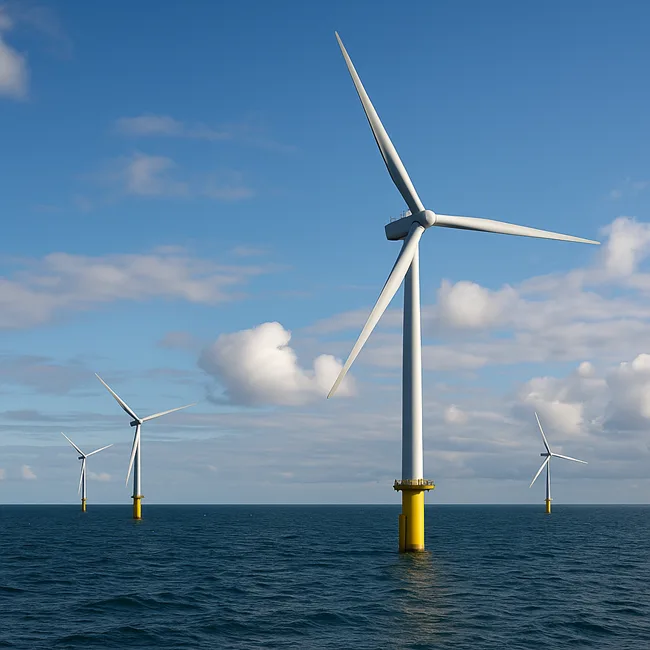
In recent years, the United Kingdom has increasingly positioned itself as a global leader in the offshore wind sector. With a combination of robust regulatory frameworks, strategic partnerships, and cutting-edge technological advancements, the UK has become a major player in the race to harness wind energy from its expansive coastlines. The latest development—consent granted to the Morgan Offshore Wind Project—marks a significant milestone in the country’s offshore wind ambitions. As one of the key projects in the UK’s Round 4 Offshore Wind Licensing Arrangements, Morgan is set to play a critical role in solidifying the UK’s position as a global offshore wind hub.
What is the Morgan Offshore Wind Project and why does it matter for the UK’s renewable energy future?
The Morgan Offshore Wind Project, a joint venture between JERA Nex bp and Energie Baden-Württemberg AG (EnBW), is designed to have a generating capacity of 1.5 gigawatts (GW), enough to power approximately 1.5 million UK homes annually. Located in the Irish Sea, Morgan’s development has been hailed as a breakthrough for the UK’s renewable energy landscape. Once fully operational, it will contribute significantly to the UK’s clean energy transition, generating low-carbon power and helping to reduce dependency on fossil fuels.
What sets Morgan apart from other offshore wind projects is its swift progression. The project secured development consent from the Department for Energy Security and Net Zero in August 2025, following a rigorous application process that began in April 2024. Morgan has quickly become a flagship project within the UK’s broader offshore wind strategy, particularly within the context of the Round 4 leasing round, which promises to drive the nation’s offshore wind capacity to new heights.
How does the Morgan Offshore Wind Project fit into the UK’s Round 4 offshore wind strategy?
In 2023, the UK’s government auctioned seabed rights under its Round 4 Offshore Wind Leasing Arrangements, which includes the development of up to 8 GW of new offshore wind capacity across the country’s waters. The Morgan Offshore Wind Project is part of this ambitious plan, which aims to significantly increase the UK’s offshore wind capacity by 2030, pushing the country toward its goal of generating 50 GW of electricity from offshore wind by the end of the decade.
Morgan is one of the first projects to be granted development consent from the Round 4 auction, underscoring the UK government’s commitment to driving renewable energy projects forward. With the country’s energy security and decarbonization goals top of mind, these projects are positioned to contribute a substantial share of the UK’s energy mix in the coming years.
What makes Round 4 particularly important is that it marks a new phase of offshore wind development. While earlier rounds focused on the relatively shallow waters of the North Sea, Round 4 projects are located in deeper waters, requiring more advanced turbine technology and greater investment in infrastructure. These deeper sites also offer higher wind speeds, which translates into more efficient energy production.
What role do international partnerships play in the success of UK offshore wind projects like Morgan?
International partnerships have played a central role in the UK’s offshore wind development. The Morgan Offshore Wind Project is a prime example of the collaborative efforts driving the sector forward. The partnership between JERA Nex bp—a subsidiary of Japan’s JERA and BP—and EnBW, a German utility company, brings together a diverse pool of expertise from both the European and Asian markets.
Such collaborations are crucial not only for technology innovation but also for securing the necessary capital to fund large-scale offshore wind farms. By pooling resources and knowledge, international partners can more effectively navigate the challenges of developing offshore projects, such as grid connectivity, supply chain management, and regulatory compliance. This collaborative approach also strengthens the global competitiveness of the UK offshore wind sector, making it a key player on the world stage.
For example, EnBW’s experience in offshore wind, including its involvement in other large projects such as the Hohe See and Albatros wind farms off the coast of Germany, complements JERA Nex bp’s energy trading capabilities and expertise in large-scale power generation. Together, these companies can leverage their respective strengths to ensure the successful execution of the Morgan project.
How is the UK addressing the challenges of offshore wind development?
While the UK has made significant strides in offshore wind development, challenges remain—especially in the areas of grid connectivity, supply chain constraints, and rising costs. One of the primary concerns facing the sector is the ability to connect large offshore wind farms to the national grid. Offshore wind farms like Morgan require significant infrastructure, such as offshore substations, interconnector cables, and onshore connections, to transfer the generated power to land. However, grid capacity is often limited, and upgrading the grid infrastructure to accommodate increasing volumes of renewable energy can take years.
To address this issue, the UK government has been working closely with developers and regulatory bodies to streamline the approval process for transmission projects and incentivize investments in grid infrastructure. In the case of Morgan, the accompanying Morgan Transmission Project will play a critical role in ensuring that the electricity generated offshore can be efficiently transferred to the UK’s national grid. The transmission project is currently under examination, with a decision on development consent expected in 2026.
Additionally, the rising costs of raw materials, shipping, and construction labor have put pressure on offshore wind developers. However, the UK government has taken steps to address this by reforming its Contracts for Difference (CfD) subsidy scheme to ensure that offshore wind projects remain financially viable even in the face of inflationary pressures. The government recently announced an increase in the maximum bid prices for offshore wind projects to reflect rising costs, while still maintaining the competitive pricing structure that has driven the rapid expansion of offshore wind in the UK.
What’s driving innovation in turbine technology for offshore wind projects?
One of the key drivers of the UK’s success in offshore wind is the ongoing innovation in turbine technology. Offshore wind turbines have become much larger and more efficient in recent years, thanks to advancements in design and materials. For example, the turbines deployed at the Morgan Offshore Wind Project are expected to be some of the largest and most efficient ever built, designed to operate in deeper waters with higher wind speeds.
These advancements are not only increasing the efficiency of offshore wind energy generation but also driving down costs. Larger turbines are able to capture more energy from the wind, making each individual turbine more productive. In addition, innovations such as floating turbines are opening up new possibilities for offshore wind development in deeper waters, which were previously inaccessible using traditional fixed-bottom turbines.
The UK has become a testing ground for these cutting-edge technologies. As a result, British companies, universities, and research institutions are at the forefront of offshore wind research and development, helping to drive further innovation in turbine design, grid connectivity, and energy storage.
What does the future hold for the UK’s offshore wind sector?
Looking ahead, the UK is on track to meet its offshore wind capacity targets, but continued investment in technology, infrastructure, and policy support will be crucial. The success of projects like Morgan will set the tone for the next phase of offshore wind development, with the country’s pipeline of Round 4 projects offering a clear roadmap for scaling up capacity.
Analysts expect the UK to remain a global leader in offshore wind, with continued growth in international partnerships and technological innovation. However, there are concerns about the ability of the UK government to maintain its momentum and deliver the necessary infrastructure and subsidies to ensure that offshore wind projects remain financially viable. Institutional investors will be closely watching how the government responds to challenges in grid connectivity and cost inflation.
Morgan Offshore Wind, along with other Round 4 projects, will play a critical role in meeting the UK’s energy security and net-zero goals. As the UK continues to invest in offshore wind and leverage its international partnerships, it will likely remain a key player in the global renewable energy race.
Discover more from Business-News-Today.com
Subscribe to get the latest posts sent to your email.