



The Albanese Labor Government has unveiled a significant expansion of concessional finance for Australia’s agricultural sector, with a new commitment of AUD 1 billion in funding to the Regional Investment Corporation (RIC). This latest allocation lifts the total support delivered through RIC loans to over AUD 5 billion, reinforcing Canberra’s long-term bet on low-cost financing to strengthen on-farm resilience, climate adaptation, and sustainability.
Prime Minister Anthony Albanese, alongside Minister for Agriculture, Fisheries and Forestry Julie Collins, announced the funding package on August 29, 2025, framing it as a structural pillar of the government’s response to extreme weather events and financial hardship affecting regional producers. In addition to the immediate loan boost, the government also confirmed its support for a broader lending scope for the RIC, aligning future concessional financing tools with national climate goals, ecological resilience, and the push toward net zero agriculture.
RIC Chief Executive Officer John Howard welcomed the announcement, describing it as a “certainty marker” for farmers navigating an increasingly complex financial and environmental landscape. According to Howard, the funding ensures continuity beyond the June 30, 2026 sunset clause while enabling RIC to implement a broader product suite—including support mechanisms for “Significant Ecological Events”—within the evolving agricultural finance landscape.
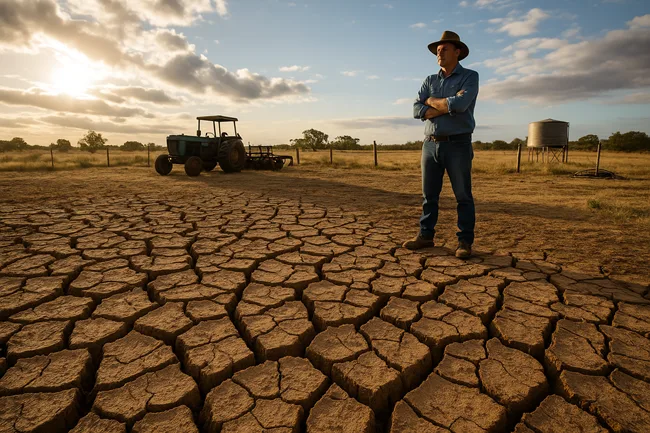
How does the Regional Investment Corporation’s new loan funding impact its scope, mission, and farmer support?
Established under the Regional Investment Corporation Act 2018, the RIC was formed to administer low-interest loans to Australian farmers and farm-related small businesses, with a mandate to mitigate hardship caused by drought, biosecurity disruptions, market shocks, and natural disasters. As of July 31, 2025, the government-backed lender had settled more than 3,400 loans totaling AUD 3.63 billion.
The latest AUD 1 billion in concessional capital represents more than just a financial injection—it reflects a policy shift toward proactive risk mitigation. Under the expanded framework, loans can now be accessed not just for recovery or working capital purposes, but also for climate-proofing assets, boosting productivity, and facilitating green transition investments. That includes funding activities like soil regeneration, water efficiency, or succession planning for first-generation farmers.
Importantly, the new funding comes ahead of the government’s final response to the 2023–24 Review of the RIC Act. Analysts expect that review to shape future regulatory alignment, especially around lending eligibility criteria, public-private collaboration, and the blending of concessional and commercial capital in agri-finance.
Why are concessional loans being linked to climate resilience and Australia’s net zero transition?
By formally embedding climate resilience into the RIC’s lending objectives, the Albanese government is seeking to align rural credit mechanisms with Australia’s broader carbon transition strategy. Australia has committed to achieving net zero emissions by 2050, and the agriculture sector—which contributes roughly 13% of the nation’s greenhouse gas emissions—has emerged as both a challenge and an opportunity in that trajectory.
Incorporating climate considerations into concessional finance allows the government to steer agricultural capital toward regenerative practices, precision irrigation, biodiversity conservation, and carbon abatement projects, without mandating top-down interventions. RIC loans, with their 10-year terms and reduced interest rates, are uniquely suited to derisking longer-term sustainability investments that commercial banks often shy away from.
Minister Julie Collins emphasized this alignment in her remarks, reiterating that “climate resilience, drought mitigation, and long-term productivity enhancement” will be central pillars of RIC’s evolving mandate. Observers also noted the timing, as Australia braces for another potential El Niño cycle, intensifying concerns about agricultural volatility, food inflation, and rural debt burdens.
How has institutional sentiment shifted around agriculture lending and concessional loan programs?
From a financial sector standpoint, concessional loans offer a strategic bridge between market-rate credit and grant-based support. With commercial lenders still cautious about sectors exposed to climate risk or long-term margin volatility, instruments like RIC loans fill an important financing gap. They also serve as a de facto risk buffer for regional banks, which can co-lend alongside RIC or offload high-risk borrowers who otherwise might default.
Institutional sentiment around the RIC has grown more favorable over the years, especially as loan performance has remained stable despite recurring climate events. RIC’s zero-default policy, rigorous vetting process, and high-touch service model have helped build trust among financial stakeholders and farmer groups alike. As one agribusiness consultant noted, the RIC is increasingly seen “not just as a lender of last resort, but as a strategic finance partner for medium-scale transition.”
Still, there is growing pressure to ensure RIC’s expanded scope does not crowd out private capital. Market observers will be watching closely how the agency balances concessionality with market principles, especially if it moves into more active climate-financing or green infrastructure roles.
What are the next steps for the Regional Investment Corporation and how will farmers access the new support?
According to CEO John Howard, the next phase will involve deep engagement with stakeholders—including industry groups, rural finance advisors, and regional banks—to implement the broadened lending mandate. Specific program rollouts, including the new “Significant Ecological Events Assistance” loan product, are expected to be detailed in the coming months.
Farmers seeking to access RIC loans must continue to meet defined eligibility criteria related to financial hardship, business viability, and resilience planning. The application process remains centralized through RIC’s digital and regional delivery platforms, with additional support available via state-level extension officers and approved intermediaries.
Meanwhile, the government is expected to table the final RIC Act review recommendations in Parliament before year-end. While no major structural overhauls are anticipated, policy tweaks may refine loan caps, interest rate formulas, or eligibility metrics to better reflect Australia’s evolving climate and market landscape.
What does this funding mean for the future of rural resilience, agricultural productivity, and government intervention?
The AUD 1 billion injection is both a policy bet and a symbolic gesture. It reinforces the view that concessional credit will remain a cornerstone of Australia’s rural policy architecture for the foreseeable future. And by anchoring that commitment in climate resilience, the Albanese government is attempting to future-proof both policy and productivity.
However, long-term effectiveness will hinge on how well the RIC adapts to a more complex set of borrower needs—from carbon markets to water infrastructure and intergenerational land transitions. If executed well, the RIC’s evolution could offer a blueprint for similar rural finance programs in other regions facing climate and commodity shocks.
At a time when rural debt in Australia has surpassed AUD 100 billion and global food security risks are rising, targeted instruments like concessional loans may increasingly shape how governments balance resilience, reform, and growth.
Discover more from Business-News-Today.com
Subscribe to get the latest posts sent to your email.