




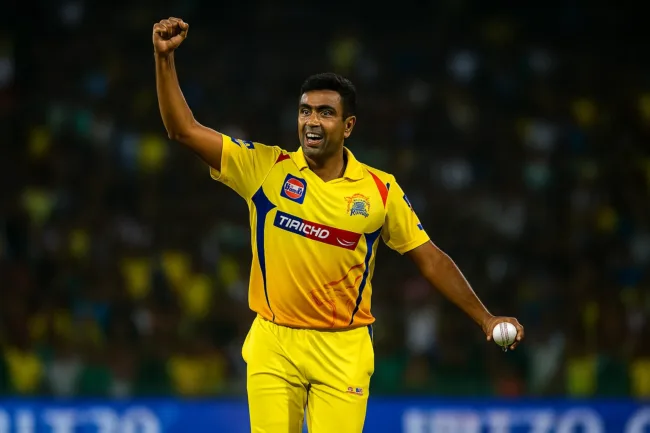
The Indian Premier League (IPL) has bid farewell to one of its most cerebral performers. Ravichandran Ashwin, India’s celebrated off-spinner and one of the longest-serving figures in franchise cricket, announced on August 27, 2025 that he was retiring from the IPL after 17 years. His decision closes a defining chapter of his career while opening new avenues in overseas T20 leagues such as the Big Bash League in Australia, Major League Cricket in the United States, the Caribbean Premier League, and the UAE’s ILT20.
Ashwin’s announcement followed a carefully sequenced transition. He had already stepped away from international cricket in December 2024, ending his Test and limited-overs tenure with India. His retirement from the IPL was the final condition required to make himself available for overseas franchise opportunities, given the Board of Control for Cricket in India’s long-standing restriction on active Indian players in foreign leagues.
For fans, Ashwin’s statement was bittersweet. He framed the decision as the close of one journey and the beginning of another, writing, “My time as an IPL cricketer comes to a close today, but my time as an explorer of the game around various leagues begins.” The message underscored his determination to continue contributing to cricket’s global story, even as one of India’s most iconic cricket chapters reached its end.
Why did Ravichandran Ashwin retire from the IPL after nearly two decades of dominance?
Ashwin’s exit comes at a time when age and opportunity converged. At 38, he remains fit and competitive but is also acutely aware that the IPL demands a balance of youth, intensity, and scheduling endurance. With younger spinners breaking through in the Indian domestic system, Ashwin’s place as a front-line bowler in the IPL was beginning to shift toward mentorship and tactical roles.
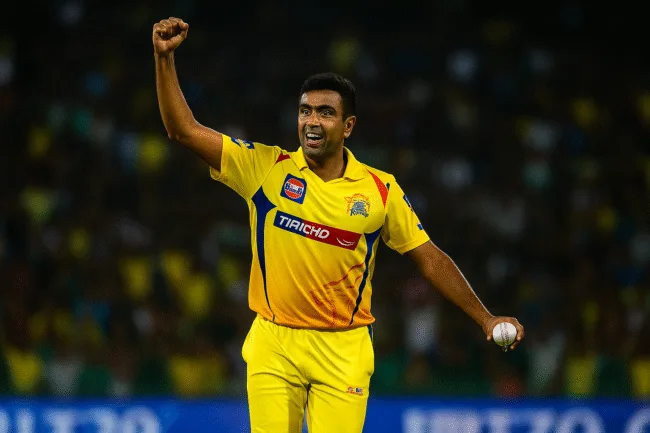
Rather than fade into reduced responsibilities, Ashwin has chosen reinvention. Retirement from the IPL gives him the freedom to join global leagues without regulatory constraints. This enables him to extend his playing career while offering his expertise to leagues that crave both marquee signings and experienced tacticians.
In addition, overseas leagues often place significant emphasis on player-mentor hybrids, where senior professionals double as coaches and strategists. Ashwin’s analytical approach and track record in cricket commentary and tactical discussions make him ideally suited for such dual responsibilities.
How does Ravichandran Ashwin’s IPL legacy frame the significance of this moment?
Across 17 seasons, Ashwin’s numbers and impact speak volumes. He played 221 matches, claiming 187 wickets and cementing himself as the fifth-highest wicket-taker in IPL history. His economy rate hovered consistently under control, even in eras when batsmen dominated short formats. But beyond the statistics, Ashwin’s IPL career is notable for its intellectual innovation.
He was never content with repetition. From introducing the carrom ball into mainstream T20 strategy to frequently experimenting with angles, pace, and delivery points, Ashwin epitomized the spinner’s evolution in the shortest format. His tactical decisions, including controversial but legal “Mankad” dismissals, sparked debates that extended far beyond the IPL.
With Chennai Super Kings, he contributed to two title wins and helped establish the franchise’s golden era under M.S. Dhoni. Later, his leadership roles with Kings XI Punjab and Rajasthan Royals showcased his ability to manage bowling units and nurture younger spinners. His IPL career, in essence, mirrors the league’s own trajectory: from a bold experiment in 2008 to a global powerhouse in 2025.
How are fans and insiders responding to the end of Ashwin’s IPL journey?
Reactions have been a mix of nostalgia, admiration, and curiosity about his next steps. Chennai Super Kings supporters, in particular, lamented the departure of a player who symbolized their early dominance. Many highlighted memories of Ashwin’s performances in playoff matches and his role in CSK’s rise as a global brand.
For Rajasthan Royals, where he ended his IPL playing career, fans acknowledged his mentorship of younger bowlers, noting his steadying influence on the squad. Across social media, hashtags like #ThankYouAshwin and #IPLLegend trended, signaling widespread recognition of his contributions.
Industry insiders, meanwhile, emphasized the symbolic value of his move. Ashwin represents the archetype of a senior Indian player stepping into the global franchise circuit, breaking through the IPL’s exclusivity. Analysts believe his presence abroad will not only enhance league competitiveness but also improve commercial traction, as broadcasters and sponsors leverage his stature.
What does Ashwin’s retirement mean for Chennai Super Kings and their long-term planning?
Ashwin’s exit is not limited to his playing duties. Until recently, he also held the role of Director of Operations at the CSK Academy, responsible for nurturing younger talent. His decision to leave CSK entirely removes potential conflicts of interest as he begins exploring overseas leagues.
For CSK, the departure means reshaping both immediate strategy and long-term development. On the field, they must identify a successor to fill the gap in spin depth. Off the field, the Academy must recalibrate leadership roles to maintain continuity in talent grooming. Analysts note that CSK, a franchise built on continuity and experience, faces a rare moment of recalibration, underscoring the broader transition as IPL stalwarts approach retirement.
Why is Ashwin’s pivot to overseas leagues significant for T20 economics and cricket’s global reach?
Ashwin’s retirement reflects a larger transformation in cricket’s global marketplace. The IPL remains the most lucrative and competitive T20 league, but as newer leagues in the UAE, USA, and South Africa gain financial muscle, they increasingly target marquee players to establish credibility. Ashwin fits this demand perfectly—an established name, an active competitor, and a cerebral figure whose presence boosts both sporting standards and commercial appeal.
His participation could raise the profile of Major League Cricket in particular, as the U.S. market continues investing in cricket infrastructure. Similarly, leagues like the ILT20 and SA20 seek high-profile Indians to capture South Asian viewership. For Ashwin, this translates into fresh contracts and global exposure, while for the leagues, it secures prestige and market penetration.
What is the outlook for Ashwin’s career and the broader franchise ecosystem?
Looking ahead, Ashwin’s transition is likely to extend his playing career by several years, as overseas leagues often have shorter schedules and more flexible conditions for veterans. Beyond playing, his future may include commentary, coaching, and strategic consulting—roles he has already previewed in his IPL and international career.
For the IPL, his retirement highlights the inevitability of generational change. As legends like Ashwin, Dhoni, and Rohit Sharma gradually exit, the league will increasingly be defined by emerging Indian and international talents. Yet their departures also strengthen the global T20 ecosystem, redistributing experience and star power to leagues seeking legitimacy.
Institutional sentiment among analysts suggests that Ashwin’s move will not diminish his legacy. Instead, it is expected to expand his influence, transforming him from an IPL icon into a global ambassador for T20 cricket. For fans, the excitement lies in following his journey across continents, a rare chance to watch an Indian star compete outside the IPL framework.
Discover more from Business-News-Today.com
Subscribe to get the latest posts sent to your email.