



How does enCore Energy’s $115 million convertible notes offering reshape its financing structure and balance sheet strategy?
enCore Energy Corp. (NASDAQ: EU, TSXV: EU), the uranium-focused developer branding itself as “America’s Clean Energy Company™,” has completed its upsized $115 million offering of senior convertible notes due 2030. The raise, which exceeded its initial $100 million target, included the full exercise of a $15 million option granted to initial purchasers. The financing marks one of the most substantial balance sheet moves by a U.S. uranium producer in 2025, reinforcing enCore’s strategy to secure long-term capital for both operational continuity and future project expansion.
The notes carry a 5.5% annual coupon and are convertible into common shares at an initial rate of 303.9976 shares per $1,000 principal, equal to a conversion price of $3.2895 per share. This price represented a 27.5% premium over the stock’s $2.58 close on August 19, 2025, on the Nasdaq Capital Market. Under certain scenarios, the conversion rate could be adjusted, though the ceiling has been set at 387.5968 shares per $1,000, aligning to a price of roughly $2.58 per share.
Analysts view this pricing as a notable confidence signal, with investors betting that enCore’s expansion trajectory in uranium supply and processing will support long-term value creation.
Why is enCore Energy allocating proceeds toward capped call transactions, loan repayment, and corporate liquidity?
After deducting placement fees and offering expenses, enCore Energy netted about $109.8 million. From this, $11.5 million was directed toward capped call transactions, a structure designed to limit dilution for existing shareholders if the notes convert to equity. Roughly $10.6 million was used to repay outstanding debt obligations, while the balance will fund general corporate purposes and operating flexibility.
The capped call strategy has drawn institutional attention. Analysts have framed it as a “shareholder-friendly hedge” that reduces downside dilution, while the debt repayment element helps clean up the balance sheet. Together, these measures signal financial discipline even as the company commits to a broader growth push.
For investors, the deployment of proceeds reflects a dual-track approach: immediate balance sheet repair coupled with long-term positioning for project build-out.
What do the conversion terms and premium suggest about investor appetite for uranium-linked equities?
The 27.5% premium embedded in the conversion price is higher than typical for resource companies raising convertible notes, where volatility often drives lower premiums. This suggests that institutions participating in the raise are betting on uranium price strength and enCore’s capacity to deliver volumes in a tightening supply-demand market.
In 2025, uranium prices have hovered at elevated levels compared to the previous decade, driven by reactor restarts in Japan, nuclear expansions in China, and Western governments prioritizing energy security. For a U.S.-based producer with ISR (in-situ recovery) capacity already operating in Texas, the premium reflects a broader institutional endorsement of domestic supply chains.
How does this financing align with enCore Energy’s growth pipeline across South Texas, South Dakota, and Wyoming?
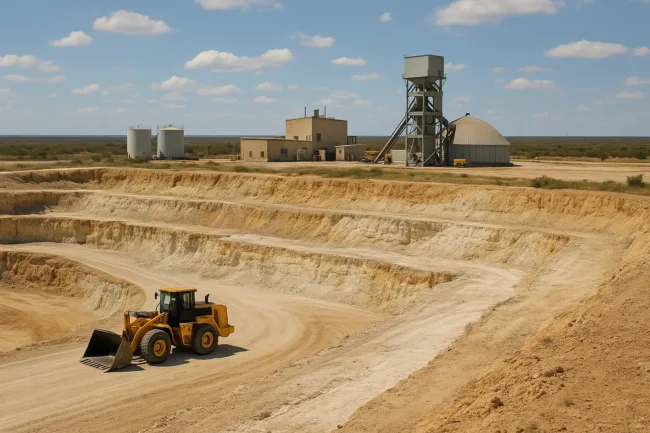
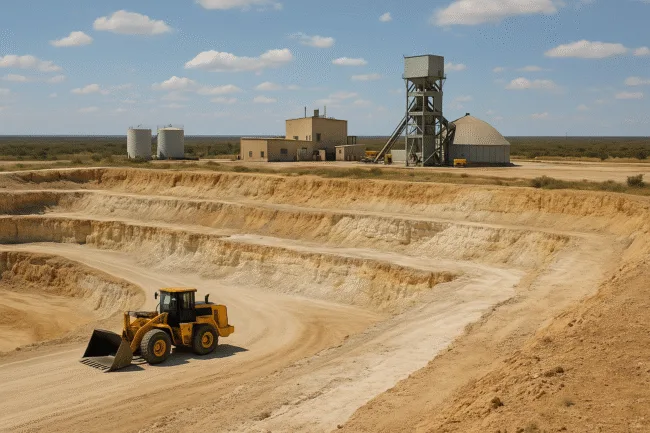
enCore Energy’s operational base is anchored in South Texas, where it runs multiple ISR uranium processing facilities. The firm’s pipeline extends northward with the Dewey-Burdock project in South Dakota and the Gas Hills project in Wyoming. Both are slated to be major contributors to future U.S. uranium output if developed on schedule.
By securing convertible financing that extends through 2030, enCore is effectively buying itself a longer runway for project development. Analysts note that this flexibility is particularly critical in uranium mining, where permitting, regulatory approvals, and construction timelines can stretch over several years. The funds give enCore the capacity to weather potential delays while maintaining ongoing operations.
Why is enCore Energy’s role in U.S. uranium supply security drawing investor and policy interest?
The United States imports the majority of its uranium, much of it from politically sensitive jurisdictions. Geopolitical disruptions over the past three years — including the Russia-Ukraine conflict and shifting U.S. trade policy with Central Asia — have renewed calls for domestic uranium production.
enCore Energy positions itself as a domestic alternative with lower environmental footprint extraction methods. Its reliance on ISR technology, co-developed by leaders now on its management team, enables uranium recovery without the same surface-level disruption associated with conventional mining. This operational model appeals not only to regulators but also to institutional investors increasingly sensitive to ESG considerations.
Policy tailwinds have further brightened sentiment. The U.S. Department of Energy continues to discuss expansion of its uranium reserve program, which could provide long-term purchase contracts for domestic suppliers. Against this backdrop, enCore’s financing is being seen as a strategic move to lock in capital while sector fundamentals are supportive.
How are institutional investors interpreting this offering in the context of sector-wide financing trends?
Convertible notes have become a preferred tool in resource financing, offering companies flexibility while giving investors upside exposure. For enCore, the structure provides cheaper access to capital than straight equity, while minimizing immediate dilution.
Institutional sentiment indicates that the notes were well-received, with Cantor Fitzgerald & Co. leading the bookrunning process and Haywood Securities Inc. co-managing. Market observers suggest that the participation of established institutions added credibility and reinforced confidence in enCore’s trajectory.
While enthusiasm is evident, some investors remain cautious about risks, particularly regulatory hurdles in South Dakota and Wyoming. Uranium equities, though in favor, remain highly sensitive to commodity cycles, meaning execution risk cannot be ignored.
What does recent stock performance reveal about investor sentiment toward enCore Energy?
Leading up to the offering, enCore Energy’s shares had been trading near $2.58 on the Nasdaq. The announcement of the upsized raise and premium conversion terms was taken as a positive indicator by many investors, suggesting confidence from institutional backers.
Trading volumes spiked immediately following the announcement, reflecting heightened investor interest. While the stock remains below the conversion threshold of $3.2895, the premium signals that buyers expect meaningful appreciation over the next five years as projects move toward production.
Analysts have noted that convertible structures often create a ceiling effect on near-term share performance but add long-term support by reducing financing uncertainty.
What are the forward-looking risks and opportunities tied to this financing?
enCore Energy’s success in deploying the proceeds will be critical. Risks include permitting delays at Dewey-Burdock, potential opposition from local stakeholders, and commodity price fluctuations. Uranium markets remain globally interconnected, and shifts in supply from Kazakhstan, Canada, or new entrants could impact pricing.
However, opportunities are equally clear. Nuclear energy has gained fresh momentum as a low-carbon baseload power source. With global net-zero targets intensifying and advanced reactor designs gaining traction, demand for uranium is expected to rise. enCore’s financing ensures it has the resources to scale operations in line with this demand.
Analysts conclude that the $115 million raise provides enCore with a solid foundation to consolidate its role as a leading U.S. uranium producer, balancing financial discipline with aggressive project development.
Discover more from Business-News-Today.com
Subscribe to get the latest posts sent to your email.

