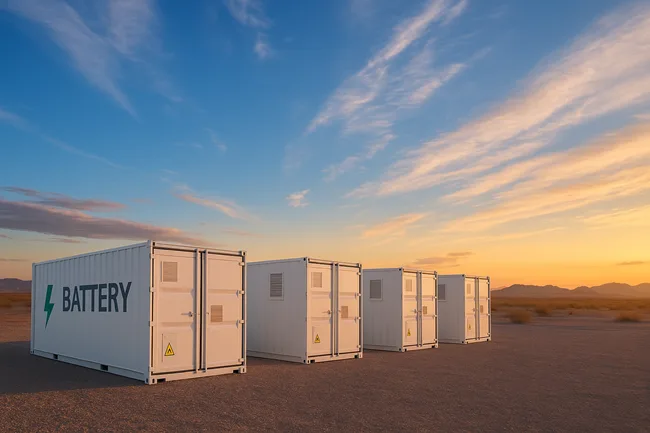
Copenhagen Infrastructure Partners (CIP), one of the world’s largest renewable energy infrastructure investors, has deepened its U.S. energy presence by acquiring the 1 gigawatt-hour (GWh) Beehive Battery Energy Storage System (BESS) in Arizona from EDF power solutions North America. The transaction positions CIP’s flagship CI V fund as a central investor in large-scale storage at a time when U.S. utilities are confronting surging demand and the operational limits of intermittent renewables.
The Beehive project, located in Peoria, Arizona, is designed as a 250 megawatt, four-hour duration system capable of storing and dispatching 1,000 megawatt-hours of electricity. EDF power solutions had initiated construction earlier in 2025, with commercial operation scheduled for the first half of 2026. Under CIP’s ownership, the project will complete construction and then operate under a 20-year tolling agreement with Arizona Public Service Company (APS), the state’s largest utility serving about 1.4 million customers.
Why does the Beehive battery energy storage system matter for Arizona’s growing energy demand challenges?
Arizona is one of the fastest-growing electricity demand markets in the U.S., with population expansion, industrial growth, and extreme weather putting pressure on APS to maintain reliability. Beehive’s storage capacity is intended to absorb excess electricity during high renewable generation periods—particularly from solar—and release it back to the grid during peak evening hours. This capability helps APS smooth volatility, manage capacity margins, and delay investment in more carbon-intensive peaking plants.
Institutional sentiment around the deal highlights how battery storage is evolving from experimental add-ons to core infrastructure. Analysts noted that with a locked-in 20-year tolling agreement, Beehive provides predictable revenue flows for investors while addressing grid flexibility needs. For APS, it represents a hedge against rising demand without overcommitting to new fossil-based assets.
How does Copenhagen Infrastructure Partners’ acquisition strategy fit into the U.S. energy storage sector?
The acquisition is structured through CIP’s CI V fund, which closed in March 2025 at over USD 14 billion, surpassing its fundraising target. The fund is focused on energy infrastructure across North America, Europe, and Asia Pacific, with a total potential commitment exceeding USD 27 billion. Beehive is emblematic of CIP’s strategy to diversify from traditional renewables into supporting infrastructure that unlocks greater renewable penetration.
Tim Evans, Partner and Head of North America at CIP, emphasized that rising Southwest power demand makes battery storage indispensable for economic growth. While direct financial details of the acquisition were not disclosed, CIP’s involvement signals strong institutional confidence in large-scale storage as a bankable asset class.
Market observers view CIP’s entry as part of a broader global investor shift, where funds once focused exclusively on solar and wind are now targeting grid-scale storage to ensure those technologies achieve their potential.
What role does EDF power solutions North America see for storage in its renewable portfolio expansion?
For EDF power solutions, Beehive marked its second standalone storage development in North America. The business has increasingly sought partnerships across project lifecycles to optimize its renewable and storage portfolio. Ryan Pfaff, Executive Vice President at EDF power solutions, noted that collaboration with CIP aligned with the company’s goal of accelerating grid-scale battery storage alongside its traditional generation business.
The strategy mirrors a wider industry recognition that storage is not just complementary but essential for decarbonization. EDF power solutions, with more than 23 gigawatts of wind, solar, and storage projects developed in North America, positions storage as a commercial enabler for scaling renewables in grid-constrained regions like Arizona.
How does the Arizona Public Service agreement strengthen the case for long-term storage investment?
APS, a subsidiary of Pinnacle West Capital Corporation (NYSE: PNW), has a diversified generation portfolio but faces rising stress from peak demand in summer months. By entering into a 20-year agreement with EDF—and now transitioning to CIP ownership—the utility secures long-term dispatchable capacity without the emissions intensity of new natural gas.
Brian Cole, APS’s Vice President of Resource Management, stressed that the utility is incorporating multiple technologies to balance affordability and reliability while expanding renewable generation. Storage assets like Beehive allow APS to integrate higher solar shares while maintaining system stability, reinforcing the value of tolling agreements as a financing structure.
From an investor perspective, APS’s commitment de-risks the project by ensuring consistent offtake revenues, making it an attractive fit for funds like CI V that prioritize stable infrastructure yields.
What are the broader implications for U.S. battery energy storage and investor sentiment?
The Beehive transaction arrives as U.S. grid-scale battery deployments are accelerating. According to industry trackers, over 15 gigawatts of battery storage capacity is expected online by 2026, much of it in high-demand regions like the Southwest and California. The structure of the Beehive project—long-term utility contract, institutional ownership, and integration with renewables—reflects the template for future projects.
Institutional investors have shown growing appetite for storage, viewing it as both an infrastructure and clean energy investment. Analysts suggest that projects like Beehive highlight a shift in utility procurement strategy from short-term reliability fixes to long-term energy transition planning.
For Arizona, the implications extend beyond reliability. Large-scale storage projects also support economic development, as dependable power supply is a prerequisite for attracting advanced manufacturing and data centers to the state.
What outlook do analysts see for future projects following Beehive’s acquisition?
Looking forward, analysts expect more transactions where global infrastructure funds take over partially developed storage projects from renewable developers. This model allows developers like EDF to recycle capital into earlier-stage projects, while long-term funds like CIP focus on de-risked construction and operational phases.
With APS as an anchor customer, Beehive sets a precedent for utilities seeking capacity solutions that fit climate policy goals. Analysts broadly characterize investor sentiment as stable-to-positive, with a recognition that the combination of renewable expansion and electrification trends will keep storage demand robust.
For Copenhagen Infrastructure Partners, the Beehive project not only strengthens its U.S. platform but also consolidates its reputation as a global leader in clean energy infrastructure. By adding a 1 gigawatt-hour battery energy storage system to its North American portfolio, CIP is building on a track record of developing, constructing, and managing assets that go beyond traditional solar and wind investments. Beehive demonstrates the fund’s ability to participate in every stage of the energy transition—aligning capital deployment with the pressing need for grid stability in high-demand states like Arizona. Institutional investors see this as further validation of CIP’s long-term strategy of diversifying into storage, a sector that has quickly moved from niche to necessity in utility planning.
For EDF power solutions North America, the transfer underscores a deliberate strategy of innovation and partnership that positions energy storage at the center of its growth outlook. By initiating the development of Beehive and then partnering with a global fund like CIP, EDF signals its commitment to bringing scalable solutions to market while recycling capital into earlier-stage projects. This approach allows EDF to maintain its focus on expanding renewable generation while ensuring that battery energy storage systems remain an integral part of its portfolio. With more than three decades of experience in the U.S. energy market, EDF’s pivot toward standalone storage projects reflects both confidence in the technology and recognition that utilities like Arizona Public Service now view storage as critical to long-term reliability.
Share this:
Discover more from Business-News-Today.com
Subscribe to get the latest posts sent to your email.