




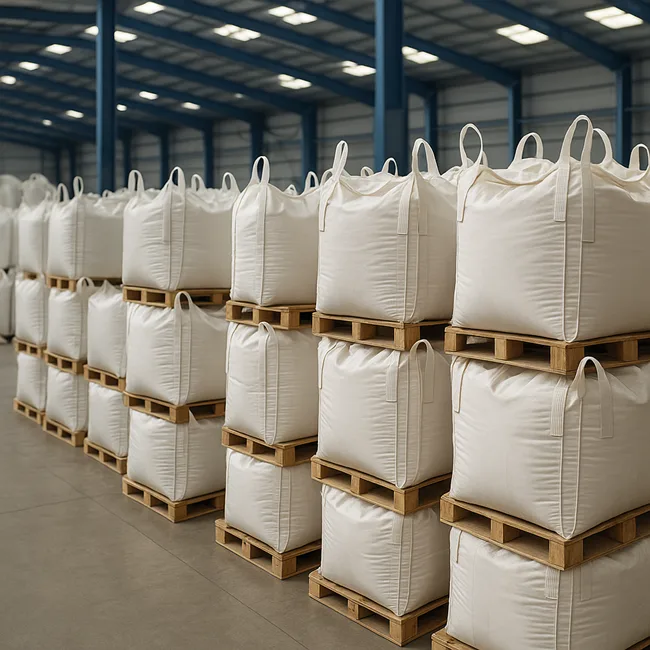
India’s industrial packaging exporters are quietly positioning themselves for a breakout moment. With trade pacts like the UK–India Free Trade Agreement lowering tariffs and expanding access, companies such as Kanpur Plastipack Limited (NSE: KANPRPLA) are starting to compete directly with established global players in the high-value flexible intermediate bulk container (FIBC) market.
The FIBC sector, often under the radar compared to steel or chemicals, is vital to modern trade. These large woven polypropylene bags are used to transport agricultural products, fertilizers, resins, and specialty chemicals. With international demand growing and Indian firms investing in quality upgrades, the question for investors and industry watchers is whether India can convert its trade pact tailwinds into lasting market share gains against European and American giants.
How are Indian FIBC exporters gaining momentum from trade agreements like the UK–India FTA?
The UK–India Free Trade Agreement, signed in 2025, slashed duties on technical textiles and packaging materials. For Indian exporters, this means lower landed costs for customers in the UK and EU. Kanpur Plastipack’s acquisition of Valex Ventures in the UK is a textbook example of how companies are using this tailwind: by combining tariff advantages with direct local distribution.
This is not just a one-off. Similar benefits are emerging under the Regional Comprehensive Economic Partnership (RCEP), which opens doors to Asian markets including Japan, South Korea, and Australia. With India’s packaging industry already achieving scale and cost efficiency at home, these agreements allow exporters to compete not just on price but on compliance and certifications that European and Asian buyers demand.
What challenges do Indian firms face when competing with global packaging leaders?
Despite lower costs and trade pact advantages, Indian packaging exporters are still up against established multinationals like Greif, Berry Global, and LC Packaging. These companies dominate the premium FIBC space, especially in Europe and North America, with longstanding client relationships and distribution networks.
The key differentiator will be quality and compliance. Food-grade and UN-certified FIBCs require stringent testing, traceability, and sustainability benchmarks. Indian players such as Kanpur Plastipack, Rishi FIBC Solutions, and Big Bags International are investing heavily in certifications, automation, and risk audits to bridge this gap. The shift is evident in Kanpur Plastipack’s decision to engage Grant Thornton for a risk and compliance overhaul, a move rarely seen in smaller manufacturing firms until recently.
Can India’s packaging sector leverage agricultural and chemical export growth for scale?
Packaging demand is tightly linked to India’s role as a global supplier of grains, fertilizers, and chemicals. With agricultural exports at record levels and India’s chemicals sector projected to touch USD 300 billion by 2030, the need for durable and compliant bulk packaging is set to soar.
Analysts point out that FIBCs are one of the few manufactured products that scale directly with commodity exports. As India pushes its agri-export agenda and chemical majors expand capacity, domestic FIBC makers are positioned to ride the same wave. Trade agreements, in this sense, amplify the advantage by ensuring Indian bags are competitive not only on cost but also in ease of market entry.
How are investors viewing Indian packaging stocks in light of trade tailwinds?
Stocks like Kanpur Plastipack have already started to reflect cautious optimism. The company’s Q1 FY26 results marked a sharp turnaround, with profits reversing year-ago losses and margins expanding on export-led growth. The stock trades at around 22 times earnings, which some investors see as pricing in early optimism.
Retail investors on Dalal Street often overlook packaging names compared to higher-profile manufacturing plays, but institutions are watching closely. The presence of free trade benefits, rating upgrades, and overseas acquisitions could make packaging firms attractive small-cap bets for those looking to ride India’s export growth cycle. Analysts suggest that while valuations are not cheap, the sector’s alignment with global trade flows makes it a structural growth story rather than a cyclical one.
What is the outlook for Indian packaging exporters in the global FIBC race?
The outlook depends on whether Indian firms can convert trade pact-driven cost advantages into sustainable brand equity. Acquiring overseas distribution firms, investing in compliance, and innovating in sustainable packaging will be critical steps. With ESG mandates tightening in Europe and North America, the ability to offer recyclable or biodegradable bulk bags could give Indian exporters an edge over incumbents.
In the near term, investors should expect volatility. Small-cap packaging stocks are prone to sharp swings given their limited free float and modest institutional participation. However, the structural drivers—rising global demand, favorable trade policies, and ongoing consolidation—suggest that Indian firms are entering a rare window of opportunity to punch above their weight internationally.
Discover more from Business-News-Today.com
Subscribe to get the latest posts sent to your email.



