



Could the 90-day tariff suspension extension reshape US–China trade relations in 2025?
The White House has extended the suspension of additional ad valorem tariffs on imports from the People’s Republic of China (PRC) for another 90 days, citing progress in bilateral trade discussions aimed at addressing long-standing imbalances and national security concerns. The executive order, signed by President Donald J. Trump on August 11, 2025, pushes the current suspension’s expiration date from August 12 to November 10, 2025, giving negotiators more time to find common ground without triggering an escalation in tariffs.
This decision maintains the status quo on reciprocal tariff rates established in earlier executive actions, which had been partially rolled back in May to encourage constructive engagement between the two countries. The extension is the latest chapter in a series of tariff adjustments this year under the administration’s broader trade strategy, which links market access to national security considerations.
How earlier executive orders set the stage for the current US–China tariff negotiations
The origins of this tariff structure trace back to April 2, 2025, when Executive Order 14257 first introduced a reciprocal tariff framework designed to counter persistent U.S. goods trade deficits. Citing the International Emergency Economic Powers Act (IEEPA) and the National Emergencies Act, the administration framed the deficits as an “unusual and extraordinary threat” to both national security and the economy.
Following China’s announcement of retaliatory measures through its State Council Tariff Commission, the White House issued two additional orders on April 8 and April 9 (Executive Orders 14259 and 14266) to raise duty rates on Chinese imports further. These measures were designed to offset Beijing’s counter-tariffs and reinforce Washington’s negotiating leverage.
By May 12, 2025, the tone shifted. Executive Order 14298 temporarily suspended the higher tariff rates for 90 days, replacing them with a lower, alternative ad valorem duty. This was a strategic concession meant to foster dialogue, with the explicit understanding that the suspension would expire on August 12 unless renewed.
Why the administration opted to extend the suspension instead of reinstating higher tariffs
According to the August 11 executive order, the decision to extend the suspension reflects “significant steps” taken by China toward remedying non-reciprocal trade arrangements. While no detailed public list of concessions has been released, officials have suggested that talks have touched on market access, industrial subsidies, intellectual property protections, and broader economic security matters.
The order emphasizes that, despite these steps, the underlying national emergency declared in April still stands. Maintaining the suspension—rather than reverting to the higher rates outlined in Executive Order 14257—allows for a continued pressure-and-incentive balance. It keeps the threat of tariff escalation alive while signaling willingness to reward good-faith engagement.
From a market perspective, this delay in reinstating higher duties also helps avoid immediate disruptions to supply chains, import costs, and retail pricing ahead of the critical U.S. holiday shopping season. Analysts note that sudden tariff hikes could have fueled inflationary pressures, particularly in electronics, apparel, and consumer goods categories.
What the extended suspension means for the Harmonized Tariff Schedule of the United States
The legal effect of the order is to keep Heading 9903.01.63 and a specific subdivision of U.S. note 2 to subchapter III of chapter 99 of the Harmonized Tariff Schedule of the United States (HTSUS) suspended until November 10, 2025. This ensures that the alternative tariff rates, as modified in May, remain in force instead of the steeper rates imposed earlier in the year.
The implementation section directs the Secretary of Commerce, Secretary of Homeland Security, and United States Trade Representative (USTR)—in coordination with agencies such as the Treasury Department and the State Department—to take all necessary actions to carry out the suspension. This includes making regulatory adjustments in the Federal Register and using the President’s powers under IEEPA to ensure compliance.
How markets and investors have reacted to the tariff extension announcement
Initial market reaction on August 11 was cautious. U.S. equity indexes opened slightly lower, with modest declines in technology and manufacturing stocks. Investors appeared to interpret the extension as a sign of progress but also as an acknowledgment that full resolution remains elusive.
Commodity markets saw a muted response. Gold prices dipped slightly, reflecting reduced short-term demand for safe-haven assets. Meanwhile, freight and shipping companies, which had been bracing for increased costs on China-bound cargoes, saw modest gains as tariff uncertainty eased.
Institutional investors have described the extension as “constructive but provisional.” According to several trade analysts, keeping the suspension in place supports earnings visibility for U.S. import-dependent sectors in Q4 2025, but the looming November deadline maintains an element of geopolitical risk.
Could this extension pave the way for a broader trade agreement between the US and China?
Trade policy experts suggest that the next 90 days could be critical for shaping the long-term trajectory of U.S.–China economic relations. By extending the suspension, Washington preserves flexibility to either lock in concessions through a formal agreement or revert to higher tariffs if talks stall.
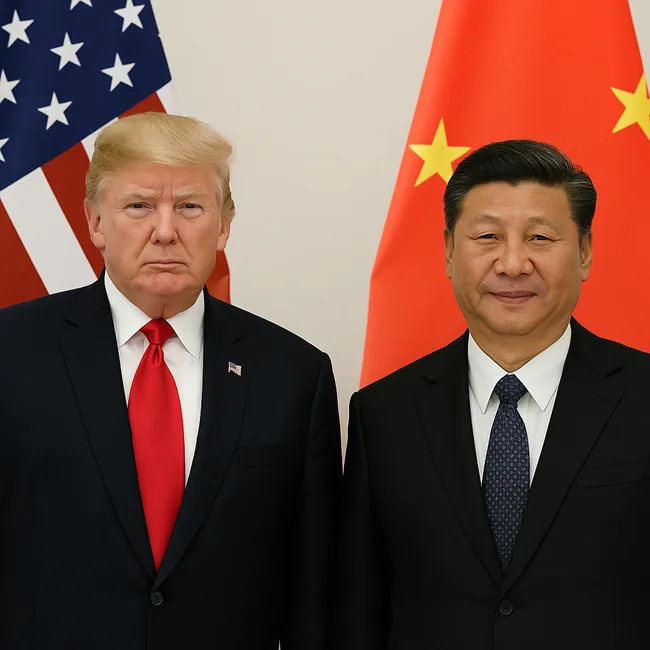
The White House has not confirmed whether a direct meeting between President Trump and President Xi Jinping will take place before November, but senior officials have hinted that ongoing working-level discussions are laying the groundwork for potential high-level engagement.
From Beijing’s perspective, the extension may be seen as an opportunity to solidify gains from the current talks while avoiding the optics of making concessions under pressure. For Washington, it’s a calculated gamble that China’s “significant steps” will evolve into tangible, verifiable changes in trade practices.
How trade policy experts view the balance between diplomatic progress and domestic political priorities
Trade policy analysts have noted that extending the tariff suspension can be seen as a way to reward progress in negotiations while maintaining leverage. They also caution that any concessions made during the talks will need to be substantive and enforceable to have a lasting impact, rather than merely symbolic.
Economists have also pointed out that the extension aligns with domestic political considerations. With the 2026 midterm election cycle on the horizon, avoiding tariff-driven price spikes on consumer goods could help manage inflationary pressures and bolster household confidence.
What key structural issues could shape the outcome of US–China trade talks before November 10
The next three months are expected to bring more intensive negotiations on structural trade matters that have long complicated U.S.–China relations. A central focus will be market access, with U.S. negotiators pushing for assurances that American companies can compete on equal footing in Chinese industries such as financial services, e-commerce, and manufacturing. Another priority will be the issue of industrial subsidies, where Washington has consistently argued that state-backed support for domestic industries in China distorts global competition and undermines fair trade. In addition, technology transfer policies remain a critical sticking point, as U.S. officials seek to curb requirements that compel foreign companies to share proprietary technologies as a condition for doing business in China. The resolution—or continued deadlock—on these three fronts will heavily influence whether the current tariff suspension is extended, converted into a longer-term agreement, or allowed to expire in November.
Should talks break down, the White House retains the authority to reimpose the higher tariffs immediately after November 10, potentially reigniting a trade confrontation. Conversely, if progress is deemed sufficient, the suspension could be extended again—or converted into a longer-term arrangement embedded in a broader trade pact.
Discover more from Business-News-Today.com
Subscribe to get the latest posts sent to your email.