



Neogen Chemicals Limited, through its wholly owned subsidiary Neogen Ionics Limited, is betting big on the strategic convergence of global battery supply chain diversification and India–Japan technological cooperation. In Q1 FY26, the specialty chemicals manufacturer formally activated its joint venture with Japan’s Morita Chemical Industries—launching Neogen Morita New Materials Limited (NML)—a step seen as pivotal for India’s ambitions to become a credible lithium battery chemical exporter.
The JV marks one of the first major Indo-Japanese collaborations in the advanced materials space focused specifically on battery-grade lithium salts, an input critical to electrolyte manufacturing for lithium-ion batteries. With Neogen aiming to manufacture and export these salts from its Dahej-based infrastructure, the initiative could open the doors for India’s first global-scale lithium salts play.
What makes the Neogen–Morita JV strategically important in the lithium battery chemicals landscape?
Morita Chemical Industries, based in Japan, brings over 30 years of operational experience in lithium salt synthesis and purification. By combining Morita’s technical know-how with Neogen’s established specialty chemicals manufacturing base and its new greenfield investment at Dahej PCPIR, the venture aims to produce high-purity lithium salts tailored for global battery cell manufacturers.
What sets this JV apart is not just the manufacturing synergy but the global demand-side shift. Battery OEMs in the U.S., Europe, and Japan have actively been seeking alternatives to Chinese-origin lithium salts, driven by regulatory, geopolitical, and ESG concerns. This structural realignment creates a valuable market opening for JV-backed Indian exports—particularly if quality, consistency, and scale can match global benchmarks.
Neogen’s press release dated August 2, 2025, explicitly stated that these lithium salts will be used captively for in-house electrolyte production and exported globally “addressing growing demand for non-China material supply.” This signals a clear intent to tap into global offtake pipelines beyond India’s nascent EV sector.
Where will lithium salts production take place, and how is Neogen preparing for scale?
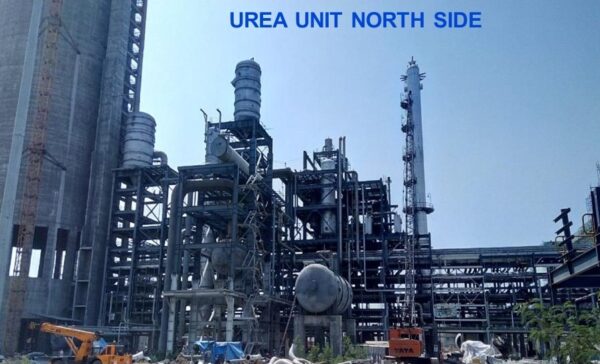
Neogen Ionics’ greenfield facility in Pakhajan, Dahej PCPIR—covering 65 acres—is being developed with modular manufacturing capacity built using MUIS (Modular Unit Integrated Systems) technology. According to the company, civil works are significantly complete, and long-lead equipment has already been ordered. Notably, factory acceptance testing (FAT) is ongoing at the Mitsubishi Engineering Corporation contractor site.
While some capacity for lithium electrolyte salts (400 MTPA) and liquid electrolyte (2,000 MT) has already been commissioned in Dahej SEZ, the new facility in Pakhajan is expected to be the cornerstone of export-oriented production. The infrastructure is being designed to meet the quality and traceability standards required by international battery manufacturers.
Out of the planned ₹1,500 crore capital expenditure, ₹506 crore has been deployed to date, with ₹36 crore spent in Q1 FY26 alone. This capital infusion underscores Neogen’s confidence in the project’s long-term viability and global competitiveness.
How does this initiative align with broader India–Japan battery supply chain partnerships?
India and Japan have deepened their strategic cooperation in energy security, rare earths, and advanced materials. The Morita–Neogen JV builds on this diplomatic and industrial synergy, offering Japan an additional secure production base for battery precursors while enabling India to develop export-oriented high-value chemical manufacturing capacity.
With Japan’s Ministry of Economy, Trade and Industry (METI) backing supply chain resilience through public-private frameworks, ventures like NML are well-positioned to benefit from potential downstream partnerships or offtake arrangements from Japanese OEMs.
On India’s side, policy frameworks like the PLI scheme for Advanced Chemistry Cell (ACC) battery storage and incentives for chemical manufacturing under Make in India provide strong tailwinds. While the JV has not explicitly applied for government subsidies, it aligns structurally with both nations’ policy goals.
Could Neogen Morita New Materials become a global name in lithium salts?
While it’s early days, institutional sentiment has been broadly positive. Analysts tracking Neogen’s transition into battery materials view the Morita JV as a high-potential differentiator in a crowded specialty chemicals space. Unlike typical Indian lithium-ion battery initiatives which focus on cell assembly or cathode active material, NML is targeting an upstream niche—lithium salts—with comparatively lower capital intensity and faster path to commercial scale.
Export orientation, advanced synthesis standards from Morita, and early CAPEX execution all contribute to a strong go-to-market foundation. However, scaling will depend on Neogen’s ability to secure long-term offtake contracts, pass qualification audits from international buyers, and maintain high process control.
Notably, Neogen already reported ₹5.4 crore in revenue from Neogen Ionics in Q1 FY26, suggesting initial customer validation and trial orders have commenced.
Discover more from Business-News-Today.com
Subscribe to get the latest posts sent to your email.