




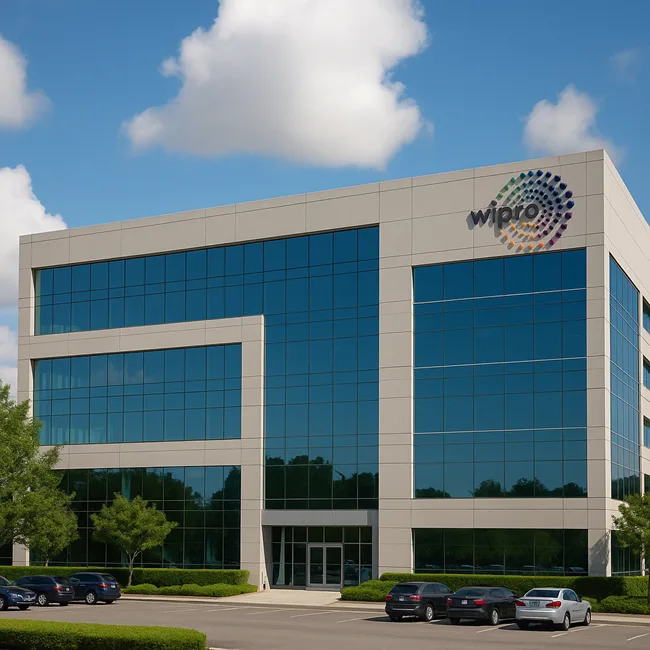
Wipro Limited’s recent contract with Saudi Electric Company – National Grid SA to deploy a smart meter data management (MDM) system has amplified global interest in the fast-growing smart grid market across the Gulf Cooperation Council (GCC). As Saudi Arabia drives digital energy transformation under Vision 2030, international and regional tech players are positioning themselves for a surge in demand for meter data platforms, grid automation tools, and predictive analytics solutions across the region.
The July 2025 win positions Wipro Limited (NYSE: WIT, BSE: 507685, NSE: WIPRO) as a serious contender in large-scale Middle Eastern utility digitalization deals. However, the competitive landscape is broad and intensifying—spanning industrial control majors, global energy OEMs, and Indian IT integrators—each hoping to shape the next generation of energy infrastructure across the Gulf.
How is Wipro Limited’s Saudi Electric win changing competitive dynamics in Gulf smart grid procurement?
Wipro’s end-to-end contract with National Grid SA involves full lifecycle deployment of a smart MDM platform, including infrastructure, software, and long-term support. Its implementation will support grid forecasting, power dispatch optimization, and outage minimization. Analysts expect the deal to serve as a reference project that could strengthen Wipro’s case in future tenders across the region.
However, utility contracts across the GCC are rarely awarded in isolation. Market observers point out that Saudi Arabia’s Vision 2030 initiatives tend to catalyze similar modernization efforts in the UAE, Qatar, and Oman. This ripple effect means that Wipro’s momentum is now intersecting with long-standing efforts by other vendors already embedded in the region’s energy digitalization efforts.
Who are the top contenders for upcoming GCC smart grid contracts—and what are their strengths?
Among Wipro’s key global competitors is Siemens Energy, which has longstanding relationships with utility providers in the UAE and Oman. Siemens’ SICAM grid automation suite and EnergyIP MDM platform are already deployed in multiple countries, offering real-time energy flow visibility and distribution automation. Analysts note that Siemens’ ability to combine hardware, OT, and software solutions gives it a full-stack advantage in grid modernization efforts.
Schneider Electric is another major player, particularly active in digital substation modernization and edge analytics. Its EcoStruxure Grid platform is being used in parts of the GCC to enhance resiliency and integrate distributed energy resources. Schneider’s focus on modular, scalable systems appeals to utilities with limited deployment capacity or mixed infrastructure.
GE Vernova, newly spun off as an independent energy entity, is pushing hard to win transmission and distribution digitization projects across the Middle East. The company’s GridOS and MDS smart grid communications platforms are already being considered in Qatar and Kuwait. GE Vernova’s competitive edge lies in its deep transmission experience and ability to integrate renewables at scale.
From Asia, Hitachi Energy is leveraging its ADMS and Lumada portfolio to compete for smart grid projects in Saudi Arabia and beyond. With strong credentials in high-voltage systems and real-time data integration, Hitachi is well positioned for grid-wide digitization where MDM platforms must sync with transmission control centers.
What role do Indian technology firms like Infosys and TCS play in regional smart grid development?
Following Wipro Limited’s lead, Infosys and Tata Consultancy Services (TCS) are also actively pursuing smart energy contracts, often by integrating cloud-based analytics and digital twin capabilities into utility operations. Infosys has previously worked on energy billing and outage management systems in North Africa, while TCS has invested in smart city and utility solutions targeting GCC states.
Unlike global OEMs, Indian firms often position themselves as agile system integrators able to work across vendor stacks. They focus on software orchestration, cybersecurity integration, and AI-powered decision support. Analysts expect more Indian firms to enter joint ventures or consortiums to bid on upcoming digital energy tenders in Oman, Bahrain, and parts of the UAE.
Are localization and regulatory priorities reshaping the vendor landscape in the GCC?
One emerging trend is the demand for localization in smart grid contracts. Governments across the GCC—especially Saudi Arabia and the UAE—are tying contract awards to local content quotas and technology transfer agreements. This means foreign vendors must often partner with regional firms or establish local operating entities to meet procurement eligibility.
Wipro Limited’s expanding presence in the Middle East, including delivery centers and training programs, may provide an edge here. Similarly, Siemens and Schneider have invested in Gulf-based manufacturing and R&D capabilities to align with localization targets.
In this environment, consortium-based bidding has gained momentum. Projects are increasingly awarded to multi-vendor teams that combine global technology expertise with local execution capabilities. As a result, smaller regional firms with strong government relationships may play a larger role in shaping vendor access.
What does this competition mean for the future of smart grid investment in the Middle East?
The regional market is entering a high-stakes growth phase. Analysts forecast that smart grid investments across the GCC will surpass USD 3.2 billion by 2033, with a focus on meter data management, outage automation, demand response, and renewable integration.
While Wipro Limited’s National Grid SA win marks a turning point, the broader competitive picture suggests that smart grid modernization will be shaped by an ecosystem of vendors—each offering distinct strengths in hardware, software, and integration. Future contracts are likely to emphasize not only technical capability but also long-term operational resilience, cybersecurity, and alignment with national energy goals.
For vendors, the message is clear: GCC utilities are no longer content with incremental upgrades. They are looking for partners who can help them leapfrog into a digitally autonomous grid era.
Discover more from Business-News-Today.com
Subscribe to get the latest posts sent to your email.


