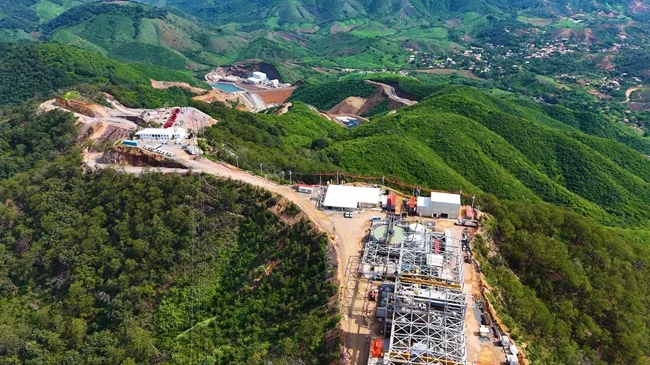






As Kinross Gold Corporation (TSX: K, NYSE: KGC) rides the momentum of its record-breaking Q2 2025 performance, the focus is now shifting to its most high-potential development property: the Great Bear project in Ontario. Acquired in 2022 through the $1.8 billion takeover of Great Bear Resources, the site is finally transitioning from high-grade exploration success to tangible development—with advanced engineering, procurement, and permitting steps now visibly underway.
In its second-quarter update, Kinross confirmed that construction of surface facilities for the Advanced Exploration (AEX) program is progressing well. Earthworks are already in motion, and the AEX camp is nearly complete. The company aims to initiate underground decline development by December 2025, contingent on permitting timelines. This marks a major milestone in turning Great Bear from a resource story into a long-life production asset that could reshape Kinross’s Canadian footprint.
How far along is Kinross in permitting and engineering for Great Bear—and why does the timeline matter?
The permitting process is now in a critical phase, as Kinross coordinates with the Impact Assessment Agency of Canada (IAAC) to file its Environmental Impact Statement (EIS). In a notable move, the company has adopted a staged filing strategy—intending to submit most of the technical chapters by the end of 2025, with the remainder expected by the close of Q1 2026. This modular approach is designed to facilitate a more efficient IAAC review, especially as the company works closely with Indigenous groups and regulators to integrate traditional knowledge into environmental baselines.
At the same time, detailed engineering is advancing across core project components, including the mill, tailings management facility, and site infrastructure. Kinross has already commenced procurement for major processing equipment, with award decisions expected to begin by late 2025. This sets up the potential for initial fabrication and early-stage construction activities to begin as early as 2026.
The staged approach allows Kinross to move forward on parallel tracks—pushing engineering and procurement while de-risking the regulatory process. For a project of Great Bear’s scale and sensitivity, particularly in a jurisdiction like Ontario’s Red Lake District, this coordination with stakeholders and regulators could prove decisive in staying on timeline.
What makes the Great Bear project strategically important for Kinross and Canadian gold production?
From a geological and strategic standpoint, Great Bear remains one of the most promising undeveloped gold systems in North America. Situated along the prolific Dixie Limb and LP Fault zones, the deposit has consistently yielded wide, high-grade intercepts with excellent continuity at depth. Although Kinross has yet to publish a formal maiden resource estimate, prior exploration programs from Great Bear Resources and Kinross alike have suggested the potential for several million ounces of high-margin gold.
More importantly, Great Bear is expected to become Kinross’s flagship Canadian asset—critical to balancing its Americas-focused portfolio and derisking geopolitical exposure. With operating mines in Mauritania, Brazil, and Chile, bringing a large-scale, low-risk project to life in Ontario offers Kinross both regulatory credibility and long-term jurisdictional diversification.
Institutional sentiment around Great Bear has remained positive, particularly as Kinross avoided over-promising early in the asset’s integration phase. The company has repeatedly stated it would focus on thorough technical de-risking before releasing any economic model—ensuring capital markets have confidence in the final mine plan.
How are analysts and investors assessing the near-term upside and risks for Great Bear?
Analysts see Great Bear as a medium- to long-term value unlock for Kinross rather than an immediate production driver. That said, with Q2 2025 results exceeding expectations and the balance sheet now boasting $1.14 billion in cash, investors are questioning whether Kinross might accelerate elements of the development timeline—especially with underground access via the AEX decline expected by late 2025.
There are still hurdles ahead. Delays in permitting, potential construction cost inflation, or complications in stakeholder consultations could push timelines beyond 2026–2027 for commercial production. However, Kinross’s methodical approach has so far reassured institutions that the company is committed to building Great Bear right, not just fast.
For now, the market is watching closely for two things: the first full resource estimate and a preliminary economic assessment (PEA). Either could land in 2026 and serve as the next major valuation catalyst. Until then, each quarterly update is expected to offer incremental milestones—be it procurement wins, engineering milestones, or regulatory advancements.
Discover more from Business-News-Today.com
Subscribe to get the latest posts sent to your email.