





Why is Barranco Gold Mining Corp. pursuing mineral claims next to operating projects in Ontario?
Barranco Gold Mining Corp. (CSE: BAR, FWB: 314) disclosed on August 1, 2025, that it is in the final phase of negotiations to acquire a portfolio of highly prospective mineral claims under Ontario’s Mining Lands Administration System (MLAS). The North Vancouver-based junior gold exploration company stated that the targeted land package lies adjacent to two active mining operations, a detail that significantly raises the strategic importance of the deal.
While financial terms of the acquisition remain undisclosed, Barranco confirmed that the transaction is expected to close imminently, subject to standard regulatory approvals and final due diligence. The Canadian exploration firm plans to initiate immediate technical work programs on the newly acquired assets once the transaction is completed, suggesting a proactive approach to unlocking value in one of Canada’s most geologically endowed jurisdictions.
How does this land acquisition fit into the historical context of gold exploration in Ontario?
Ontario remains a cornerstone of Canada’s mining industry, particularly in gold production, with a long history of hosting world-class deposits in belts such as the Abitibi Greenstone and Red Lake regions. The area targeted by Barranco Gold Mining Corp. has seen consistent exploration activity over past decades, with geological surveys and historical drill records pointing to favorable mineralization trends.
This legacy of geological work is critical to Barranco’s strategy. By acquiring claims in a historically rich and currently active exploration corridor, the company reduces its geological risk profile. Analysts note that the junior miner’s playbook—building on existing datasets and neighboring discoveries—aligns with best practices in early-stage project development, especially for undercapitalized explorers looking to maximize return on exploration dollars.
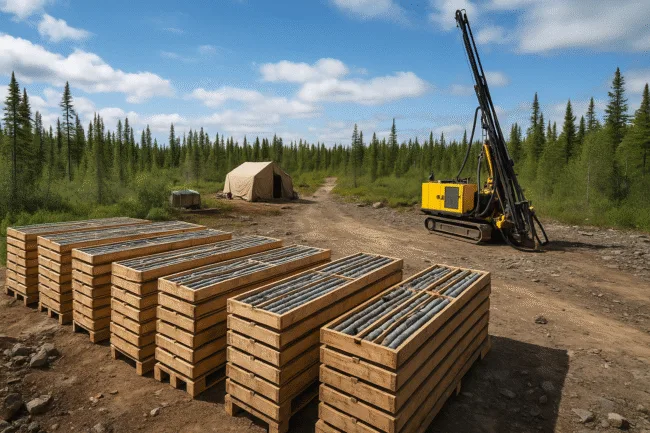
Additionally, the MLAS system, administered by the Ontario Ministry of Mines, offers a transparent and secure method for staking and managing mineral claims. This framework is often cited by institutional investors as a key factor when assessing the legal clarity and risk-adjusted attractiveness of early-stage projects in Canada.
What advantages does proximity to active mining operations offer for junior explorers like Barranco?
The claims Barranco is seeking to acquire are located directly next to two companies that are currently advancing exploration or development-stage projects. This proximity is more than a logistical convenience—it carries real geological and commercial implications. From a geological perspective, mineral systems do not stop at claim boundaries. Being near active exploration can offer insights into mineral continuity and structural trends.
From a commercial standpoint, adjacent claims can benefit from shared infrastructure, geophysical interpretations, and even potential future partnerships or consolidation. Industry experts suggest that juniors operating in close proximity to advancing peers often find themselves in advantageous positions during sector upcycles, especially when majors or mid-tiers look to expand their resource bases through acquisition.
For Barranco, this move could also signal a deliberate shift toward scalability. If successful, the acquisition could transform the firm from a grassroots prospector into a regional player with multiple growth levers tied to Ontario’s proven geological belts.
How is the institutional investor community responding to Barranco’s expansion strategy?
Although Barranco Gold Mining Corp. is still in its early development phase and lacks a defined resource estimate, the acquisition news has drawn cautious optimism among small-cap mining investors. Institutional sentiment toward Canadian junior gold explorers has been selective in 2025, with capital generally flowing toward firms that demonstrate either tangible resource growth or clear strategic positioning near tier-one assets.
Barranco’s latest move appears to fall into the latter category. Its strategy of consolidating land next to ongoing projects is being interpreted by some market watchers as a bid to align with eventual consolidation or JV interest. In the past, several Canadian juniors have followed similar paths—securing early-stage properties in high-potential corridors and later advancing them through option agreements, farm-outs, or outright sale to better-capitalized players.
Analysts who track junior gold equities note that the success of such a model hinges on rapid technical validation. If Barranco can follow through with fieldwork that identifies meaningful targets—via geochemical anomalies, structural mapping, or early scout drilling—it could generate momentum for a re-rating. Until then, investors are likely to remain focused on tangible execution milestones.
What technical work programs are expected following the acquisition’s completion?
Barranco has indicated that exploration activities will begin shortly after the acquisition closes, likely starting with baseline geological and geophysical surveys. In Ontario, early-stage exploration programs typically involve airborne magnetics, electromagnetic (EM) surveys, and soil sampling to delineate target zones. These are usually followed by trenching or diamond drilling campaigns once anomalies are verified.
Given the presence of two active nearby projects, Barranco may also benefit from publicly available data on adjacent geology, drill logs, and structural models. These insights could significantly reduce exploration costs while accelerating drill targeting. If all goes to plan, the Canadian exploration firm could be in a position to initiate a Phase 1 drill campaign by early or mid-2026.
Such a timeline would place Barranco on a relatively fast track compared to peers, especially in a market where exploration cycles can often drag due to permitting delays or funding constraints. While no resource estimate has yet been established for the newly targeted area, successful drill intercepts within the first year could materially change the company’s valuation and visibility.
How does this acquisition reflect broader trends in the Canadian junior mining sector in 2025?
The Canadian junior mining sector in 2025 continues to be shaped by capital discipline, regional consolidation, and heightened scrutiny of ESG and permitting risks. Against this backdrop, Barranco’s acquisition strategy stands out for its simplicity and focus. By targeting underexplored but well-positioned claims near existing development activity, the company sidesteps some of the challenges that have hampered juniors operating in more remote or less-proven districts.
Moreover, the move comes at a time when gold prices remain volatile but broadly favorable for exploration-stage companies. As of late July 2025, gold futures have hovered in the range of USD 2,200–2,350 per ounce, offering sufficient price support for risk-on positioning in early-stage equities. If Barranco can show technical progress and maintain fiscal prudence, it may be able to ride this wave of cautious optimism while building a foundation for long-term asset development.
In short, the Barranco Gold Mining Corp. announcement signals a clear intent to scale up within a proven Canadian jurisdiction. The next six to twelve months will determine whether this expansion leads to tangible value creation—or simply becomes another speculative play in a crowded junior mining landscape.
Discover more from Business-News-Today.com
Subscribe to get the latest posts sent to your email.