




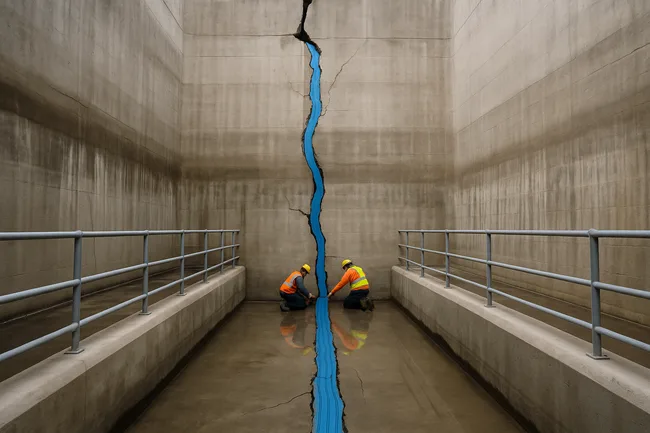
Concrete gravity dams continue to face one of the oldest challenges in hydraulic engineering: joint leakage. As these megastructures age and undergo thermal, hydrostatic, and seismic stress, maintaining watertight integrity becomes increasingly complex. In 2025, innovations in waterstop materials and joint sealing systems are quietly transforming how dam operators design, retrofit, and future-proof their infrastructure.
Joint leakage is not merely a nuisance—it is a structural and operational risk. Cracks or seal failures at construction and expansion joints allow water ingress into galleries, inspection chambers, or even downstream toe zones. This leads to icing hazards in cold regions, corrosion of embedded instrumentation, reduced storage efficiency, and long-term damage to concrete and rebar. For gravity dams, which rely on their mass to resist hydrostatic pressure, even small joint leaks can evolve into expensive rehabilitation efforts.
What makes modern waterstop systems critical for gravity dam resilience today?
At the heart of the sealing strategy are waterstops—engineered barriers embedded in concrete joints to prevent water passage. In traditional construction, polyvinyl chloride (PVC) and rubber-based profiles were used at monolith joints. However, these often deteriorate over time due to repeated joint movement, chemical degradation, or poor installation.
The latest systems, including hydrophilic waterstops, adhesive-bonded profiles, and hybrid sealing combinations, are engineered to offer dynamic movement capabilities while withstanding high hydrostatic pressure. Hydrophilic options, for instance, expand upon contact with moisture, filling gaps that may emerge due to shrinkage, differential settlement, or hairline cracking.
Adhesive-backed waterstops and preformed joint tapes are now favored in dam retrofits due to their ease of application and enhanced bonding with aged concrete surfaces. These systems are designed to accommodate cyclic loading, freeze-thaw cycles, and long-term immersion without failure.
One example is the CYLutions joint sealing approach, which was deployed in concrete dams to inject elastomeric sealing profiles into active monolith joints. This method restored watertight integrity without full structural overhaul and demonstrated performance under full reservoir loading.
How big is the waterstop market in 2025, and why are dams a major driver?
Industry estimates place the global waterstop market at over USD 2.7 billion in 2024, with steady year-on-year growth projected through 2025. The segment is expanding at a compound annual growth rate of approximately 5%, driven by demand from large-scale civil infrastructure including dams, tunnels, and underground transport. Within this, hydrophilic waterstop products are gaining traction, with some forecasts suggesting the segment could double in size by the early 2030s, fueled by rapid adoption in dam rehabilitation and tunnel waterproofing projects.
Dams are among the key contributors to this growth, alongside tunnels, basements, water treatment plants, and underground transport infrastructure. Countries in the Asia-Pacific region, particularly India and China, are driving waterstop demand through aggressive infrastructure renewal schemes. India’s DRIP (Dam Rehabilitation and Improvement Project) and China’s modernization of legacy concrete dams are incorporating waterstop upgrades as part of broader waterproofing and safety protocols.
At the same time, regulators across the U.S. Bureau of Reclamation and Federal Energy Regulatory Commission (FERC) have elevated standards for concrete joint sealing in large dams. These include recommendations for movement-capable waterstops, dual sealing arrangements, and compatibility testing under hydrostatic load conditions.
How do newer joint sealing methods outperform legacy PVC systems?
One of the major advantages of next-generation sealing systems is their hybrid configuration. Modern gravity dams built using roller-compacted concrete (RCC) incorporate frequent horizontal lift joints, typically spaced every 300–600 millimeters. These joints become water ingress points over time if not properly sealed.
The latest systems combine multiple layers of protection to enhance joint durability and leak resistance. At the core, PVC or thermoplastic vulcanizate (TPV) base profiles provide essential structural reinforcement and flexibility to accommodate joint movement. Complementing this are hydrophilic rubber strips, which swell upon contact with water, effectively sealing any gaps or micro-cracks that may develop over time. Finally, the use of adhesive or epoxy bonding agents ensures that the entire assembly is securely integrated into the surrounding concrete matrix, providing both chemical and mechanical anchoring for long-term performance.
Compared to traditional embedded waterstops, which rely on perfect placement and continuous concrete pour, these new systems provide tolerance for construction variances and joint movement. Their ability to self-heal or re-expand upon water contact further reduces the likelihood of long-term leakage.
Recent pilot studies and independent engineering research have demonstrated that modern waterstop systems offer superior performance under thermal cycling, hydrostatic pressure, and joint movement when compared to traditional PVC-only solutions. These newer modular designs also enable partial replacement of degraded segments without requiring full joint demolition, making them well-suited for dam retrofits and long-term maintenance strategies.
Can joint sealing systems support climate adaptation in dam infrastructure?
Climate-related stress on dam infrastructure—through increased rainfall variability, thermal expansion, and reservoir level fluctuations—is growing. Joint sealing systems are now seen as part of the adaptation toolkit.
The ability of a waterstop to remain watertight under dynamic loading and environmental changes helps extend the life of aging dams and reduces the cost of unplanned maintenance. In some advanced projects, waterstop materials are being embedded with micro-sensors to detect early leakage or material fatigue. These systems can alert engineers via automated monitoring platforms, improving proactive maintenance.
In India and Latin America, where seismic activity intersects with high dam concentration, the combination of earthquake-resistant design and joint sealing strategies is now codified in engineering manuals and procurement tenders.
What’s next for the waterstop industry in dam engineering?
As waterstop adoption deepens, the industry is pivoting toward multi-functional sealing systems. Key trends shaping the future of waterstop systems in dam engineering include the integration of sensors capable of monitoring joint integrity in real time, enabling proactive maintenance strategies. There is also growing emphasis on compatibility with pre-cast segmental construction methods, which demand flexible and modular sealing solutions. Additionally, manufacturers are developing thermal-resilient polymers designed to perform reliably in high-altitude or arid-region dam installations where extreme temperature variations are common. Finally, smart design tools are being adopted to simulate joint behavior and optimize waterstop placement, ensuring precise alignment with structural movement patterns and hydrostatic demands.
Leading companies such as Sika AG, Trelleborg Ridderkerk BV, GCP Applied Technologies, and Fosroc International are developing project-specific waterstop solutions tailored for large dams. These are increasingly being embedded into early design workflows rather than retrofitted post-construction.
From a financial standpoint, the global waterstop market is expected to continue expanding through the next decade, with dam infrastructure accounting for a substantial share of future demand—particularly in regions investing heavily in the modernization of critical water assets.
Why joint sealing is now a strategic priority for dam projects
In 2025, waterstop systems and joint sealing strategies are no longer seen as accessories—they are core engineering components in both new builds and rehabilitation efforts. As concrete gravity dams age and climate demands grow, these technologies are essential to ensure safe operation, regulatory compliance, and structural longevity.
For dam owners, public agencies, and EPC firms, choosing the right waterstop and sealing strategy can be the difference between routine performance and chronic leakage-driven failures. The good news is that materials, techniques, and standards have all evolved. The only remaining question is whether operators are integrating these solutions early enough.
Discover more from Business-News-Today.com
Subscribe to get the latest posts sent to your email.


