



What factors are driving ACME Solar’s sharp revenue, EBITDA, and profit growth in Q1 FY26 compared to its previous year’s performance?
ACME Solar Holdings Limited (NSE: ACMESOLAR, BSE: 544283) has reported a significant financial turnaround in the first quarter of fiscal year 2026, with strong growth across all key metrics. Consolidated revenue surged by 71.8 percent year-on-year to ₹584 crore, supported by new project commissioning and improved operational efficiency. EBITDA jumped 76 percent to ₹531 crore, compared to ₹302 crore in the same period last year, while profit after tax recorded a staggering 9,319 percent increase to ₹131 crore from just ₹1 crore in Q1 FY25.
The company’s EBITDA margin expanded to 90.9 percent from 88.8 percent, and PAT margin rose to 22.4 percent, reflecting better operating leverage and disciplined cost control. Cash profit after tax also increased 346.5 percent to ₹254 crore, indicating strong free cash generation and liquidity. Net debt to EBITDA stood at 4.2x, well within ACME Solar’s stated leverage ceiling of 5.5x, which institutional investors see as a sign of prudent financial management.
How are newly commissioned solar and wind projects contributing to ACME Solar’s operational portfolio and earnings visibility?
The Gurugram-based renewable energy developer added 350 MW of new capacity during the quarter, including 300 MW of solar capacity at Acme Sikar under a Solar Energy Corporation of India (SECI) contract and a 50 MW wind project at Acme Pokhran under a Gujarat Urja Vikas Nigam Limited (GUVNL) agreement. This marked ACME Solar’s first operational wind project, positioning it firmly in India’s hybrid renewable energy segment.
The operational portfolio now totals 2,890 MW, representing a 115.7 percent year-on-year increase. Based on this expanded base, ACME Solar expects to achieve an annual run-rate project EBITDA of ₹2,000–2,050 crore, with a pre-tax return on capital employed estimated at 14.5 percent, according to the company’s own calculations.
What scale of battery energy storage system capacity has ACME Solar secured and how significant is it for its long-term strategy?
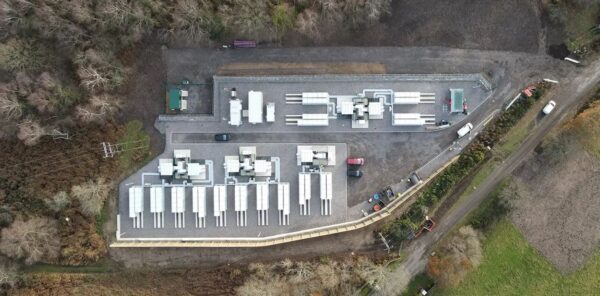
In a strategic diversification move, ACME Solar won its first standalone battery energy storage system (BESS) projects totalling 550 MWh, contracted with NHPC at a weighted average tariff of ₹2.20 lakh per MW per month. Additionally, it has placed orders for over 3.1 GWh of BESS from global energy system suppliers including Zhejiang Narada and Trina Energy.
The renewable energy firm also signed power purchase agreements for 250 MW of firm and dispatchable renewable energy (FDRE) and 300 MW of solar capacity. More than 55 percent of its under-construction capacity is now PPA-backed, giving clear earnings visibility and making ACME Solar one of the few Indian developers with an integrated solar, wind, and storage portfolio. Its total under-construction pipeline stands at 4,080 MW of capacity plus 550 MWh of standalone BESS.
How have debt refinancing and credit rating upgrades impacted ACME Solar’s cost of capital and investor sentiment?
ACME Solar successfully refinanced ₹1,072 crore of debt for its 250 MW operational project in Rajasthan at a fixed interest rate of approximately 8.5 percent for five years. The refinancing, which brought in new lenders including Standard Chartered Bank, Bank of America, and India Infradebt Limited, reduced the project’s interest cost by around 95 basis points.
In parallel, credit rating agencies raised the company’s project ratings, with four SECI ISTS solar projects upgraded to CRISIL AA-/Stable and Acme Aklera 250 MW receiving an ICRA A+/Stable rating. Institutional investors view these developments positively, as they indicate strengthening financial stability and lower funding costs for upcoming capacity expansions.
How do operational efficiency indicators such as CUF and plant availability reflect execution strength in FY26?
The company generated 1,636 million units (MUs) of electricity in Q1 FY26, a 107.1 percent jump from the previous year, driven by both capacity additions and improved utilization. The capacity utilization factor (CUF) rose to 28.5 percent, compared to 27 percent in Q1 FY25.
Rajasthan-based operational assets, which account for a significant portion of the capacity, delivered an average CUF of 30.3 percent. Plant availability and grid availability remained robust at 99.4 percent and 98.7 percent respectively. These operational improvements underscore ACME Solar’s execution efficiency, a point repeatedly highlighted by institutional investors tracking India’s renewable energy sector.
What is the market and institutional outlook on ACME Solar’s medium-term growth amid hybrid renewable and storage expansion?
Market commentators view the Q1 FY26 performance as a turning point for ACME Solar, reinforcing its position as a top renewable energy independent power producer in India. Analysts noted that the combination of hybrid solar-wind projects and large-scale battery energy storage orders would likely enhance grid reliability, attract new offtake agreements, and improve tariff competitiveness.
Institutional investors are also encouraged by the company’s improved credit profile, visible project pipeline, and demonstrated ability to lower financing costs. Expectations are high for continued capacity commissioning, additional PPA signings, and scaled BESS adoption through FY26 and FY27. However, analysts also caution that returns will depend on maintaining high CUF levels, stable regulatory frameworks, and timely execution of the under-construction portfolio.
Discover more from Business-News-Today.com
Subscribe to get the latest posts sent to your email.