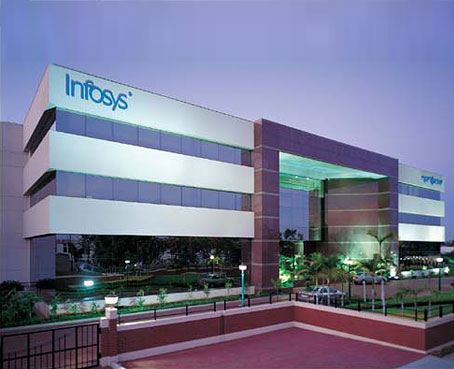
Infosys Limited (NSE: INFY, BSE: INFY, NYSE: INFY) reported a steady performance for the first quarter of FY26, with revenues reaching $4,941 million (₹42,279 crore), reflecting a year-on-year constant currency growth of 3.8% and sequential growth of 2.6%. The operating margin stood firm at 20.8%, while free cash flow generation remained strong at $884 million (₹7,533 crore), representing 109.3% of net profit. The large deal total contract value (TCV) was $3.8 billion, of which 55% was net new, signaling the company’s sustained relevance in vendor consolidation plays.
Chief Executive Officer and Managing Director Salil Parekh underscored the performance as evidence of Infosys’ “strength of enterprise AI capabilities” and emphasized the growing role of client consolidation in driving deal wins. Chief Financial Officer Jayesh Sanghrajka highlighted the resilience of margins despite market uncertainties, crediting the continued execution of Project Maximus, a strategic cost optimization and reinvestment initiative.
How does Infosys’ Q1 performance reflect its AI positioning and client consolidation advantage in a slowing IT spending environment?
In an industry where discretionary technology spending remains subdued, Infosys’ sequential revenue growth of 2.6% in constant currency has been regarded as impressive by institutional investors tracking IT services. Analysts point to Infosys’ differentiated enterprise AI offerings—anchored by its Topaz AI suite—as a key factor in winning large transformation programs, particularly in banking, energy, and retail verticals.
Institutional sentiment appears cautiously optimistic, with investors citing the $3.8 billion in large deal TCV as a strong indicator of future revenue visibility. More than half of this pipeline comprises new deals, reinforcing Infosys’ competitive edge in multi-year digital transformation contracts. The emphasis on AI adoption, integrated cloud services, and hybrid IT operations is reportedly helping the company secure vendor consolidation mandates where clients are reducing the number of IT partners.
Parekh’s commentary highlighted that enterprise clients increasingly seek to consolidate technology spending with fewer strategic partners capable of delivering AI-enabled business outcomes. This consolidation advantage, combined with Infosys’ global delivery scale, is expected to help the company navigate headwinds in discretionary IT spending through FY26.
What do Infosys’ financial metrics indicate about operational resilience and investor sentiment going into FY26?
Infosys’ Q1 financials reflected a mix of stability and cautious optimism. The operating margin of 20.8%—though down 0.3 percentage points year-on-year and 0.2 percentage points sequentially—remained well within the company’s stated guidance of 20% to 22%. Analysts observed that maintaining this margin level in a competitive pricing environment suggests effective cost discipline, aided by ongoing automation, resource utilization optimization, and currency hedging strategies.
The return on equity (ROE) improved by 140 basis points to 30.4%, a metric that institutional investors consider a strong indicator of capital efficiency. Free cash flow, at $884 million, represented a decline of 19.2% year-on-year; however, the cash flow conversion ratio of over 109% of net profit reinforced investor confidence in the company’s ability to sustain shareholder returns.
Earnings per share rose 8.6% year-on-year to ₹16.70, signaling stable profitability despite modest revenue growth. According to fund managers tracking the stock, this EPS growth is consistent with Infosys’ historical dividend payouts and buyback programs, adding to its appeal as a defensive play within the Indian IT services sector.
What does Infosys’ balance sheet reveal about its financial health and investment capacity for future growth?
The Q1 balance sheet under International Financial Reporting Standards (IFRS) highlighted robust liquidity and a strong capital structure. Cash and cash equivalents increased to $3.2 billion (₹27,459 crore) from $2.86 billion in the previous quarter, reflecting disciplined cash management. Trade receivables stood at $3.78 billion (₹32,414 crore), slightly higher than the previous quarter, aligning with the sequential revenue growth trend.
Current liabilities were stable at $5.15 billion (₹44,204 crore), while total equity attributable to equity holders stood at $11.07 billion (₹94,954 crore). The company’s low leverage remains a strategic advantage, giving it ample headroom to pursue inorganic growth opportunities, particularly in AI-driven and cloud-native consulting firms. Analysts believe this strong balance sheet positions Infosys to continue selective acquisitions that can enhance its digital and AI-led capabilities, an area increasingly critical for staying competitive against peers like Tata Consultancy Services and Accenture.
Institutional investors also noted that Infosys’ proactive currency hedging has mitigated volatility in cash flow, a factor that continues to support stable quarterly dividends and share buybacks.
How critical are Infosys’ recent client wins in shaping its revenue visibility for FY26 and beyond?
Infosys’ strategic collaborations during the quarter underscored its positioning as a trusted partner for long-term digital transformation. The extended collaboration with Select Portfolio Servicing, Inc. is focused on leveraging Infosys Topaz for AI adoption across enterprise functions, while partnerships with AIB and DNB Bank ASA aim to accelerate core banking modernization and digital customer experience initiatives.
Energy-sector collaborations, such as with E.ON, highlight Infosys’ expanding footprint in AI-powered digital workplace transformation. Analysts tracking the sector noted that deals in energy and utilities often carry long-term managed services revenue streams, providing annuity-style income that strengthens revenue predictability.
Infosys Finacle continued to win strategic deals, including with Bank of Sydney, which is upgrading its core and digital banking platform to capture deposit growth. The expansion of Infosys BPM’s intelligent automation solutions, such as AI agents for invoice processing, was viewed positively by investors as a step toward scaling AI-based managed services offerings with higher margins.
These wins, spread across financial services, energy, retail, and telecommunications, align with analysts’ expectations of diversified sectoral revenue streams that can offset softness in discretionary IT budgets.
What does Infosys’ updated FY26 guidance reveal about its outlook in a competitive IT services market?
Infosys has retained its FY26 revenue growth guidance at 1% to 3% in constant currency and reiterated its operating margin forecast of 20% to 22%. This cautious revenue outlook reflects management’s conservative stance amid persistent macroeconomic uncertainty and tightening IT budgets across key markets such as the United States and Europe.
However, institutional sentiment remains moderately positive, with analysts pointing out that Infosys’ focus on large deal ramp-ups and cost optimization could allow it to perform toward the higher end of its revenue guidance by H2 FY26. Investors also expect that the strong annuity pipeline from managed services and vendor consolidation contracts will provide downside protection even if discretionary spending remains subdued.
The market will closely watch whether Infosys can sustain its deal momentum and translate its AI-led narrative into accelerated revenue growth. Analysts believe that scaling Topaz and other AI-first platforms across clients will be a key determinant of whether Infosys can expand beyond the lower end of its growth guidance in FY26.
Discover more from Business-News-Today.com
Subscribe to get the latest posts sent to your email.