




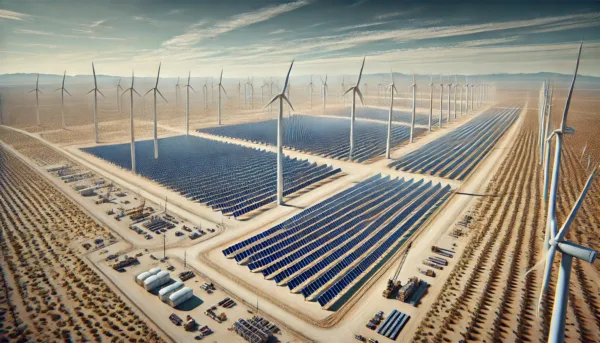
La Caisse de dépôt et placement du Québec (La Caisse) has finalized the CAD 10 billion acquisition of Innergex Renewable Energy Inc. (TSX: INE), officially transitioning the Québec-based renewable energy developer into private ownership. Announced on July 21, 2025, the transaction represents one of the largest renewable energy privatizations in Canada and mobilizes a syndicate of domestic and international investors to support long-term sustainable growth. The move removes Innergex from public market volatility, positioning the clean energy developer to accelerate large-scale project execution in Canada, the United States, France, and Chile.
What does La Caisse’s privatization of Innergex indicate about long-term investor confidence in renewable energy infrastructure?
La Caisse, formerly known as CDPQ, retains majority ownership in Innergex while syndicating approximately 20 percent of its capital to aligned institutional investors. Key participants include Investissement Québec, Desjardins Global Asset Management, Fondaction, and 14 Swiss institutional investors. This diverse syndicate underscores growing investor appetite for long-duration renewable infrastructure assets that provide stable cash flows and strong ESG credentials.
Emmanuel Jaclot, Executive Vice-President and Head of Infrastructure at La Caisse, stated that Innergex required long-term aligned shareholders insulated from quarterly market cycles. He emphasized that privatization provides increased financial agility to scale projects, reflecting both Innergex’s growth potential and Québec’s leadership in the global energy transition. Michel Letellier, President and Chief Executive Officer of Innergex, highlighted that working with like-minded partners would allow the company to accelerate renewable energy deployment with greater ambition and operational flexibility.
How has Innergex’s financial and operational track record contributed to this strategic acquisition?
Innergex operates approximately 92 renewable energy facilities, spanning hydroelectric, wind, solar, and battery storage assets, with a combined net capacity nearing 4 GW. The clean energy developer has an additional 915 MW under development and a total project pipeline exceeding 10 GW. Historically, Innergex has expanded aggressively, including the USD 1.1 billion acquisition of Alterra Power in 2018 and subsequent growth in Latin America through Chilean partnerships initiated in 2022.
Financially, Innergex has delivered consistent growth, with adjusted EBITDA increasing 30 percent year over year in late 2023 and projected to reach between CAD 725 million and CAD 775 million for 2024. This performance demonstrates its ability to self-finance new projects while maintaining disciplined leverage levels, a critical factor in attracting institutional capital.
The acquisition was executed at CAD 13.75 per common share and CAD 25 per preferred share, offering a significant premium to public investors. Convertible debentures carrying 4.65 percent interest were fully redeemed, marking a clean exit for public market shareholders. Innergex’s shares were delisted from the Toronto Stock Exchange on July 22, 2025, officially completing its transition to private ownership.
What are analysts and institutional investors signaling about the impact of this deal on Innergex’s growth outlook?
Institutional investors view the transaction as a strong endorsement of renewable infrastructure as a defensive, income-generating asset class. Analysts suggest that private ownership will enable Innergex to reallocate capital more efficiently, fast-track permitting, and optimize cost structures. The syndicate’s composition—dominated by Québec-based financial institutions yet inclusive of 14 Swiss investors—signals both regional commitment and international recognition of Innergex’s growth potential.
Investor sentiment remains broadly positive, particularly given the company’s strong project pipeline and proven operational expertise. Institutional investors anticipate that Innergex will leverage La Caisse’s extensive infrastructure portfolio to unlock new joint ventures and pursue larger-scale developments, including utility-scale battery storage and hybrid renewable plants.
How will privatization influence Innergex’s capital allocation and project development strategy over the next few years?
By moving away from the public markets, Innergex gains the ability to adopt longer investment horizons for high-capex renewable projects. According to La Caisse executives, private ownership provides protection from short-term earnings pressures, enabling a sharper focus on long-term value creation.
The company’s immediate priority is to transition its 915 MW of in-progress projects to commercial operation while securing financing for additional pipeline assets. Analysts expect that Innergex will pursue asset recycling—selling mature, cash-generating assets to fund early-stage developments—and expand green bond issuance under private ownership. There is also growing anticipation around Innergex’s increased participation in North American and European energy storage markets, which require significant upfront capital but promise higher long-term margins.
Michel Letellier emphasized that this strategic shift will allow Innergex to remain agile in its global expansion, particularly in regions with supportive renewable energy policies, such as the United States and select European markets.
What broader trends in renewable energy finance does this transaction highlight, and what risks remain for Innergex?
The acquisition reflects a broader industry trend where infrastructure-focused institutional investors are taking private control of renewable platforms to avoid public market volatility and enable faster decision-making. Similar privatizations have been observed globally as investors seek direct exposure to utility-scale renewables. Québec’s prominent role in syndicating both regional and international capital for this transaction highlights how public pension funds are driving energy transition finance.
However, risks remain. Medium and large-scale hydroelectric projects, which form a significant part of Innergex’s portfolio, face lengthy permitting processes and environmental regulatory challenges. In addition, while private ownership provides capital flexibility, it also limits transparency and could constrain access to public debt markets if future financing needs outpace current syndicate commitments.
What is the future outlook for Innergex as it enters its next growth phase under private ownership?
Analysts anticipate that Innergex will accelerate the commissioning of its 915 MW under development, targeting full operationalization within the next 24 to 36 months. Its broader 10 GW pipeline will likely advance through strategic partnerships and green infrastructure financing initiatives.
Institutional sentiment points to a focus on integrating battery storage with renewable generation, a trend gaining momentum across North America and Europe. As global competition for renewable assets intensifies, Innergex’s strong provincial backing and proven operational capabilities could position it as a preferred partner for joint ventures and government-backed energy transition programs.
The successful execution of these strategies will determine whether Innergex Renewable Energy Inc. can evolve from a leading Canadian renewable developer into a truly global clean energy platform. Analysts believe that achieving this ambition will depend on its ability to balance aggressive international expansion with the preservation of its strong Québec identity, which remains central to its brand and institutional appeal. Maintaining this balance will be critical as Innergex seeks to leverage La Caisse de dépôt et placement du Québec’s extensive infrastructure expertise and diversified asset portfolio to secure new joint ventures, long-term power purchase agreements, and large-scale project financing.
The company’s ability to integrate hydroelectric, wind, solar, and battery storage assets into commercially viable hybrid renewable projects could become a key differentiator in the competitive clean energy landscape. Institutional investors expect Innergex to prioritize high-quality, cash-yielding assets in North America and Europe while selectively entering emerging markets where policy frameworks support renewable energy development. Stable, long-term returns will depend on disciplined capital allocation, the timely commissioning of its 915 MW under-development projects, and continued operational excellence in managing its existing 4 GW portfolio. If successfully executed, this strategy could position Innergex as not only a global renewable energy leader but also a benchmark for how Québec-based infrastructure investors can drive sustainable growth in the global energy transition.
Discover more from Business-News-Today.com
Subscribe to get the latest posts sent to your email.



