


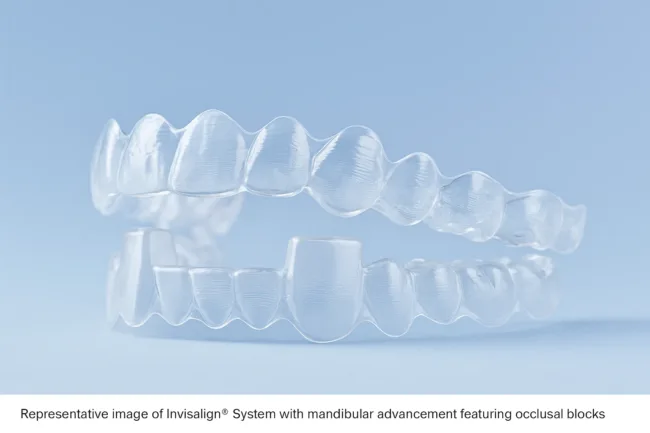
Tempe, Arizona – Align Technology, Inc. (Nasdaq: ALGN) has commercially launched its Invisalign® system with mandibular advancement featuring occlusal blocks in Singapore as of July 22, 2025. This marks a major expansion of the orthodontic innovator’s Class II treatment portfolio, targeting growing patients aged 10–16 with skeletal Class II malocclusion. The clear aligner integrates solid occlusal blocks to advance the lower jaw while simultaneously straightening teeth, representing a shift toward single-appliance skeletal and dental correction. The American medical device manufacturer began its Asia-Pacific rollout in Singapore and has already introduced the system in India, Australia, New Zealand, Japan, and Hong Kong, with additional markets expected to follow later in 2025.
Class II malocclusion, where the lower jaw is positioned posterior to the upper jaw, accounts for an estimated 30–45 percent of orthodontic cases globally. Untreated, the condition can lead to functional issues, aesthetic concerns, and long-term bite complications. Traditionally, orthodontists relied on separate functional appliances before moving patients to braces or clear aligners. This innovation aims to replace multiple appliances with a single, integrated solution.
How is the Invisalign system with mandibular advancement designed to address Class II malocclusion while aligning teeth simultaneously?
The Invisalign system with mandibular advancement featuring occlusal blocks is engineered to advance the mandible earlier in the treatment cycle. Solid, laser-welded occlusal blocks made of patented SmartTrack™ material provide structural rigidity during vertical opening, which is critical for deep-bite and Division 2 Class II cases. This allows practitioners to begin mandibular advancement without a lengthy pre-mandibular advancement phase, improving treatment efficiency for younger patients.
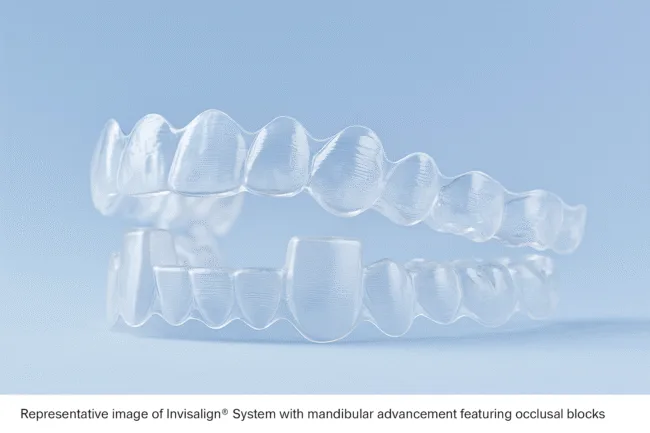
The system integrates SmartForce™ and SmartStage™ technologies to deliver controlled and predictable tooth movement. Align Technology has also allowed attachments to be placed on teeth beneath the occlusal blocks to facilitate leveling or prevent unwanted tooth movements, which has not been possible in many conventional functional appliances. The SmartTrack™ material, previously validated for improved comfort and compliance, aims to reduce treatment dropouts that have historically limited success rates in functional appliances.
Why is Align Technology expanding its Class II clear aligner portfolio across Asia-Pacific now?
The timing of the Asia-Pacific launch reflects Align Technology’s long-term strategy to dominate early orthodontic interventions. Over recent years, the company has developed a continuum of pediatric-focused products, including Invisalign First™ and the Invisalign Palatal Expander System. Adding mandibular advancement completes its Class II toolkit, enabling orthodontists to treat skeletal discrepancies, deep bites, and dental alignment issues with a single clear aligner system.
The Asia-Pacific region is a natural choice for rollout, given its large teenage population and rising demand for aesthetic orthodontic solutions. Markets like India and Singapore have seen double-digit growth in clear aligner adoption over the last three years, creating a ripe opportunity for early-intervention products. By targeting these markets first, Align Technology aims to secure long-term brand loyalty among practitioners and patients transitioning from pediatric to adult orthodontic care.
What do analysts and institutional investors think about the impact of this innovation on Align Technology’s market positioning?
Institutional investors have reacted positively to the launch, viewing it as a key differentiator in the competitive clear aligner segment. Analysts suggest that integrating skeletal correction into clear aligners may expand Align Technology’s addressable market significantly, particularly in the teenage demographic where Class II malocclusion is prevalent.
Financially, Align Technology generated approximately USD 4.0 billion in revenue for 2024, up 3.5 percent year over year, though net income slipped slightly to USD 421 million. As of July 21, 2025, its stock closed at USD 189.02, trading about 25 percent below its 52-week high of USD 262.87. However, 13 analysts currently maintain a “Buy” rating with a 12-month average price target of USD 239.33, implying a potential 27 percent upside. Some institutional investors remain cautious due to competitive pressures and macroeconomic headwinds but acknowledge that the mandibular advancement system could accelerate adoption among orthodontists treating adolescents.
Shortly after the launch announcement, shares posted a modest after-hours rally of 3.1 percent, signaling improved investor sentiment despite a generally volatile broader market.
When are investors likely to see the commercial impact of the mandibular advancement system on Align Technology’s financial performance?
Analysts expect early indications of adoption to appear in Align Technology’s second-quarter 2025 earnings report, scheduled for release on July 30, 2025. Key metrics to watch include the conversion rate of growing-patient appointments and the attachment rate of the mandibular advancement system in treatment plans.
The expansion in Asia-Pacific markets is projected to contribute to mid-single-digit revenue growth over the next two quarters, supported by higher-margin digital workflows. Cross-selling opportunities with the company’s iTero™ intraoral scanners and exocad™ CAD/CAM software are also expected to provide recurring revenue benefits. Institutional sentiment suggests that successful uptake in Q2 and Q3 results could lead to upward revisions in price targets.
What does this launch mean for Align Technology’s long-term orthodontic platform strategy?
The launch demonstrates Align Technology’s commitment to building a full-spectrum, digital-first orthodontic platform. By enabling skeletal corrections within the Invisalign system, the company is positioning itself as a one-stop solution for early and complex orthodontic cases. This innovation may reduce orthodontists’ reliance on traditional multi-appliance workflows, aligning with the broader industry shift toward digital precision dentistry.
Analysts have noted that integrating skeletal correction into aligners may also help increase practitioner retention rates. Doctors who adopt Invisalign for growing patients may be more likely to continue using Align Technology products for adult cases, creating a stickier customer base across treatment stages.
What are the challenges or limitations that could affect widespread adoption of the mandibular advancement system?
Despite its promise, the system is not a universal solution for all Class II malocclusions. Severe crossbite cases may still require a pre-mandibular advancement phase, limiting its applicability in certain clinical scenarios. Additionally, Align Technology acknowledges that attachments placed under occlusal blocks may need to be removed in some cases to avoid interference with tooth movement.
Training requirements could also pose a short-term barrier. Orthodontists accustomed to traditional functional appliances may need additional certification to integrate the new system effectively. Price sensitivity in emerging Asia-Pacific markets is another factor that could slow adoption, as advanced clear aligner treatments often carry a higher cost compared to conventional braces.
What is the expected timeline for broader regional rollouts and additional product filings?
The system is already available in Singapore, India, Australia, New Zealand, Japan, and Hong Kong, with additional Asia-Pacific markets planned for later in 2025. Align Technology is also expected to file for regulatory approvals in Europe and North America by late 2025 or early 2026. Analysts believe that further geographic expansion, combined with digital orthodontic education initiatives, will be critical to sustaining growth momentum.
How does this innovation shape Align Technology’s future growth trajectory?
Align Technology’s introduction of the mandibular advancement system represents a pivotal moment in its orthodontic expansion strategy. By addressing skeletal and dental malocclusions simultaneously in growing patients, the clear aligner developer has effectively moved into a new segment of orthodontics traditionally dominated by braces and functional appliances.
With USD 4 billion in annual revenue, strong recurring income from digital services, and supportive analyst forecasts, the company appears well-positioned for sustained growth. However, execution risks remain, including practitioner training, regional reimbursement variations, and broader macroeconomic headwinds.
If adoption rates meet or exceed expectations in the coming quarters, Align Technology could solidify its leadership in digital orthodontics, paving the way for additional innovations in early-intervention treatment and possibly expanding its presence in adjacent dental care segments.
Discover more from Business-News-Today.com
Subscribe to get the latest posts sent to your email.