



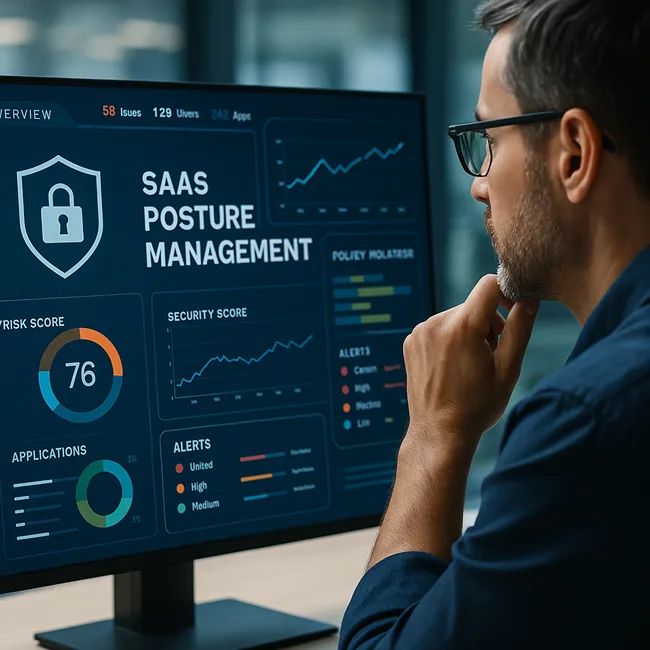
In 2025, SaaS posture management (SSPM) platforms are emerging as critical tools for enterprises navigating complex regulatory and risk environments. Triggered by a wave of SaaS breaches and rising compliance demands, organizations are seeking continuous visibility into OAuth permissions, API scopes, and cross-application data flows. Platforms like AppOmni, Obsidian Security, and Adaptive Shield are no longer niche security add-ons; they are fast becoming mandatory for cloud risk auditing across finance, healthcare, and public sector verticals.
Analysts note that this momentum builds on the identity-centric trends of recent zero-trust adoption. With regulations like the U.S. Executive Order 14028, FedRAMP High baseline updates, and the EU’s Digital Operational Resilience Act (DORA) imposing strict SaaS auditing and reporting requirements, SSPM solutions are becoming central to proving compliance and preventing misconfigurations from turning into breaches.
Why are SaaS posture management platforms becoming indispensable for cloud risk auditing in 2025?
Enterprises are expanding their SaaS ecosystems at unprecedented rates, with typical organizations now running more than 150 cloud applications across departments. Manual risk assessments, once performed quarterly, cannot keep pace with the dynamic nature of OAuth token issuance, app integrations, and permission changes. High-profile incidents like the Microsoft Entra ID nOAuth vulnerability and Commvault’s Metallic breach have shown how mismanaged SaaS access can cascade into systemic compromises.
SSPM platforms address this challenge by automating posture assessments and providing continuous monitoring of SaaS configurations. These platforms scan for excessive privileges, unmonitored third-party integrations, and dormant accounts, alerting security and compliance teams in real time. Analysts say this capability is shifting risk auditing from a reactive to a preventive exercise, enabling organizations to identify and remediate exposures before attackers exploit them.
What compliance and regulatory pressures are driving SSPM adoption among enterprises in 2025?
Regulatory frameworks are a key driver of SSPM adoption. In the United States, the latest FedRAMP updates and the Cybersecurity and Infrastructure Security Agency’s SaaS risk guidelines now emphasize continuous posture monitoring and automated audit trails for SaaS applications. Executive Order 14028 requires government vendors to provide evidence of SaaS configuration baselines and incident response readiness.
In Europe, DORA mandates that financial institutions implement real-time risk management for third-party software providers, including SaaS vendors, with detailed reporting requirements. Analysts report that SaaS vendors lacking SSPM controls are being flagged during procurement reviews, causing delays or exclusions from lucrative public-sector contracts.
Cyber insurers are also adjusting premiums based on SSPM adoption. Firms that can provide continuous audit logs and automated misconfiguration remediation are securing better rates, while those relying on manual checks face stricter underwriting terms.
How do SSPM platforms enhance visibility and control compared to traditional security tools?
Traditional SaaS security assessments depend heavily on manual checks or static scans, which often miss changes occurring between audits. SSPM platforms operate continuously, mapping every connected app, API token, and OAuth permission to establish a baseline of normal behavior. When deviations occur—such as a new third-party integration with privileged read/write access or a dormant app reactivated unexpectedly—the system flags the anomaly for investigation or auto-remediation.
Platforms like AppOmni and Obsidian Security offer granular visibility into application-to-application communications, a layer often ignored by conventional cloud access security brokers (CASBs). Adaptive Shield’s latest updates integrate with identity providers like Okta and Microsoft Entra ID to enforce least-privilege policies automatically, reducing the window of exposure when risky changes are detected.
This shift toward automated, context-aware posture management enables organizations to replace periodic spreadsheet-based audits with near real-time compliance dashboards, dramatically reducing risk visibility gaps.
What role are institutional investors and insurers playing in accelerating SSPM adoption?
Institutional investors increasingly view SSPM adoption as a proxy for SaaS security maturity, particularly in heavily regulated industries. Venture capital and private equity firms conducting due diligence on SaaS vendors are now requesting SSPM-generated posture reports before finalizing deals. Red flags such as unmanaged integrations, unrevoked service accounts, and absent OAuth app policies can reduce valuation or delay acquisitions.
Cyber insurance providers have also started explicitly asking for SSPM deployment evidence as part of policy renewals. Analysts report that organizations demonstrating automated SaaS configuration monitoring can reduce premiums by as much as 20%, given the significant drop in claims associated with misconfigurations and unauthorized app access.
This institutional pressure is accelerating SSPM penetration beyond traditional early adopters, pushing mid-market and even smaller enterprises to prioritize posture management investments.
What future developments are expected in SSPM and SaaS risk auditing through 2026?
Experts predict SSPM platforms will evolve from configuration checkers to integrated compliance engines. By 2026, analysts expect SSPM solutions to merge with identity threat detection and response (ITDR) and cloud-native application protection platforms (CNAPPs), offering unified visibility across identity, application, and infrastructure layers.
Continuous attestation—proving in real time that SaaS configurations remain compliant with internal and external policies—is expected to become a procurement baseline for high-value government and financial sector contracts. SSPM vendors are also working on predictive analytics, using machine learning to forecast risk based on historical misconfiguration patterns.
Investors anticipate a wave of consolidation in the SSPM space, with larger cybersecurity vendors acquiring niche players to build end-to-end cloud risk auditing suites. AppOmni and Obsidian Security are frequently cited as likely targets for larger CNAPP or extended detection and response (XDR) platforms looking to integrate posture data into broader security workflows.
In 2025, SaaS posture management platforms have evolved from being optional security add-ons to becoming an operational necessity for organizations navigating complex multi-cloud ecosystems. Enterprises can no longer rely on manual audits or quarterly risk assessments when SaaS applications change daily, with new integrations, API tokens, and third-party apps being added to business-critical workflows. Analysts emphasize that posture management now functions as the first line of defense against misconfigurations that attackers frequently exploit in identity-driven breaches.
The shift is being accelerated by regulatory, financial, and market forces. Mandates under FedRAMP, Executive Order 14028, and the EU’s Digital Operational Resilience Act (DORA) increasingly require continuous monitoring of SaaS configurations, real-time audit logs, and evidence of least-privilege enforcement. Organizations that cannot demonstrate ongoing posture validation face delayed contract approvals or outright exclusion from public-sector procurement processes. In parallel, cyber insurance providers are linking policy premiums and coverage limits directly to SSPM adoption, rewarding firms that can document automated risk remediation.
Investor sentiment is reinforcing the trend. Institutional investors and private equity firms are scrutinizing SaaS identity hygiene during due diligence, with posture mismanagement now considered a material risk factor that can depress valuations or trigger deal delays. Companies deploying SSPM tools are signaling stronger operational maturity, faster regulatory approvals, and lower incident response costs—attributes that resonate with investors seeking long-term stability.
From a competitive standpoint, SSPM platforms are reshaping how trust is built in regulated markets. In sectors such as finance, healthcare, and government contracting, demonstrating a hardened SaaS security posture has become a differentiator for winning high-value contracts. Enterprises that can provide posture dashboards and real-time compliance attestations during vendor assessments are already gaining a measurable edge over competitors who depend on static, spreadsheet-based audits.
Looking forward, analysts predict that posture management will move beyond configuration monitoring into predictive risk analytics by 2026. SSPM vendors are developing machine learning models that can forecast likely misconfigurations based on integration trends and user behavior patterns, enabling security teams to preemptively fix issues before they materialize. As these capabilities mature, SSPM will no longer be viewed merely as a compliance tool but as a strategic enabler for secure digital transformation.
The message for CISOs and compliance leaders is clear: SSPM adoption is no longer a box-ticking exercise but a core component of zero-trust SaaS architecture. Enterprises that embed continuous posture management into their security fabric today are not just reducing risk—they are building credibility, resilience, and competitive leverage in markets where trust and auditability are paramount.
Discover more from Business-News-Today.com
Subscribe to get the latest posts sent to your email.


