






In a strategic push that could redefine the global smart home landscape, Heungkong Group and Tantron Group (TTG) have jointly launched the world’s first interoperable, multi-protocol, and multi-scenario full-link smart home ecosystem. This landmark announcement was made at the Global Smart Ecosystem Summit (GSES) in Guangzhou on July 8, 2025, with participation from over 20 global heritage brands and backing from international political and academic figures. This unveiling signals China’s emergence as a smart home innovation leader and marks a pivotal shift in how smart living technologies will integrate across brands, devices, and geographies.
What makes the Guangzhou full-link smart home ecosystem different from existing fragmented solutions globally?
Historically, the smart home industry has been plagued by fragmented protocols and compatibility constraints. Individual brands developed siloed platforms that limited cross-device functionality and frustrated consumers. Now, the Guangzhou-based innovation bridges major communication protocols—Matter, Power Line Communication (PLC), and Zigbee—into a seamless full-link framework through TTG’s Universal Gateway technology.
This new platform enables real-time, brand-agnostic device interoperability for the first time. TTG founder Yao Minghai described the ecosystem as a “polyglot translator” for smart devices, allowing appliances from different manufacturers to “speak” and function together, regardless of their native communication standards. Tan Jianrong of the Chinese Academy of Engineering likened this leap to the evolution from feature phones to smartphones—shifting intelligence from isolated nodes to a unified ecosystem level.
How does the Heungkong No.1 project deliver on multi-brand and full-lifecycle smart living experiences?
At the center of this ecosystem is the Heungkong No.1 demonstration project, which formalizes the world’s first real-world deployment of cross-brand, scenario-driven smart living. The initiative integrates German industrial engineering, Swiss precision design, and Chinese AI capabilities into a full-lifecycle platform for residential automation. This includes installation, user onboarding, predictive maintenance, and AI self-learning functionalities that adjust to lifestyle changes over time.
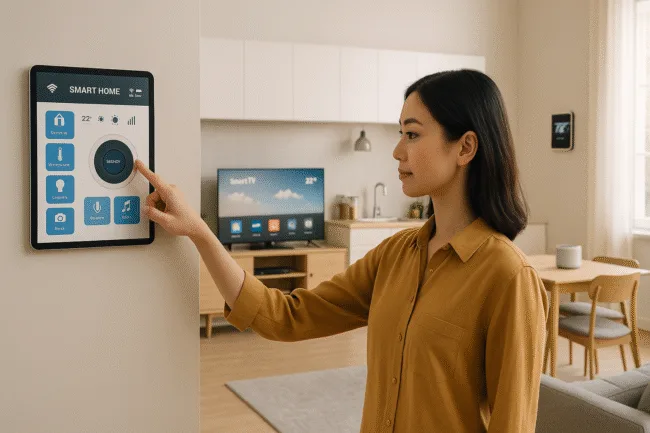
Mei Hing Chak, Chairwoman of Heungkong Group, emphasized the philosophical foundation of the initiative, stating, “We’ve combined German Industrie 4.0 precision, Swiss craftsmanship, and Chinese innovation to create a new future for smart living.” The project offers end-to-end integration with multiple global brands, including a milestone announcement from Germany’s Gaggenau and Switzerland’s V-ZUG to join the Heungkong No.1 protocol, marking their first full-link integration initiatives globally.
Why are global luxury brands endorsing this China-led smart home ecosystem standard?
The summit in Guangzhou drew broad international support, with brand leaders and policymakers embracing the open standards and cooperative model proposed by Heungkong Group and TTG. Former Belgian Prime Minister Yves Leterme and former Croatian President Kolinda Grabar-Kitarović were among high-profile endorsers. In a virtual keynote, Grabar-Kitarović called the ecosystem not merely a commercial achievement but a “civilizational evolution” in applying technological intelligence for human wellbeing.
Swiss appliance giant V-ZUG began weekly technical exchanges with Chinese partners—a first in the company’s history—while Nordic manufacturer ASKO described the collaboration as a convergence of “Nordic engineering and next-generation Chinese platform design.” Panasonic also joined the alliance, reinforcing pan-Asian alignment on ecosystem development.
A formal Global Joint Initiative on Full-Link Smart Home Ecosystems was unveiled at the summit, signed by more than 20 brands. The consensus framework outlines 10 governance principles for smart home development, covering device interoperability, user data ownership, environmental sustainability, and AI ethics.
How does the new smart ecosystem address ethical concerns around AI, transparency, and user control?
Heungkong Group and TTG’s initiative doesn’t just focus on device integration; it also embeds ethical AI governance. The protocol ensures data transparency, controllability, and explainability—three pillars endorsed by Professor Jin Sheng, a leading authority on AI ethics. These features enable consumers to understand and control how their smart environments behave and adapt, reducing the black-box nature of legacy AI-driven systems.
Institutional sentiment suggests this ethics-led approach enhances investor and policymaker confidence in the long-term viability of Heungkong’s model. Analysts see potential for rapid policy adoption of the Global Smart Ecosystem Initiative, especially as Western countries grapple with disjointed regulatory frameworks for AI and IoT interoperability.
How are analysts and institutional players reacting to China’s new leadership role in smart home standards?
Institutional sentiment is notably bullish. Analysts interpret the Heungkong–Tantron framework as a disruptive alternative to American and European fragmented standards. While Silicon Valley players focus on vertical ecosystems, China’s model now champions horizontal integration. This ecosystem strategy could shift market leadership from platform dominance to cooperative standard-setting—a move many global institutional investors view as de-risking.
The participation of brands like Gaggenau, V-ZUG, and Panasonic also validates the initiative’s commercial credibility. By showcasing full-link, cross-brand demos live in Guangzhou, these manufacturers have effectively endorsed the engineering feasibility of Heungkong No.1’s Universal Gateway protocol.
According to investor discussions cited at the summit, the Global Smart Ecosystem Initiative may spark cross-border private equity interest, especially in platform enablers and hardware integration layers. Analysts anticipate near-term licensing deals between TTG and smart appliance makers in Europe and Southeast Asia.
What is the global future outlook for full-link smart home adoption after Heungkong’s launch?
The launch of the Guangzhou ecosystem marks a foundational moment in smart home evolution. Experts believe it will catalyze international adoption of interoperability standards and trigger a wave of cross-brand alliances. With the endorsement of global political figures and heritage brand partners, Heungkong Group’s initiative may soon become the de facto reference standard for full-link smart home architecture.
Analysts expect next steps to include cross-border pilot programs, regulatory adoption discussions in the EU, and joint R&D centers across Asia and Europe. The future trajectory also likely involves expansion into commercial real estate and hospitality automation, as the same interoperability issues apply to hotels, office buildings, and healthcare environments.
The AI self-learning component of Heungkong No.1 could play a key role in personalized energy efficiency, aging-in-place solutions, and real-time diagnostics for home systems—an area that institutional investors believe will attract ESG-aligned capital.
Discover more from Business-News-Today.com
Subscribe to get the latest posts sent to your email.



