



Why are Woodside Energy, Hyundai Engineering, and Hyundai Glovis forming a strategic LNG alliance in 2025?
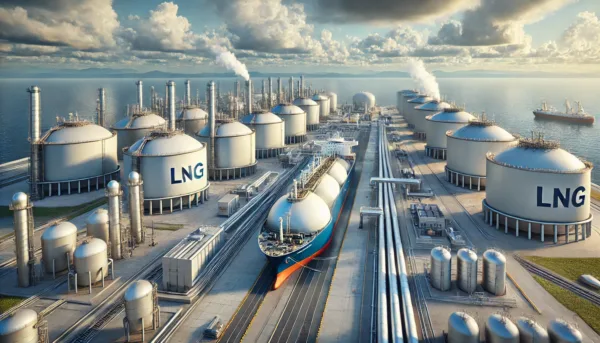
Woodside Energy Group Ltd (ASX: WDS), Hyundai Engineering, and Hyundai Glovis have entered into a non-binding memorandum of understanding (MoU) to pursue collaborative opportunities across the liquefied natural gas (LNG) value chain. Announced on July 9, 2025, this trilateral agreement aims to deepen strategic alignment between Australia’s largest independent LNG producer and two key South Korean industrial giants.
The scope of this collaboration spans LNG project development, engineering services, and maritime logistics. While financial terms have not been disclosed, the announcement signals an intent to jointly address growing LNG demand in the Asia-Pacific region and potentially in select new markets.
According to Woodside’s Executive Vice President and Chief Commercial Officer Mark Abbotsford, the partnership reinforces long-standing ties with Hyundai and builds on complementary strengths in LNG development, construction, and transportation. For Hyundai Engineering and Hyundai Glovis, the move provides expanded international exposure and a foothold in high-quality LNG infrastructure ventures.
How does this MOU align with Asia-Pacific energy demand trends and LNG market expansion?
The agreement emerges at a time when regional gas markets are rebalancing following post-COVID disruptions and renewed energy security concerns. Institutional investors have noted that countries like South Korea, Japan, India, and even Southeast Asian nations are ramping up long-term LNG procurement to hedge against supply volatility.
Woodside’s existing LNG assets—such as the Pluto LNG project and Scarborough development—are strategically positioned to serve these demand hubs. Hyundai Engineering’s extensive engineering, procurement, and construction (EPC) experience across oil, gas, and power generation, combined with Hyundai Glovis’s global shipping reach, creates a vertically integrated value proposition to address end-to-end project delivery.
While the MoU remains non-binding, institutional sentiment suggests that such early-stage collaborations are increasingly common precursors to equity partnerships, engineering tenders, or joint shipping ventures—especially when geopolitical risk and logistics optimization are top of mind.
What do each party stand to gain from this LNG value chain integration strategy?
For Woodside Energy, the collaboration offers enhanced EPC capabilities and potentially preferential access to Hyundai Engineering’s project delivery resources—critical in an environment where skilled labor and infrastructure execution are capacity constrained. It also enables LNG shipping flexibility and resilience via Hyundai Glovis, whose carrier fleet spans both vehicle and LNG segments.
Hyundai Engineering benefits by aligning with a top-tier LNG project owner with deep resource access, proven reserves, and regulatory traction. This gives the South Korean EPC contractor greater relevance in global LNG infrastructure tenders, especially in North America and Australia.
For Hyundai Glovis, the strategic opportunity lies in diversifying its maritime portfolio and capitalizing on LNG as a long-term cargo class. Given its extensive logistics capabilities, including port-to-terminal coordination and specialized vessel operations, this pact could position it as a leading energy shipping service provider beyond traditional automotive logistics.
How does this MOU fit within Woodside Energy’s broader LNG and energy transition strategy?
Woodside has consistently emphasized a dual-track strategy: sustaining its high-margin LNG portfolio while gradually expanding into new energy projects. The LNG developer has ongoing investments in hydrogen, ammonia, and carbon capture, but still sees LNG as a critical “transition fuel” for the next two decades.
Institutional analysts believe that strategic shipping and EPC partnerships, such as this one, are essential to de-risk long-cycle upstream projects and improve downstream deliverability. With tightening financing conditions for fossil fuel infrastructure, integrated alliances help ensure capital discipline while maintaining scale.
Moreover, the addition of a Korean EPC and shipping logistics provider to its partnership matrix enhances Woodside’s positioning in Asian markets where national oil companies, trading houses, and power utilities often seek aligned development and transport contracts.
What signals are institutional investors and energy analysts taking from this agreement?
While the MoU is exploratory and non-binding, institutional investors are treating it as a directional signal of Woodside’s continued LNG commitment. Analysts view the agreement as a likely precursor to formal project-level cooperation, especially for LNG assets where Woodside is seeking off-take agreements, shipping optimization, or cost-sharing through joint development models.
There is also a growing investor narrative that Australian LNG developers must forge tighter ties with Asian industrial players if they are to maintain competitive cost structures and secure firm delivery windows in a tightening global LNG market.
Hyundai Glovis’s involvement is particularly significant, as shipping costs have been a key swing variable in LNG trading margins, especially for short-term contracts. By engaging in co-development talks with logistics providers at the planning stage, developers like Woodside can build more predictable cost models for future delivery obligations.
Could this Woodside–Hyundai LNG collaboration expand into equity or project-specific joint ventures?
While the MoU explicitly stops short of announcing equity participation or binding project involvement, historical precedent suggests that such strategic frameworks often evolve into more defined agreements. Woodside’s earlier partnerships—including with Japan’s Mitsui & Co. and Korea Gas Corporation—have followed a similar trajectory, progressing from non-binding frameworks to equity JV structures over multi-year horizons.
Industry observers believe that if pilot collaborations on EPC or shipping prove operationally efficient and financially attractive, the three parties could formalize a long-term venture around a major upcoming LNG development—particularly those aimed at decarbonized LNG production or integrated gas-to-hydrogen projects.
That said, the next 12–18 months will be critical in testing the durability of this framework, especially as energy policy shifts, interest rates, and capital availability will influence how far and how fast this alliance can be commercialized.
What is the long-term outlook for LNG partnerships like this in the energy transition era?
Looking ahead, the LNG sector is expected to experience both consolidation and deeper supply-chain collaboration as geopolitical fragmentation, shipping bottlenecks, and decarbonization imperatives reshape how projects are financed and delivered.
This MoU may be a harbinger of a new model where upstream developers, EPC firms, and shipping integrators form unified coalitions from the ground up to control timing, pricing, and carbon performance across the full lifecycle of LNG projects.
If executed successfully, the Woodside–Hyundai alignment could serve as a template for dual-continent partnerships, balancing Australian resource security with Korean engineering precision and shipping reliability. In an increasingly volatile energy landscape, such integrative models may become not just preferred—but necessary.
Discover more from Business-News-Today.com
Subscribe to get the latest posts sent to your email.

