





How could The Grove’s zoning approval reshape Henry County’s growth trajectory and real estate dynamics?
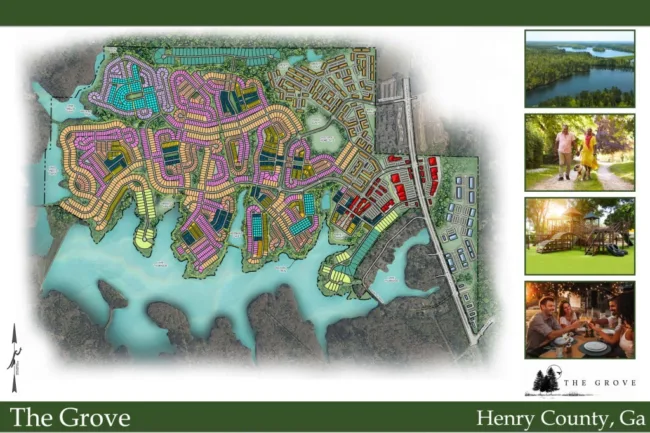
Geosam Capital Inc. has officially secured final zoning and development agreement approval for The Grove, a nearly 1,300-acre master-planned community located in Henry County, Georgia. The approval, granted by the Henry County Board of Commissioners on July 8, 2025, marks the last major regulatory milestone before the Canadian real estate investment group can break ground on one of the largest multi-phase developments in Metro Atlanta history. The project is set to deliver more than 6,000 residential units and approximately 2 million square feet of retail, commercial, and civic infrastructure.
Strategically located just 22 miles from Hartsfield-Jackson Atlanta International Airport and near regional landmarks such as EchoPark Speedway, The Grove is being positioned as a transformative economic and residential engine for the southern Atlanta suburbs. With the zoning hurdle cleared, early-stage construction will begin with critical Georgia Department of Transportation (GDOT) road infrastructure, water and wastewater system enhancements, and the rollout of the first tranche of residential units.
Institutional investors tracking Georgia’s suburban real estate markets have described The Grove as a potential inflection point for Henry County, historically viewed as a secondary growth corridor compared to its northern counterparts in Gwinnett, Cobb, and Forsyth counties. Analysts believe the scale and integrated nature of The Grove project could drive a revaluation of local land assets while creating ripple effects across labor markets, public services, and small business ecosystems.
What mix of residential formats and housing accessibility is The Grove planning to deliver across its 6,000+ units?
The Grove’s master plan outlines a diverse range of residential offerings designed to meet the region’s broadening demographic needs, from first-time buyers to retirees. The plan includes single-family homes, townhouses, multifamily apartments, and active adult communities. This portfolio is expected to attract a blend of workforce residents, move-up buyers, renters, and downsizers, enabling Geosam Capital to address both affordability concerns and lifestyle-driven demand shifts.
The real estate developer emphasized that the project is being structured in phased sub-sections, each designed to align with infrastructure rollouts and absorption rates. By spacing the delivery of these housing segments over multiple years, the development aims to minimize supply shocks while allowing for recalibration based on economic and demographic feedback. Housing market observers suggest that this approach could help reduce volatility in median home prices, especially in the face of rising mortgage rates and fluctuating construction costs.
With Henry County’s population forecasted to grow by more than 20% over the next decade, residential demand for both owned and rental housing is expected to remain elevated. The Grove’s ability to combine density with quality-of-life infrastructure may also attract institutional single-family rental operators, further integrating capital markets into the suburban housing pipeline.
How is Geosam Capital integrating commercial and civic infrastructure into the multi-phase development timeline?
In addition to its expansive residential footprint, The Grove will incorporate approximately 2 million square feet of non-residential space, including commercial, retail, and public amenities. The developer’s vision includes a central commercial core that is designed not just to serve residents but to function as a regional economic magnet. Early site plans suggest mixed-use nodes that will include grocery-anchored retail, hospitality, professional services, healthcare clinics, and small-format office spaces.
Institutional sentiment has been broadly optimistic regarding the viability of these commercial components, especially as remote and hybrid work models continue to decentralize the Metro Atlanta labor force. The proximity to major arterials and the airport increases the site’s potential appeal for logistics, medical, and service-oriented businesses seeking access to a high-growth residential catchment area.
Geosam Capital has also committed to civic and public benefit elements, including the development of 150 acres of dedicated green space, 35 pocket parks, and more than 8 miles of community trails. Public infrastructure investments will be coordinated with the County and the Georgia Department of Transportation, with early stages including key road upgrades and expanded utility service lines. The public-private approach to amenities could bolster community cohesion and support a higher-quality built environment while driving long-term asset values.
What role will infrastructure upgrades and phased zoning play in the project’s risk mitigation strategy?
To de-risk the project over its projected multi-year timeline, Geosam Capital is pursuing a phased development strategy tightly aligned with both infrastructure availability and public service capacity. The initial stages include substantial investment in GDOT-led road improvements, water and wastewater capacity enhancements, and foundational grading.
Local real estate professionals have noted that transportation bottlenecks and school overcrowding are frequently cited concerns in Metro Atlanta’s suburban growth zones. By addressing these issues through upfront infrastructure commitments and municipal coordination, The Grove is positioning itself as a more sustainable model for exurban development. Phased zoning approvals—tied to infrastructure milestones—further enable the developer and regulators to monitor impacts and course-correct if needed.
Additionally, phased project segmentation allows Geosam Capital to respond to broader economic cycles. Should interest rates spike, material costs rise, or housing demand soften, the development can modulate its build pace while preserving long-term optionality. Institutional backers view this flexibility as essential given the capital-intensive nature of large-scale master-planned communities.
How are institutional investors and market observers reacting to the scale and timing of The Grove’s approval?
Following the July 8 announcement, institutional stakeholders across real estate investment trusts (REITs), land banks, and municipal bond markets have expressed strong interest in the project’s implications for Henry County’s valuation trajectory. Although Geosam Capital is privately held and not publicly traded, the project’s scale makes it a relevant benchmark for investment flows into Southeast U.S. real estate markets.
Market watchers highlight that The Grove’s timing coincides with broader macro trends, including a resurgence of suburban migration, persistently high urban housing costs, and infrastructure stimulus programs at the federal and state level. Analysts point out that Metro Atlanta’s Southside has historically underperformed in capital deployment compared to its Northside peers, creating a relative value opportunity for first movers.
Some caution remains, particularly around the risk of overbuilding or community pushback in later phases. However, Geosam Capital’s emphasis on stakeholder engagement, environmental sustainability, and local hiring has helped mitigate political friction. Institutional sentiment remains net positive, with The Grove being viewed as a keystone project that could catalyze follow-on developments across Henry County.
What are the long-term economic, housing, and urban planning implications of The Grove project for Metro Atlanta?
The Grove stands to become a case study in modern exurban master planning, with implications that extend beyond Henry County. If executed to plan, the development could help rebalance Metro Atlanta’s growth by channeling investment and population southward—reducing development pressure on already congested northern counties and potentially lowering regional housing cost inflation.
Urban planners and housing economists believe that the integration of mixed-use formats, mobility enhancements, and environmental design could make The Grove a blueprint for future suburban expansion. The project’s alignment with demographic trends—such as aging households, remote workers, and immigrant family formation—also supports long-term housing resilience.
For Henry County, the benefits could be profound: increased tax base, new jobs, improved transportation connectivity, and elevated brand equity among Metro Atlanta’s outer ring suburbs. Local educational institutions and workforce development agencies may also benefit from proximity to new commercial spaces and higher-income residents, triggering secondary development cycles.
While execution risks remain, particularly in aligning all project phases with market demand, The Grove’s approval marks a structural shift in how suburban Georgia counties may approach long-term growth, infrastructure, and housing equity.
Discover more from Business-News-Today.com
Subscribe to get the latest posts sent to your email.