




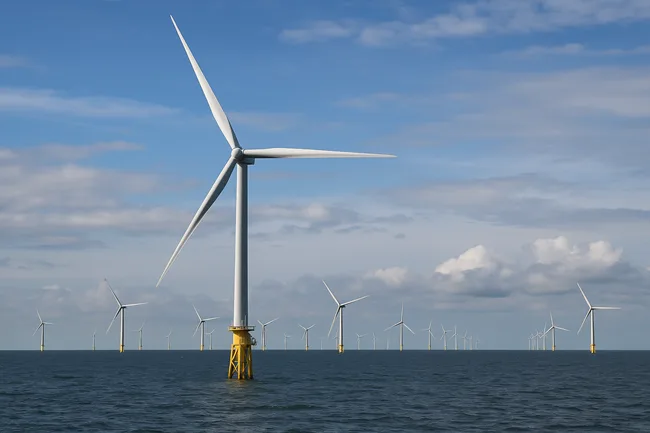
Located in the Irish Sea approximately 14 kilometers off the coast of Barrow-in-Furness, the West of Duddon Sands Offshore Windfarm remains one of the United Kingdom’s most established offshore wind assets as of 2025. With an installed capacity of 389 megawatts and 108 Siemens SWT-3.6-120 turbines, the project continues to provide clean electricity to over 300,000 British homes. First commissioned in 2014, the windfarm was developed as a joint venture between Ørsted and ScottishPower Renewables, a subsidiary of Iberdrola. In an era where offshore wind is facing inflationary pressure and geopolitical uncertainty, West of Duddon Sands is viewed as a relatively de-risked, stable generator with proven infrastructure. As of mid-2025, it stands as a benchmark project for institutional investors targeting inflation-linked returns in mature clean energy markets.
Who operates West of Duddon Sands Offshore Windfarm and how has its ownership changed since 2022
Originally developed as a 50:50 joint venture between Ørsted and ScottishPower Renewables, the West of Duddon Sands Offshore Windfarm underwent a partial ownership transition in 2025. In April, Ørsted announced the sale of a 24.5 percent equity stake to Schroders Greencoat, a leading UK-based renewable infrastructure investor, for a total cash consideration of £456.1 million. Ørsted has retained operational control and now holds a 25.5 percent stake in the project. ScottishPower Renewables maintains its 50 percent ownership. The deal marks Schroders Greencoat’s first investment in this specific asset and was received positively by energy analysts who noted the move as part of Ørsted’s broader capital recycling strategy. The transaction also reflects strong institutional confidence in mature offshore assets as a hedge against power price volatility.
What is the capacity of the West of Duddon Sands project and how is it performing in 2025
The West of Duddon Sands Offshore Windfarm has a nameplate capacity of 389 megawatts, generated by 108 Siemens SWT-3.6-120 turbines installed across a 67 square kilometer area of seabed. Since entering full commercial operation in 2014, the project has consistently maintained high availability and a capacity factor in the range of 42 to 44 percent, according to publicly disclosed figures. As of 2025, production performance remains stable, with Ørsted leveraging advanced predictive maintenance tools, including drone inspections, to minimize downtime. The windfarm’s age places it in the “middle maturity” category within the UK’s offshore wind portfolio, and analysts have highlighted its operational efficiency as a key strength in the face of rising input costs across newer projects.
How is energy exported from West of Duddon Sands and what infrastructure supports its transmission
Electricity generated at the West of Duddon Sands windfarm is transmitted to shore via two high-voltage export cables that connect to an onshore substation at Heysham in Lancashire. The offshore infrastructure includes a central substation platform, array cables, and a network of foundation-mounted turbines. During the construction phase, the project utilized advanced monopile installation techniques, with marine logistics supported from the Port of Belfast and Barrow-in-Furness. Siemens, the turbine supplier, also provided grid connection solutions and service logistics. In 2025, Ørsted continues to manage operations and maintenance through its local base at the Port of Barrow, with asset monitoring handled through its integrated control centers. The transmission system remains robust, with no significant outages reported in the past 12 months.
When was West of Duddon Sands approved and what were its key development milestones
The West of Duddon Sands Offshore Windfarm was awarded a lease by The Crown Estate and secured government approval in the late 2000s, with full-scale construction beginning in 2011. The windfarm reached full commercial operation in 2014, following a total investment estimated at £1.6 billion. Siemens was contracted as the turbine supplier and also played a key role in electrical systems integration. The project was developed during the UK’s Renewable Obligation Certificate (ROC) era, locking in a 20-year incentive mechanism that remains valid until the mid-2030s. Unlike more recent offshore wind projects facing permitting bottlenecks and supply chain risks, West of Duddon Sands was delivered on schedule and has not faced significant regulatory or legal challenges. Its construction phase also pioneered environmental mitigation techniques that have since become standard practice in the UK sector.
What regulatory and environmental frameworks apply to West of Duddon Sands and were there any protests
As a seabed leaseholder under The Crown Estate’s jurisdiction, the West of Duddon Sands windfarm is subject to UK marine planning and environmental regulation. The project underwent a full Environmental Impact Assessment (EIA) prior to construction, with studies addressing marine mammals, seabird populations, benthic habitats, and visual impacts on the coastline. As of 2025, there have been no major environmental protests or ongoing legal disputes associated with the project. In fact, the windfarm has been used in several academic studies as a case example of biodiversity-compatible offshore infrastructure. The UK government’s offshore transmission and decommissioning rules apply to the site, with Ørsted expected to present a full decommissioning plan closer to the end of the asset’s operational life, currently projected for the early 2040s.
How does West of Duddon Sands impact Ørsted, Iberdrola, and the UK’s renewable energy strategy
For Ørsted, the windfarm continues to provide stable, inflation-linked cash flows that support its capital rotation into larger, higher-risk projects such as Hornsea 3. In its Q1 2025 investor update, Ørsted reaffirmed that West of Duddon Sands remains one of its most reliable offshore assets. For ScottishPower Renewables and its parent Iberdrola, the project complements a growing UK-focused offshore wind portfolio, including East Anglia Hub and Moray East. At the national level, the West of Duddon Sands Offshore Windfarm is part of the UK’s target to deploy up to 50 GW of offshore wind by 2030. While not among the newest megaprojects, its continued performance and reliability enhance grid stability and help reduce reliance on gas-fired backup generation. Policymakers and infrastructure investors see it as a model for what mature offshore assets can offer in terms of both resilience and returns.
What are the latest developments at the West of Duddon Sands project as of 2025
The most significant 2025 development has been the partial equity sale to Schroders Greencoat, completed on 30 April. The transaction aligns with Ørsted’s strategic divestment model, wherein operating assets are sold partially to infrastructure funds while retaining operational control. Operationally, Ørsted has expanded its predictive maintenance program at the site, integrating AI-based fault detection and blade condition monitoring systems. Minor offshore cable repairs were undertaken in Q1 2025, and ESG performance reporting for the site has been upgraded to include real-time carbon intensity metrics. Analysts also noted that Ørsted is using West of Duddon Sands as a base case model when benchmarking newer Irish Sea projects, such as Morgan and Morecambe.
What is the long-term outlook for West of Duddon Sands and how does it fit into the energy transition
With a remaining operational life of 15 to 20 years, the West of Duddon Sands windfarm is expected to continue contributing to the UK’s low-carbon electricity supply until at least 2040. Decommissioning planning is underway but remains in early technical scoping stages. While newer projects in the Irish Sea and North Sea will exceed its scale, West of Duddon Sands remains competitively positioned due to its grid stability, low operating costs, and amortized capital structure. Investor sentiment, as evidenced by Schroders Greencoat’s interest, remains bullish. As governments and utilities face mounting pressure to ensure reliable baseload renewables, mature windfarms like this one are increasingly being revalued not just as clean energy sources but also as grid-stabilizing infrastructure critical to national resilience.
Discover more from Business-News-Today.com
Subscribe to get the latest posts sent to your email.

