


Why are Centrica’s RoughH₂ and Aldbrough hydrogen storage projects critical to the UK’s clean energy transition?
Centrica plc (LSE: CNA) is positioning itself at the heart of the United Kingdom’s hydrogen economy with two strategically located infrastructure developments: the RoughH₂ project in the North Sea and the Aldbrough Hydrogen Storage facility in East Yorkshire. The British energy utility developer aims to redevelop its former natural gas stronghold, Rough, into a hydrogen-ready storage facility while simultaneously co-developing Aldbrough with Equinor ASA (NYSE: EQNR) and SSE Thermal to store hundreds of millions of cubic meters of low-carbon hydrogen underground. Combined, these projects could provide the scale, geographical spread, and storage flexibility needed to establish a national hydrogen balancing system.
RoughH₂ would offer up to 16 terawatt-hours (TWh) of seasonal hydrogen storage, potentially making it the largest of its kind in Europe. In parallel, Aldbrough is designed for medium-cycle storage, with nine repurposed salt caverns totaling up to 420 million cubic meters in capacity. If successfully delivered, this dual-pillar system could mitigate renewable intermittency, buffer industrial clusters, and reinforce the United Kingdom’s Clean Power Strategy through 2035 and beyond.
What recent developments have moved the RoughH₂ storage project closer to commercialisation?
RoughH₂ reached a significant engineering milestone in early 2025 with front-end design contracts awarded to engineering services group Wood and energy systems partner Exceed. These partners are tasked with reconfiguring pipeline networks, adapting offshore facilities for hydrogen injection, and integrating the site with Centrica’s onshore assets at Easington. Centrica’s goal is to transform the offshore field from a legacy gas reservoir into a hydrogen-compatible storage site capable of operating unmanned, with digital monitoring systems ensuring 24/7 reliability.
Institutional investors tracking Centrica’s infrastructure pipeline welcomed the progress but flagged a major constraint: lack of a regulatory cap-and-floor revenue model. According to Centrica’s CEO Kevin O’Byrne, the £2 billion required to redevelop RoughH₂ cannot be deployed at scale without a stable policy framework to recover long-term storage costs. The utility developer is in active discussions with the UK Government’s Department for Energy Security and Net Zero to structure financial support ahead of final investment decision.
The investor case for RoughH₂ is not just based on hydrogen. During the 2022–2023 winter crisis, the Rough gas site reportedly saved UK consumers between £2 billion and £5 billion in avoided gas costs by enabling controlled release during peak demand periods. Analysts see this as a blueprint for hydrogen-era risk mitigation: a large storage site that can be charged during low-cost renewable surplus and discharged during shortages or industrial demand peaks.
How is the Aldbrough hydrogen storage facility advancing its development timeline in 2025?
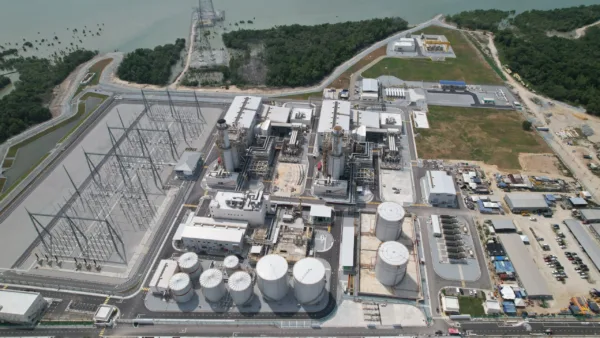
The Aldbrough Hydrogen Storage project, a partnership between Centrica, Equinor, and SSE Thermal, is progressing in parallel with RoughH₂, and is further along in regulatory and design phases. Located on the eastern edge of the Humber estuary, Aldbrough already houses salt caverns historically used for natural gas. The hydrogen redevelopment plan involves converting up to nine of these caverns for hydrogen storage, backed by electrolyser integration and compression infrastructure.
In May 2025, local planning authorities approved the Pathfinder electrolyser component, a 35 megawatt demonstration-scale unit to be integrated with hydrogen-fired power generation. The Humber Hydrogen Pipeline, designed to connect Aldbrough with H2H Saltend, H2H Easington, and Net Zero Teesside, also moved to the consultation phase, with route studies and environmental impact assessments underway.
Institutional sentiment has been broadly positive. While Aldbrough’s capacity is smaller than RoughH₂, its proximity to production hubs like H2H Saltend and the Easington terminal gives it a natural advantage for grid balancing, short-term market operations, and seasonal buffering. Analysts have pointed to Aldbrough as the first likely candidate to enter operation by 2029, thanks to lower geological risk, faster permitting, and stronger alignment with regional cluster policies such as the East Coast Cluster.
How could RoughH₂ and Aldbrough work together to support a national hydrogen network?
The strategic logic behind Centrica’s dual project approach lies in storage diversity. RoughH₂ is built for high-pressure, high-volume seasonal balancing—ideal for stabilising national hydrogen flows between quarters. Aldbrough, by contrast, is designed to offer modular, mid-cycle flexibility, supporting hydrogen producers and consumers on daily to weekly timescales. This combination mirrors successful storage models in Europe, particularly in the Netherlands and Germany, where layered storage solutions support renewable integration and industrial security.
Centrica and Equinor have proposed the Humber Hydrogen Pipeline as the backbone of this strategy. Once operational, it would link Aldbrough, Easington, and Saltend with Rough, enabling dynamic flow between production, storage, and industrial consumption zones. It also lays the groundwork for cross-border connectivity in the future, should the UK begin exporting hydrogen to continental Europe through ports like Immingham or through interconnectors via the North Sea.
According to energy infrastructure analysts, this linked network could serve as the first iteration of the UK’s “molecular backbone,” complementing Ofgem’s “electrons” grid upgrades and enabling hydrogen to serve both as an energy vector and as a tradable commodity.
What is the investor and institutional outlook for UK hydrogen storage infrastructure?
Investor sentiment around Centrica’s storage portfolio is cautiously optimistic but dependent on government policy clarity. As of June 2025, Centrica plc (LSE: CNA) is trading in the 165–170 GBp range, supported by forward-looking revenue visibility from its gas import contracts with Equinor and increased public support for hydrogen infrastructure. Equity analysts have noted that confirmation of cap-and-floor models for hydrogen storage would materially de-risk RoughH₂ and could trigger institutional buy-in from ESG infrastructure funds and pension investors.
Aldbrough, being further along in development and linked to green hydrogen production at H2H Saltend, is seen as a lower-risk play with earlier monetisation potential. Final investment decisions are expected for both RoughH₂ and Aldbrough by 2026, with operational timelines between 2029 and 2031. Investors tracking UK hydrogen demand curves see these projects as foundational enablers of the broader hydrogen economy.
Policy bodies including the Climate Change Committee and National Infrastructure Commission have repeatedly cited the need for at least 5 TWh of hydrogen storage capacity by 2035 to support energy system balancing and transport decarbonisation. Rough and Aldbrough together would exceed that baseline, providing a strategic hedge for the UK grid.
What are the risks facing the hydrogen backbone vision in the UK?
Despite strong institutional interest and clear strategic rationale, the dual-track hydrogen storage strategy faces risks on several fronts. First is regulatory uncertainty. Hydrogen business models, including pricing of storage capacity, revenue stacking mechanisms, and CO₂ transport co-funding, are still under government consultation. Without resolution, final investment decisions on both RoughH₂ and Aldbrough could be postponed.
Second, synchronisation with upstream projects is essential. If delays hit hydrogen production at Saltend or Easington, the storage sites may lack feedstock or customer demand in early years, impairing revenue models. Integration timelines with the Humber Hydrogen Pipeline will also be critical for long-term success.
Third, capital intensity remains high. RoughH₂ is estimated at £2 billion and Aldbrough at £600–800 million. While Centrica has indicated willingness to fund part of these costs from internal cash flows, long-term debt and public-private co-financing mechanisms will likely be required.
What milestones should investors watch as the UK hydrogen storage backbone takes shape?
In the next 12–18 months, both RoughH₂ and Aldbrough are expected to pass key inflection points. These include completion of front-end engineering designs, regulatory approval of the hydrogen storage business model, issuance of final planning consents for cavern conversion and pipeline construction, and announcements of anchor offtake agreements with industrial customers.
If these elements align, the UK will not only meet its 2030 hydrogen goals but may also become the first European country to deliver national-scale hydrogen storage, effectively mirroring its legacy North Sea gas strategy—but with a decarbonised foundation. For Centrica, these projects could transform the British energy utility developer into the infrastructure enabler of the hydrogen era.
Discover more from Business-News-Today.com
Subscribe to get the latest posts sent to your email.