




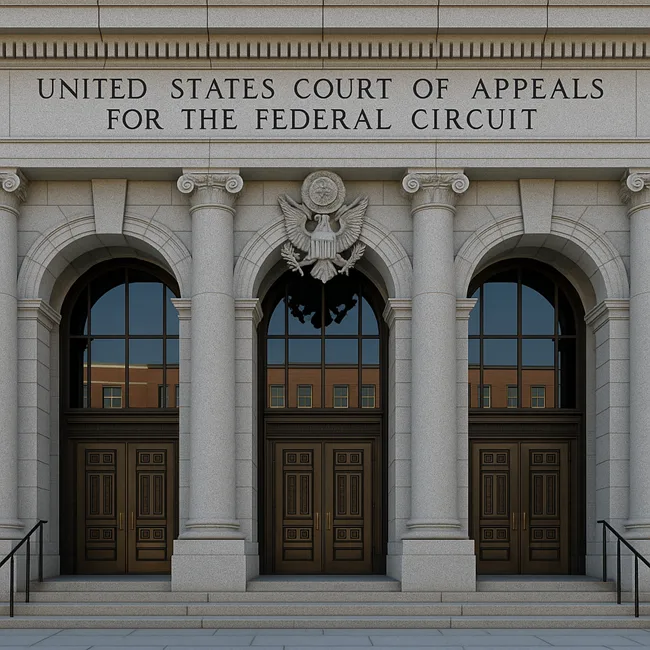
Why did the Federal Circuit overturn the Apple verdict and mandate a new jury trial?
Apple Inc. (NASDAQ: AAPL) scored a major legal victory on June 16, 2025, when the United States Court of Appeals for the Federal Circuit vacated a $506.2 million jury verdict tied to alleged infringement of LTE standard-essential patents (SEPs) held by Optis Cellular Technology LLC and its affiliated entities. The court ruled that the original jury verdict—delivered in 2020 by a Texas federal jury—violated Apple’s constitutional right to a unanimous jury decision. As a result, the case will return to the U.S. District Court for the Eastern District of Texas for a complete retrial on both infringement and damages.
The panel, comprising Judges Sharon Prost, Jimmie Reyna, and Leonard Stark, found that the trial court improperly structured its verdict form. Instead of requiring the jury to rule on each asserted patent individually, the court asked whether Apple had infringed “any” of the five asserted claims. According to the Federal Circuit, this format permitted a non-unanimous verdict on any single patent, effectively undermining a key procedural safeguard in civil trials under the Seventh Amendment and Federal Rule of Civil Procedure 48.
This procedural error had a cascading effect. Not only was the $506.2 million award vacated, but so was a later $300 million award determined in a second damages-only trial. The ruling leaves the case in a state of reset and may significantly affect how future SEP cases are tried, especially when FRAND (Fair, Reasonable and Non-Discriminatory) licensing obligations are in dispute.
What are the patents at the center of the Apple–Optis LTE SEP litigation?
The legal battle involves five LTE-related patents originally held by LG Electronics, Samsung Electronics, and Panasonic Corporation. These patents, acquired by Optis Cellular Technology LLC, Optis Wireless Technology LLC, and PanOptis Patent Management LLC, cover critical aspects of LTE device functionality including channel estimation, control channel signaling, uplink signal multiplexing, and random access protocols.
The legal dispute between Apple Inc. and Optis Cellular Technology revolves around five U.S. patents, each declared essential to the LTE wireless communication standard and originally developed by legacy technology giants including LG Electronics, Panasonic Corporation, and Samsung Electronics before being acquired by Optis and its affiliates. These patents encompass a range of foundational LTE functionalities crucial for the operation of mobile devices.
U.S. Patent No. 9,001,774 is titled “System and Method for Channel Estimation in a Delay Diversity Wireless Communication System” and describes techniques for performing channel estimation in orthogonal frequency division multiplexing (OFDM) and orthogonal frequency division multiple access (OFDMA) systems. This technology improves how wireless signals are demodulated when transmitted through multiple antennas—a key component of LTE performance optimization.
U.S. Patent No. 8,019,332, titled “Method for Transmitting and Receiving Control Information through Physical Downlink Control Channel,” focuses on reducing the computational burden placed on user devices by optimizing how control channel elements are assigned and decoded. It introduces a pseudo-random calculation (involving a recursive equation Yk=(A*Yk−1) mod D) to improve the predictability and efficiency of how LTE devices search control channels.
U.S. Patent No. 8,385,284 is titled “Control Channel Signaling Using a Common Signaling Field for Transport Format and Redundancy Version.” It deals with improving data efficiency in control signaling by jointly encoding both the transport format and redundancy version in a single field. This consolidation minimizes the number of bits required for critical control operations during both initial transmissions and retransmissions in LTE systems.
U.S. Patent No. 8,102,833, which is titled “Method for Transmitting Uplink Signals,” relates to the process by which a mobile station transmits both control and data signals back to a base station. The patent specifically describes how to structure and map these signals within a two-dimensional matrix based on Single Carrier Frequency Division Multiple Access (SC-FDMA)—a technique used to maintain low peak-to-average power ratios in LTE uplink transmissions. It also includes provisions for how acknowledgement (ACK/NACK) signals overwrite previously mapped data to prioritize reliability.
Finally, U.S. Patent No. 8,411,557, titled “Mobile Station Apparatus and Random Access Method,” introduces a method for dynamically selecting random access sequences based on the device’s control requirements and the radio network’s quality expectations. The invention structures the grouping of sequences to optimize random access efficiency and reduce collision rates, improving the initial connection performance between LTE-enabled devices and cell towers.
Together, these five patents represent diverse but interlocking aspects of LTE protocol implementation and device compliance. Their assertion by Optis in a U.S. courtroom underscores the high commercial stakes associated with SEP licensing, especially as global smartphone manufacturers seek to reduce dependency on external patent pools and negotiate lower FRAND royalty rates. The Federal Circuit’s decision to remand the case for retrial means each of these patents will now face renewed scrutiny—both for validity and for whether Apple’s products infringe them under the standard’s technical specifications.
Optis alleged that multiple Apple products, including iPhones, iPads, and Apple Watches, incorporated these technologies without a valid FRAND license. While the jury initially found in favor of Optis, awarding the firm over half a billion dollars in damages, Apple contested the verdict on multiple procedural and substantive grounds—including whether Optis’s licensing demands were truly FRAND-compliant.
How did the court address Apple’s claims regarding jury unanimity and FRAND compliance?
In the core of its June 2025 ruling, the Federal Circuit sided with Apple’s assertion that the Texas court violated its right to a unanimous verdict. The original verdict form had asked jurors to collectively determine whether Apple infringed “any” of the asserted claims without distinguishing which patent or claims were involved. This effectively allowed jurors to reach a general verdict even if they disagreed on which specific patents had been infringed—a situation that, the court concluded, constitutes legal error.
The appellate court emphasized that each patent claim constitutes a separate legal cause of action under U.S. patent law. Accordingly, jury instructions must require unanimity on each specific legal question. The court noted that while both Apple and Optis had proposed a verdict form that split infringement questions by patent, the district court chose not to adopt that structure and instead opted for a single compound question. This, the Federal Circuit concluded, was an abuse of discretion.
Separately, the court upheld Apple’s claim that the original damages verdict was legally flawed because it lacked a proper finding of infringement on which to base a damages calculation. Even in the second trial, where $300 million in damages was awarded as a lump sum, jurors were instructed to assume that Apple had infringed all five patents—despite the fact that there was no definitive record from the first trial confirming this.
Why did the court question the use of the Qualcomm settlement during damages testimony?
The Federal Circuit also ruled that the district court erred in allowing Optis’s damages expert to reference a prior settlement agreement between Apple and Qualcomm Incorporated during trial. That 2019 deal, which resolved multiple global disputes between the two technology giants, had been cited by Optis to support its royalty valuation.
However, the court determined that the Qualcomm agreement was too different in scope and structure to be fairly compared with Optis’s licensing claims. The Qualcomm license encompassed a broad, worldwide portfolio and involved complex cross-licensing arrangements that did not resemble the narrower, five-patent dispute at hand. As such, the court concluded that the agreement’s inclusion in trial was prejudicial and should not have been admitted.
This evidentiary misstep further weakened the damages judgment and supported the case for a complete retrial.
How did the court rule on the validity and construction of specific Optis patent claims?
Beyond procedural issues, the court addressed several important claim construction and validity matters that could reshape the scope of any future trial:
Patent eligibility of the ’332 patent: The court reversed the district court’s determination that claims 6 and 7 of U.S. Patent No. 8,019,332 were not directed to an abstract idea. Instead, it found these claims to involve a mathematical formula, rendering them likely ineligible under Section 101 of the U.S. Patent Act unless an “inventive concept” can be demonstrated on remand.
Claim construction for the ’833 patent: The appellate judges upheld the lower court’s construction of claim 8 of U.S. Patent No. 8,102,833, rejecting Apple’s argument that the claim required mapping to begin from a specific row in a resource matrix.
Section 112(f) interpretation for the ’557 patent: The court also held that the term “selecting unit” in U.S. Patent No. 8,411,557 did invoke 35 U.S.C. § 112 ¶ 6, reversing the district court’s earlier conclusion. The case will now return to determine whether the patent discloses adequate structure for that claim.
These rulings could impact not just the Apple case but also how courts interpret claim scope in future SEP disputes, especially in the wireless and telecom domains.
What does this decision mean for FRAND licensing enforcement and SEP litigation in the U.S.?
Legal experts see the ruling as a significant precedent in the evolving legal treatment of SEPs and FRAND disputes in U.S. courts. The Federal Circuit’s insistence on stricter jury procedures—and its skepticism about using unrelated settlement deals as valuation proxies—could shape future litigation strategy for SEP holders and implementers alike.
From an institutional perspective, the court’s firm line on jury unanimity may deter plaintiffs from bundling multiple patents into general infringement verdicts, especially when each patent involves distinct technical features. Investors watching patent monetization firms like Optis may need to factor in longer litigation timelines and higher evidentiary burdens in SEP enforcement efforts.
At the same time, Apple’s success in securing a full retrial reflects the growing trend of aggressive defensive litigation among large technology firms when facing royalty demands they view as excessive or non-FRAND.
What is the next legal step, and how might global FRAND rulings influence the U.S. retrial?
The case will now return to the Eastern District of Texas, where Judge J. Rodney Gilstrap must oversee a new jury trial that meets the Federal Circuit’s procedural standards. Apple and Optis may present revised damages theories, and the court will have to evaluate whether each of the remaining patents is valid and infringed on an individual basis.
Meanwhile, the situation is further complicated by a parallel proceeding in the United Kingdom. On May 1, 2025, the English Court of Appeal ruled that Apple must pay approximately $502 million for a global license to Optis’s LTE SEPs. While the Federal Circuit did not opine on how this ruling affects the U.S. retrial, the English court stated that it would defer to U.S. outcomes where possible under principles of comity.
Analysts believe the interplay between global FRAND rulings may become a defining feature of future SEP disputes, particularly as courts in different jurisdictions adopt divergent approaches to valuation, enforcement, and contractual obligations under standard-setting organization rules.
Discover more from Business-News-Today.com
Subscribe to get the latest posts sent to your email.