



President Donald Trump confirmed on Friday that the United States had prior knowledge of Israel’s large-scale military strikes on Iran, revealing that his administration had “known everything” before the operation was launched. While publicly endorsing Israel’s actions as “very successful,” Trump maintained that a nuclear agreement with Tehran remained achievable.
In a phone interview with Reuters, the president defended the dual-track policy his administration had pursued over recent months—supporting Israeli deterrence efforts while urging Iranian leaders to come to the negotiating table. “We knew everything, and I tried to save Iran humiliation and death,” Trump said. “They can still work out a deal—it’s not too late.”
What triggered the Israeli airstrikes on Iran?
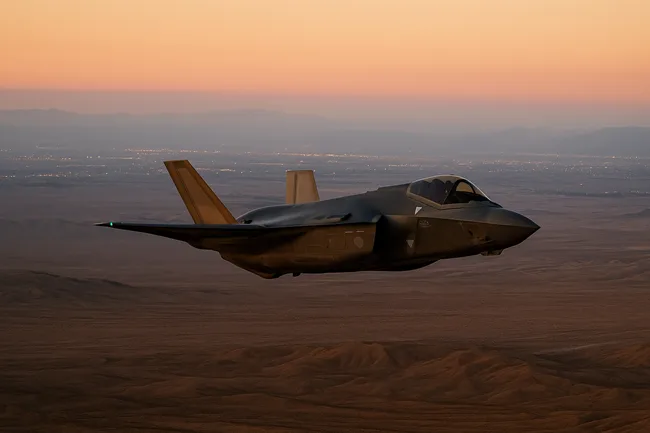
The Israeli Defense Forces launched Operation Rising Lion early Friday, targeting over 100 locations across Iran. According to Israeli media and military briefings, the strikes focused on nuclear infrastructure at Natanz and Fordow, ballistic missile factories, and command posts associated with the Islamic Revolutionary Guard Corps. More than 200 aircraft reportedly took part in the operation, firing over 300 precision munitions.
Trump said the strikes followed a 60-day deadline the U.S. had given Iran to negotiate a nuclear deal. “We knew enough that we gave Iran 60 days to make a deal and today is 61, right? So, you know, we knew everything,” Trump said.
Despite the magnitude of the Israeli attacks, which analysts described as one of the largest coordinated air offensives in the Middle East in recent years, Trump expressed hope that diplomatic talks would not collapse. “Nobody knows,” he said when asked whether Iran’s nuclear program had been destroyed. “It was a very devastating hit.”
How has Iran responded to Israel’s military strikes?
Tehran launched Operation True Promise III in retaliation, firing over 150 ballistic missiles and 100 armed drones toward Israeli cities, including Tel Aviv and Jerusalem. Most incoming threats were intercepted by Israel’s Iron Dome and Arrow missile defense systems, but damage was reported in at least three urban districts. According to Iranian state media, over 78 people were killed and 320 injured in the Israeli strikes.
Two U.S. Navy destroyers in the eastern Mediterranean reportedly helped intercept incoming projectiles aimed at Israeli airbases. A senior U.S. defense official said the action was defensive and limited to supporting Israel’s right to self-defense. American forces in Iraq and Jordan were placed on heightened alert.
Can the nuclear talks in Oman still take place?
Trump told Reuters that the scheduled sixth round of nuclear talks in Oman, set for Sunday, was still technically on the calendar, though he admitted it was unclear if Iran would show up. “They’re not dead,” he said of the talks. “We have a meeting with them on Sunday. Now, I’m not sure if that meeting will take place.”
U.S. Special Envoy Steve Witkoff is expected to lead the American delegation. These talks were aimed at persuading Iran to halt uranium enrichment beyond civilian levels and to dismantle advanced centrifuge operations. However, Trump had previously acknowledged that Tehran was resisting these demands, saying earlier this week, “They seek enrichment. We can’t have enrichment.”
The strikes have cast fresh doubt over whether Iran will engage constructively or double down on nuclear development.
How have global and regional actors responded?
The strikes drew swift and widespread international reaction. The United Nations Secretary-General condemned both the Israeli attack on nuclear facilities and Iran’s missile retaliation, warning that the escalation risked destabilizing the entire Middle East. European Union foreign policy chief Josep Borrell called the situation “a dangerous turning point.”
Russia’s President Vladimir Putin warned Israel against further escalation and urged all sides to “choose dialogue over destruction.” China’s foreign ministry echoed similar sentiments, calling for an emergency session of the U.N. Security Council.
Meanwhile, Gulf Arab states, including Saudi Arabia and the United Arab Emirates, called for restraint while quietly coordinating contingency plans for potential missile spillover or refugee movements.
Public sentiment in Iran has been mixed. State TV broadcast footage of mass funerals, while social media showed citizens demanding revenge. Some Iranians in cities like Tabriz and Isfahan reportedly fled their homes, fearing more airstrikes.
In Israel, there was widespread political support for the operation, with opposition leader Benny Gantz saying the country “acted out of necessity, not provocation.” Israeli Prime Minister Benjamin Netanyahu reportedly spoke twice with Trump this week, including after Sunday’s Camp David security briefing and again following the strikes.
What does this mean for Trump’s foreign policy strategy?
The incident has highlighted Trump’s signature foreign policy approach: using public pressure and military alignment to shape negotiation outcomes. “We’ve been very close to Israel. We’re their number one ally by far,” Trump reiterated. “I don’t want Iran to fail—I just don’t want them to have a nuclear weapon.”
This strategy echoes past actions under his leadership, including the 2020 assassination of Iranian General Qassem Soleimani, and is rooted in the belief that forceful posturing creates leverage for diplomacy.
At the same time, critics argue that Trump’s handling risks undermining the very talks he claims to support. Some Democratic lawmakers have warned that military escalation could entrench Iranian hardliners and stall diplomacy indefinitely. Progressive groups like J Street and MoveOn have called on the White House to clarify its position and ensure that military actions are not substituting for a comprehensive strategy.
Will this reshape the geopolitical balance in the region?
The unfolding conflict is testing the security architecture of the Middle East, with potential implications for oil markets, military alliances, and proxy dynamics. Brent crude spiked by 4.2% on Friday, while regional stock exchanges in Dubai, Tel Aviv, and Tehran saw heavy selloffs.
Jordan and Egypt closed key border crossings as a precaution, while Turkey’s foreign ministry warned of a “nightmare scenario” if attacks continue.
Diplomats familiar with the Oman talks said that whether the Sunday meeting proceeds will signal Iran’s willingness to de-escalate or retaliate further. U.S. officials have reportedly been in backchannel communication with Qatar, Switzerland, and Oman to keep lines of dialogue open.
Meanwhile, military analysts note that Israel’s action—striking deep into Iranian territory, including Isfahan—sets a precedent that could trigger expanded conflict with Hezbollah or even provoke involvement from Russia-backed Syrian forces.
Future outlook: can diplomacy survive the crossfire?
Analysts remain divided. Some argue that Iran may return to the table if it sees strategic advantage, especially given economic vulnerabilities and social unrest at home. Others believe the damage to Iran’s nuclear program will push hardliners to walk away entirely.
“There’s still a narrow path to diplomacy, but it’s littered with debris,” said one senior European diplomat not authorized to speak on the record.
Trump’s comment that Iran can “still work out a deal” may be aimed at offering Tehran a face-saving exit—especially if Sunday’s talks are salvaged. However, with each side now having escalated militarily, the risk of miscalculation remains high.
Whether this latest round of violence marks the end of negotiations or a painful step toward renewed diplomacy may hinge on what unfolds in the next 48 hours.
Discover more from Business-News-Today.com
Subscribe to get the latest posts sent to your email.