Why Is Pune Becoming India’s Most Contested Real Estate Ground in 2025?
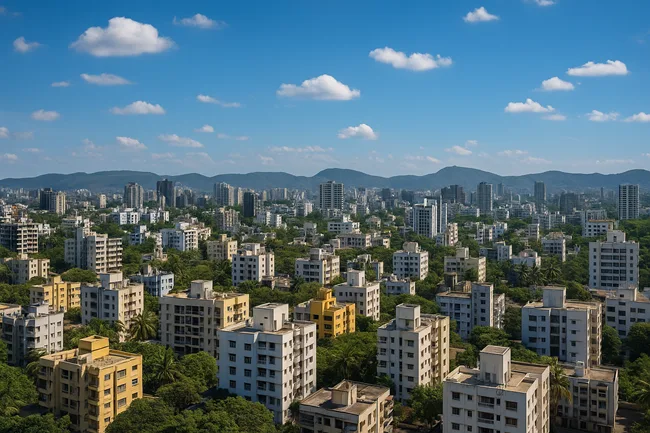
Pune has emerged as one of India’s most aggressively contested urban housing markets. Once considered a secondary city in the shadow of Mumbai, Pune is now the site of premium residential battles led by India’s biggest names in real estate. From Godrej Properties Limited (NSE: GODREJPROP) to DLF Limited (NSE: DLF), Shapoorji Pallonji Real Estate (SPRE), and VTP Realty, land acquisition strategies in 2025 reveal a competitive landscape grounded in long-term conviction.
Fueled by a young, upwardly mobile population and backed by massive infrastructure investments such as Metro Line 3 and the Pune Ring Road, developers are not just launching projects—they’re acquiring strategic land tracts that will define their growth over the next decade. As pricing power shifts eastward toward high-demand corridors like Kharadi, Bavdhan, and Thergaon, owning the right land at the right time is becoming more crucial than ever.
What Did Godrej Properties Just Acquire in Kharadi–Wagholi?
On June 2, 2025, Godrej Properties Limited announced the acquisition of a strategically located 14-acre land parcel in Pune’s high-growth Kharadi–Wagholi belt. The ₹4,200 crore revenue potential project will feature approximately 3.7 million square feet of premium group housing.
This is more than a routine acquisition—it marks Godrej’s formal entry into Kharadi, a micro-market synonymous with IT employment hubs, proximity to Chhatrapati Sambhaji Maharaj International Airport, and evolving urban infrastructure. Managing Director and CEO Gaurav Pandey said the parcel fits Godrej’s strategy of “strengthening presence in key micro-markets.”
The expected average realization of over ₹11,300 per sq. ft. reflects the area’s premium credentials. Given current land rates in Kharadi–Wagholi—ranging from ₹65 to ₹80 crore per acre—the deal could represent a ₹950–₹1,100 crore land outlay. For investors and analysts, this confirms Godrej’s intent to blend high-margin premium housing with sustainable development principles in India’s top-performing real estate clusters.
Is DLF Preparing to Enter Pune’s Market with Force?
While DLF Limited hasn’t formally announced a Pune-specific land acquisition in 2025, its macro strategy indicates a strong possibility. The company has guided for ₹17,000 crore in new launches across FY26, focusing largely on the luxury and super-luxury housing segments. This includes potential expansions into Tier-1 cities where branded supply is still low relative to demand.
Pune fits squarely into DLF’s radar, especially given the rising premiumization in corridors like Viman Nagar, Koregaon Park, Baner–Balewadi, and Kalyani Nagar. While the company has traditionally concentrated on Delhi NCR and Gurugram, its stated ambition of expanding its luxury footprint may see land banking activity in Pune increase in the months ahead.
Forum chatter and analyst commentary point to DLF’s interest in Eastern Pune land clusters, though no transaction has been confirmed as of June 2. If DLF does enter Pune through direct land acquisition, it would likely target parcels with development potential of 2+ million sq. ft. and ticket sizes of ₹2 crore and above.
How Is Shapoorji Pallonji Scaling Its Presence Through Vanaha?
Shapoorji Pallonji Real Estate (SPRE) has already established one of the largest townships in Pune with Vanaha, located near Bavdhan. Spanning hundreds of acres, Vanaha is a multi-phase, mixed-use development that includes premium residential units, schools, retail centers, and wellness infrastructure.
While there have been no new reported land purchases by SPRE in 2025, its strategy centers on unlocking value from large-scale, integrated developments. Vanaha alone positions SPRE among the few developers in Pune with long-cycle control over land and product.
Strategically located between NDA Hills and Chandni Chowk, the project appeals to aspirational buyers seeking green surroundings and gated luxury within 30 minutes of the city core. The developer’s focus on building community ecosystems—rather than just standalone towers—gives it a differentiated brand recall.
SPRE’s approach is capital-intensive but margin-stable, offering slower but steadier monetization compared to developers focused on mid-cycle launches.
What Makes VTP Realty the Most Aggressive Land Buyer in Pune?
VTP Realty, a privately held Pune-based developer, is now widely recognized as the most aggressive acquirer of land across the city. In April 2023, its affiliate Rising Wellworth Enterprises LLP purchased a 6.7-acre parcel in Thergaon for ₹260 crore, cementing its expansion into PCMC (Pimpri Chinchwad) regions.
This acquisition followed a series of land banking deals in emerging hubs like Kharadi Annexe, Manjri, and Hinjewadi Phase 3. VTP’s business model emphasizes scalability and vertical integration, allowing it to control project timelines and construction costs more effectively than many listed peers.
While Godrej and SPRE target high-end projects in the ₹1.5–₹3.5 crore range, VTP concentrates on 2BHK and compact 3BHK homes priced between ₹65 lakh and ₹1.25 crore, with phased premium upgrades. This mid-premium positioning appeals to younger, salaried buyers and NRIs looking for second homes with rental yield potential.
By mid-2025, VTP has emerged as the dominant player in Pune’s 50–150 acre segment land markets, with expectations of more strategic purchases in western corridors like Wakad and Mahalunge.
How Are Institutions Viewing These Land Bets?
Institutional investors have responded positively to developers with defined land acquisition blueprints. For listed players like Godrej Properties, consistent delivery, pre-sales growth, and prudent land banking have attracted strong flows from mutual funds and foreign institutional investors.
As of May 2025, Godrej’s market capitalization stood at ₹67,335.90 crore, with a trailing P/E of 45.00. Despite recent corrections, the stock remains among the most actively held in mid-cap real estate funds, and delivery volume suggests long-term accumulation.
VTP Realty, despite being unlisted, is being closely tracked by private equity funds. There is growing market speculation of an IPO window in late FY26. SPRE, meanwhile, is seen as a conservative but stable player, given its balance sheet strength and long-term real asset orientation.
DLF’s moves are being watched for potential upside in case of a formal Pune entry, which could expand its valuation multiple from a North India-dominated brand to a pan-India luxury player.
What’s the Future Outlook for Pune’s Land and Housing Market?
With infrastructure expansion catching up to housing demand, Pune is poised to outperform other Tier-1 cities in the residential space. The city has an active housing demand across price points—from ₹45 lakh affordable homes in Moshi to ₹4 crore villas in Koregaon Park.
Land deals in 2025 are being driven by a few common factors: proximity to commercial hubs, metro connectivity, availability of social infrastructure, and speed of civic clearances. Developers who control land in zones that meet these criteria are likely to enjoy stronger absorption and pricing leverage over the next three to five years.
Kharadi, Hinjewadi Phase III, Bavdhan, Baner, Manjri, and Wakad are expected to remain hotspots for high-volume launches and institutional capital inflows.
So Who’s Winning the Pune Land Game in 2025?
While Godrej Properties may have taken the biggest bet in terms of revenue potential with its ₹4,200 crore Kharadi project, VTP Realty leads in volume and frequency of acquisitions. Shapoorji Pallonji, through Vanaha, continues to dominate the township-style development model, while DLF is viewed as a luxury disruptor-in-waiting.
Each developer is betting on a different Pune—Godrej on premium, VTP on mass mid-premium, SPRE on community-centric luxury, and DLF on future brand loyalty.
What’s common is this: in 2025, land in Pune is not just being bought—it’s being claimed as future positioning in India’s most balanced, upwardly mobile, and high-absorption housing market.
Discover more from Business-News-Today.com
Subscribe to get the latest posts sent to your email.