




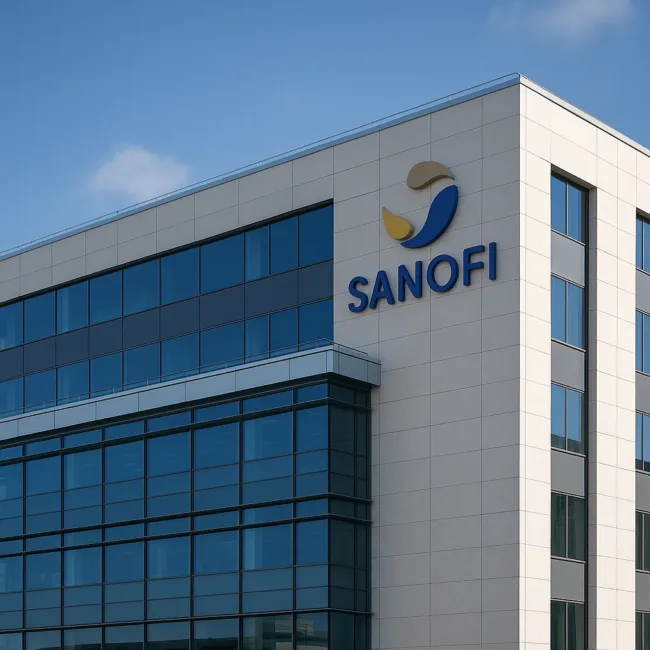
Why Is Sanofi Planning to Acquire Vigil Neuroscience?
Sanofi announced on May 22, 2025, that it has entered into a definitive agreement to acquire Vigil Neuroscience, a U.S.-based clinical-stage biotech firm focused on neurodegenerative diseases. The proposed transaction, which values Vigil at approximately $470 million in equity, marks a calculated expansion of Sanofi’s neurology portfolio. The centerpiece of the acquisition is VG-3927, an investigational therapy for Alzheimer’s disease designed to activate the TREM2 receptor, a target with increasing scientific traction in the fight against neurodegeneration. Pending regulatory and shareholder approvals, the transaction is expected to close in the third quarter of 2025.
Sanofi intends to pay $8.00 per share in cash, with an additional $2.00 per share offered as a non-transferable contingent value right (CVR), dependent upon VG-3927 achieving its first commercial sale. This reflects the company’s strategy to mitigate risk while incentivizing clinical success. For Sanofi, the deal strengthens one of its four core R&D focus areas—neurology—while reinforcing a broader pivot toward immunologically anchored solutions for neurodegenerative conditions.
What Makes VG-3927 a Potentially Transformative Alzheimer’s Drug?
VG-3927 is an oral small molecule designed to activate TREM2, a receptor that regulates the activity of microglia—the brain’s innate immune cells. In Alzheimer’s disease, microglial function is often impaired, leading to a buildup of toxic proteins, chronic inflammation, and ultimately neurodegeneration. By targeting TREM2, VG-3927 aims to restore the natural neuroprotective functions of microglia, such as debris clearance, migration to sites of neuronal injury, and inflammation modulation.
The treatment’s mechanism diverges sharply from currently available Alzheimer’s therapies that focus on amyloid plaque reduction through monoclonal antibodies. These existing therapies, while groundbreaking, have received mixed reception due to modest clinical benefits, restrictive eligibility criteria, and complex infusion-based administration. VG-3927 offers a more convenient oral format and a novel biological pathway, positioning it as a potential breakthrough in patient accessibility and real-world efficacy.
Sanofi’s acquisition builds upon its earlier $40 million investment in Vigil made in June 2024, which included exclusive negotiation rights for VG-3927. That initial stake appears to have been a strategic beachhead for this broader takeover, now crystallizing as part of the French pharmaceutical giant’s long-term neurology strategy.
How Does This Pending Acquisition Fit into Sanofi’s Strategic Focus?
The proposed acquisition of Vigil Neuroscience represents a continuation of Sanofi’s effort to deepen its innovation capabilities at the convergence of immunology and neurology. Dr. Houman Ashrafian, Head of R&D at Sanofi, emphasized that VG-3927 supports the company’s aim to solve areas of critical unmet need by addressing the root mechanisms of disease rather than simply alleviating symptoms. By integrating TREM2 activation into its research pipeline, Sanofi is betting on a future where innate immune pathways play a leading role in central nervous system therapeutics.
Notably, Sanofi will not acquire Vigil’s second program, VGL101, as part of the deal. This indicates a tightly scoped acquisition centered around a single asset with high strategic value rather than a full-platform play. The transaction is structured to align R&D acceleration with financial discipline, including risk-sharing mechanisms such as the CVR. If VG-3927’s Phase 2 trial results—anticipated by mid-2026—meet expectations, the deal could unlock significant long-term upside for Sanofi’s neurology business.
What Has Been the Market Reaction to the Sanofi-Vigil Agreement?
Vigil Neuroscience shares surged by over 240 percent in intraday trading on May 22, closing at $7.88, up from $2.31 the previous session. This movement effectively priced in the $8 per share offer and reflected investor confidence in the transaction’s likelihood of closing. The premium also underscores Sanofi’s belief in the clinical potential of VG-3927 and the growing value of mid-stage neurology assets. Analyst coverage turned sharply bullish, suggesting that the deal signals Sanofi’s renewed interest in central nervous system innovation following its exits from earlier neurology ventures earlier in the decade.
Shares of Sanofi (NASDAQ: SNY) experienced a minor decline of less than 1 percent on the day of the announcement but remain up nearly 10 percent year-to-date, as of May 23. Market reaction among institutional holders appears neutral to positive, as investors view the transaction as modest in scale and aligned with long-term strategic priorities. Importantly, Sanofi confirmed that the deal will not impact its FY2025 financial guidance, a signal welcomed by risk-averse stakeholders.
Atlas Ventures and Vigil CEO Ivana Magovčević-Liebisch, representing around 16.2 percent of Vigil’s shares, have signed voting agreements in favor of the deal, suggesting strong internal consensus. Institutional flow data also show heightened block trade activity around VIGL, signaling accumulation by hedge funds anticipating deal closure.
What Other Recent Acquisitions Underscore Sanofi’s Strategic Evolution?
The pending Vigil acquisition follows a series of high-impact, innovation-focused deals by Sanofi across its core therapeutic areas. In January 2024, Sanofi acquired Inhibrx for $1.7 billion to secure INBRX-101, an experimental therapy for Alpha-1 Antitrypsin Deficiency, strengthening its rare disease portfolio. In March 2025, Sanofi agreed to acquire the immunology division of Dren Bio for $600 million upfront and up to $1.3 billion in milestone payments, adding DR-0201 to its autoimmune pipeline. The following month, Sanofi and Clayton Dubilier & Rice completed the carve-out of Opella, creating a new consumer health company to streamline Sanofi’s focus on prescription innovation.
These transactions reflect a deliberate strategy of targeting modular, late preclinical to Phase 2-stage assets that align with Sanofi’s scientific competencies and commercial infrastructure. The pending Vigil deal is consistent with this philosophy, emphasizing capital discipline while expanding addressable market opportunities.
What Is the Future Outlook for VG-3927 and Sanofi’s Neurology Unit?
VG-3927 is entering a competitive but underserved Alzheimer’s market that continues to grapple with unmet patient needs. While the approval of lecanemab and donanemab has validated amyloid as a therapeutic target, the limitations of these therapies create ample space for differentiated modalities. If VG-3927 delivers favorable results in Phase 2, Sanofi could position itself at the forefront of a new generation of immunologically driven Alzheimer’s therapies.
The near-term roadmap will involve advancing VG-3927 through regulatory consultations, finalizing trial designs, and integrating Vigil’s development team into Sanofi’s neurology vertical. Analysts expect Sanofi to explore potential biomarkers for patient stratification, as well as complementary indications in other forms of neuroinflammation.
Looking ahead, further M&A activity cannot be ruled out. With a strong balance sheet and a disciplined acquisition record, Sanofi remains a likely participant in the next wave of biotech consolidation, particularly in neurology, immunology, and metabolic disorders.
Discover more from Business-News-Today.com
Subscribe to get the latest posts sent to your email.

