



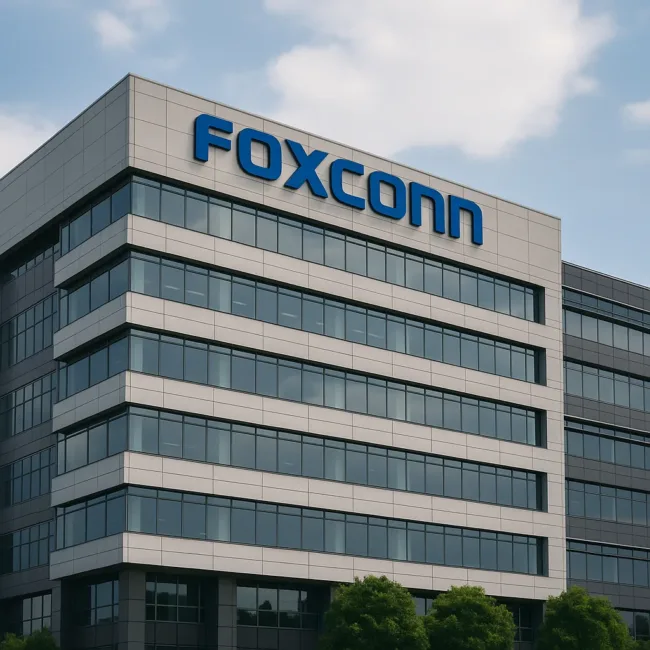
Why Is Foxconn Investing $1.5 Billion in India Now?
Foxconn, formally Hon Hai Precision Industry Co., Ltd., is infusing $1.5 billion into its Indian unit Yuzhan Technology India Pvt Ltd, marking one of its largest single-country capital deployments outside of China. This investment, routed via Foxconn Singapore, comes amid Apple Inc.’s intensifying push to diversify iPhone production away from China, under a broader “China+1” strategy.
The infusion will be used to expand Foxconn’s iPhone assembly operations in Tamil Nadu, where the company already manages a major production base employing over 35,000 workers. The deal includes Foxconn’s acquisition of 12.77 billion equity shares at ₹10 each, totalling ₹127.74 billion (approx. $1.5 billion). While the company has not disclosed precise allocation details, insiders suggest the funds will primarily be used for capacity expansion, component localization, and workforce training—core enablers for scaling iPhone manufacturing in India.
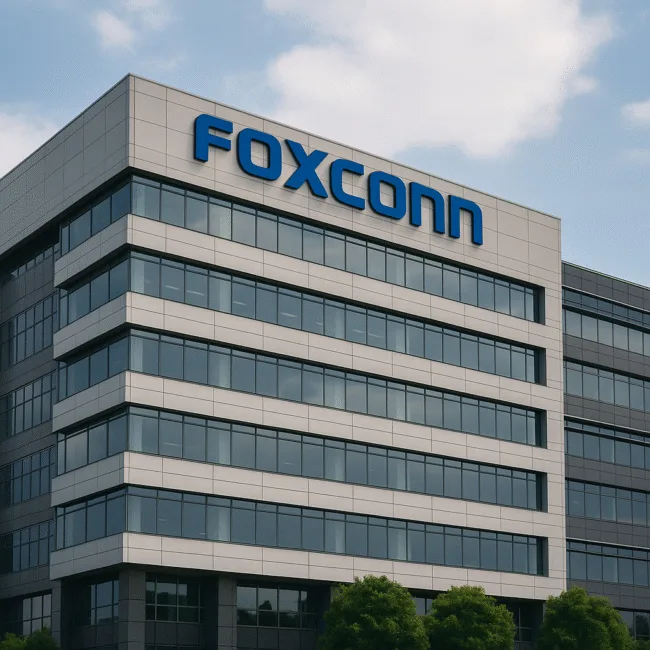
How Does This Investment Fit Into Apple’s Global Manufacturing Strategy?
Apple has been accelerating efforts to de-risk its supply chain from overexposure to China, which currently accounts for over 90% of its global iPhone output. This strategic realignment began in earnest in 2022 amid U.S.-China trade tensions and COVID-era disruptions, including a widely publicized worker unrest incident at Foxconn’s Zhengzhou plant. India, backed by generous government subsidies and a rapidly evolving electronics ecosystem, emerged as the most viable alternative.
Apple aims to produce 25% of all iPhones in India by 2026, up from 7% in FY23. Already, the company exported nearly $2 billion worth of iPhones to the U.S. in March 2025 alone, signaling growing confidence in Indian facilities. The current investment by Foxconn is viewed as critical to enabling this transition and reinforcing Apple’s long-term commitment to the Indian supply chain.
What Role Will Yuzhan Technology India Play in Apple’s iPhone Supply Chain?
Yuzhan Technology India, Foxconn’s fully owned subsidiary, is expected to become a cornerstone of iPhone assembly in South Asia. In addition to final assembly, Yuzhan is also involved in the manufacture of key sub-components such as PCBs (printed circuit boards), camera modules, and enclosures. The new funding will support tooling upgrades, supply chain resilience planning, and increased automation.
This subsidiary operates within Tamil Nadu’s Sriperumbudur district—an area increasingly recognized as India’s answer to Shenzhen. It shares proximity with other Apple suppliers such as Pegatron and Tata Electronics, forming a cluster of high-end electronics manufacturing capabilities. Foxconn’s ability to scale rapidly in this region aligns with Apple’s need for both volume and speed-to-market consistency in its global product rollout.
Is Foxconn Also Entering India’s Semiconductor Sector?
Yes, the $1.5 billion iPhone push is not the only frontier Foxconn is pursuing in India. In parallel, it has launched a ₹3,706 crore (approx. $433 million) joint venture with HCL Group to set up a semiconductor fabrication plant in Uttar Pradesh. This fab will produce display driver ICs—semiconductor components vital for smartphones, laptops, and TVs.
The move reflects a global realignment in chip supply chains, driven by both pandemic-era shortages and national security concerns in the West. India’s “Semicon India” initiative, part of a $10 billion central incentive program, has been crucial in drawing major players like Foxconn into chip manufacturing, a traditionally capital-intensive industry.
The fab, once operational, will feed into the same Apple ecosystem that Foxconn supports via Yuzhan, creating a vertically integrated production pipeline spanning chips to final assembly—all within India.
What Government Policies Are Supporting Foxconn and Apple’s Expansion?
The Indian government has actively wooed Apple’s suppliers through targeted industrial policies, including the Production Linked Incentive (PLI) scheme for electronics manufacturing. This scheme offers financial incentives based on incremental production and value addition, effectively reducing operating risks for companies like Foxconn, Wistron, and Pegatron.
Tamil Nadu’s state government, in particular, has streamlined land acquisition and power clearances, while offering labor support under the state’s Electronics Policy. Uttar Pradesh has similarly positioned itself as a semiconductor hub through capital subsidies, interest subvention, and infrastructure readiness.
As of FY24, India’s electronics production touched ₹8.25 lakh crore (~$100 billion), making it one of the top five global hubs. Apple alone contributed an estimated $12 billion in exports in the last fiscal year, of which nearly 60% came through Foxconn facilities.
How Have Investors Reacted to Foxconn’s India Strategy?
Early investor sentiment has been largely positive. On the Taiwan Stock Exchange, shares of Hon Hai Precision (TPE:2317) have maintained steady upward momentum through Q2 2025, buoyed by expectations of margin improvements from low-cost manufacturing in India. Market watchers view the India pivot as both a cost hedge and geopolitical buffer.
For Apple Inc. (NASDAQ: AAPL), the market has priced in steady supply-side risk mitigation, keeping the stock in a consolidation phase after its April peak. Analysts maintain a consensus “Buy” rating, citing the India transition as accretive to Apple’s margins by FY27, especially as the company seeks to preserve premium pricing while lowering supply chain friction.
Foreign institutional investors (FIIs) have shown renewed interest in Indian electronics plays, with flows into Apple suppliers listed in Taiwan and India rising in recent weeks. Domestic institutional investors (DIIs), including mutual funds and pension bodies, have also backed suppliers linked to the Apple ecosystem.
What Does This Mean for India’s Broader Economic and Industrial Landscape?
Foxconn’s $1.5 billion infusion is one of the strongest endorsements yet of India’s ambition to become a global manufacturing powerhouse. The investment is expected to directly generate over 25,000 jobs and indirectly support nearly 100,000 through supply chain linkages and downstream industries.
The move also signals a transition for India from a services-led growth model to a hybrid model that includes high-tech manufacturing. As more components are localized and value addition deepens, India’s electronics trade deficit—currently hovering around $50 billion—could narrow substantially over the next five years.
This trend fits within a larger pattern of global manufacturers diversifying operations in the post-pandemic world, with India, Vietnam, and Mexico gaining prominence as China alternatives. The convergence of policy, market size, labor advantage, and digital infrastructure makes India a unique long-term bet.
Foxconn’s latest commitment brings a new level of seriousness to Apple’s India manufacturing roadmap. The infusion into Yuzhan Technology India and parallel investments in semiconductors represent more than capacity building—they mark a foundational shift in how the global tech supply chain is being rewritten. As political risks mount in traditional hubs and cost structures evolve, India’s rise as a manufacturing base could reshape the future of global electronics, not just for Apple and Foxconn, but for the entire tech ecosystem.
Analyst Outlook:
With more players entering India’s manufacturing and semiconductor sectors, analysts anticipate a new wave of M&A activity and value chain consolidation by late 2025. Foxconn’s success will likely serve as a case study for other Tier-1 OEMs evaluating India as a production anchor.
Discover more from Business-News-Today.com
Subscribe to get the latest posts sent to your email.