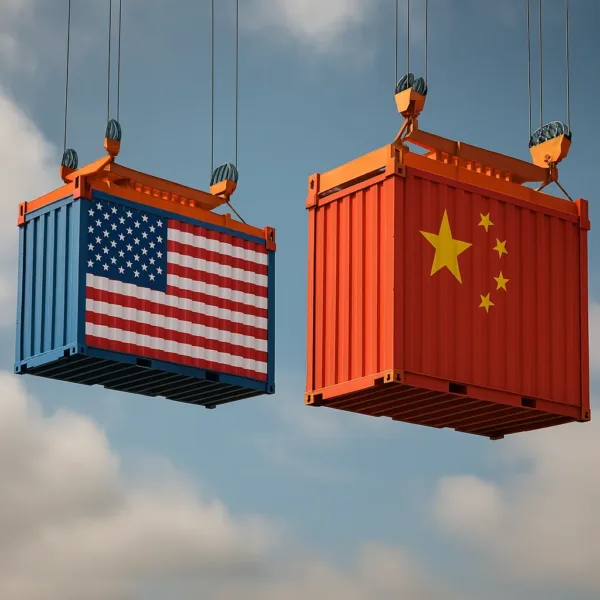
What Has China Done Regarding U.S. Tariffs?
On April 30, 2025, multiple sources confirmed to Reuters and The Wall Street Journal that Chinese authorities have prepared a confidential exemption list of U.S.-made goods shielded from the newly imposed 125% retaliatory tariffs. The measure, taken amid heightened trade tensions with the United States, was not disclosed publicly but instead relayed informally to Chinese importers on a case-by-case basis.
The exemptions aim to protect strategic Chinese industries from disruptions caused by the broad tariff hikes, which were announced earlier this month in response to the U.S. administration’s latest escalation in bilateral trade restrictions. The tariff rate, at 125%, marks one of the steepest retaliatory hikes in China’s history and was initially expected to affect all U.S. goods within specified HS code ranges.
Which U.S.-Made Products Are Being Exempted?
The exempted goods include critical imports such as aircraft engines, microchips, advanced pharmaceutical products, and liquefied ethane—a vital feedstock in petrochemical manufacturing. According to industry insiders cited by Reuters, exemptions have been applied to maintain continuity in sectors that would be significantly impacted by tariff-induced supply disruptions.
Ethane is sourced almost exclusively from U.S. suppliers such as ExxonMobil Corporation and Enterprise Products Partners, both of which operate large-scale liquefied ethane export terminals. China’s petrochemical industry, heavily reliant on this feedstock, cannot currently substitute it at scale from alternative sources without incurring significant cost or supply chain delays.
Similarly, semiconductors from companies like Intel Corporation and Texas Instruments Inc. are essential to China’s electronics and automotive sectors. While Beijing continues to invest in domestic chip capacity, certain mid- and high-grade components remain dependent on U.S. suppliers.
Why Were These Exemptions Not Publicly Announced?
Chinese trade authorities, including the Ministry of Commerce and the General Administration of Customs, have not issued any formal statements or updates on these exemptions. Instead, companies are being informed directly via internal channels or through customs documentation that the affected goods will not incur additional tariff surcharges.
Analysts interpret this method as a dual-purpose strategy. It enables Beijing to maintain its firm rhetorical position in the ongoing trade conflict while selectively mitigating the economic impact of its own retaliatory policies. This behind-the-scenes adjustment suggests a prioritisation of economic pragmatism over symbolism, particularly as domestic industrial output shows signs of contraction.
What Is the Broader Context of the U.S.-China Trade Dispute?
This development follows U.S. President Donald Trump’s decision to sharply increase tariffs on a wide range of Chinese exports in April 2025. The White House cited persistent trade imbalances, intellectual property issues, and strategic rivalry as the basis for the tariff hikes, which expanded duties to nearly $300 billion worth of Chinese goods.
Beijing responded with countermeasures, including the 125% tariff plan, covering a wide swathe of U.S. exports. However, the practical application of this policy now appears more nuanced, as select categories of imports are being shielded to prevent domestic economic disruption.
The current trade friction marks a renewed phase of economic tension between the two countries, reminiscent of the 2018–2019 tariff war under Trump’s first term. Unlike that period, however, the current round of retaliations has occurred against a backdrop of slower global economic growth, volatile commodity markets, and rising geopolitical risk in the Indo-Pacific region.
How Are China’s Domestic Conditions Influencing This Policy?
The exemption decision comes amid signs of weakening in China’s industrial economy. The official April 2025 Purchasing Managers’ Index (PMI) dropped to 49.0, indicating contraction in manufacturing output. Sub-indexes tracking new export orders and production volumes also declined, reflecting growing headwinds from both external demand and domestic supply constraints.
Chinese policymakers, including the National Development and Reform Commission, have reportedly begun assessing industry-specific impacts from tariff-related disruptions. Ethane importers, auto component manufacturers, and pharmaceutical processors have been among the early recipients of exemption notices.
According to The Wall Street Journal, government officials have conducted closed-door consultations with industrial associations to identify critical goods where exemptions might be justified for maintaining stability in domestic output and inflation control.
Has There Been Any Response from the United States?
Despite the selective exemptions, there has been no public acknowledgment from Chinese authorities about whether these actions indicate a willingness to engage in trade negotiations. President Trump has said a “fair deal” may be possible, but Chinese government spokespersons have rejected claims that formal discussions are currently underway.
The U.S. Department of Commerce and the Office of the U.S. Trade Representative have not issued any comments specifically regarding the exemptions. However, policy experts suggest that the informal Chinese move may be interpreted in Washington as a de-escalatory signal—though without any formal communication, it’s unlikely to prompt a change in current U.S. tariff policy.
How Are Markets and Investors Reacting?
The news has sparked cautious optimism among institutional investors in sectors exposed to U.S.-China trade flows. Semiconductor firms including Intel Corporation and Texas Instruments Inc. saw modest intraday gains following reports of continued exports to China. However, analysts warned that without official confirmation or long-term clarity, market sentiment is likely to remain fragile.
In the energy and chemicals space, exporters of ethane such as Enterprise Products Partners and Occidental Petroleum recorded increased futures volume amid expectations of sustained Chinese demand. Trade logistics companies involved in transpacific freight forwarding also saw a minor uptick in shipping inquiries tied to petrochemical cargo.
On the Chinese side, equity markets showed mixed signals. The Shanghai Composite Index edged lower on broader economic concerns, but individual stocks in petrochemicals and electronics showed relative outperformance. Domestic investors appear to be cautiously interpreting the exemptions as a sign of supply chain stability rather than broader easing in trade tensions.
What Comes Next in the U.S.-China Trade Relationship?
While the exemptions offer short-term relief for certain economic actors, the overall trajectory of U.S.-China trade policy remains uncertain. Without a formal framework for engagement, businesses on both sides must navigate a highly unpredictable environment marked by regulatory risk, nationalist economic policies, and volatile public rhetoric.
In the absence of formal announcements, further exemptions may emerge over time as China continues to refine its industrial protection strategy. Observers expect that exemptions may expand to cover additional intermediate goods such as semiconductors for EVs, industrial chemicals, and possibly select agricultural products used in animal feed and bioengineering.
Ultimately, the quiet tariff exclusions underscore the economic complexity and high stakes embedded in the current phase of U.S.-China tensions—a relationship where political rivalry and economic interdependence continue to coexist uneasily.
Discover more from Business-News-Today.com
Subscribe to get the latest posts sent to your email.