

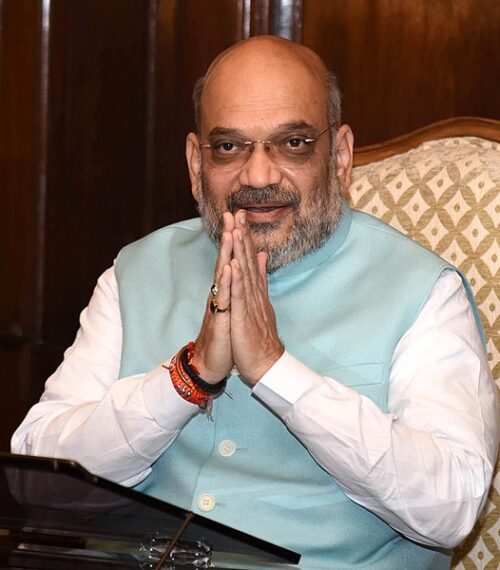
Union Home Minister Amit Shah has mounted a strong defense of the Bharatiya Janata Party’s administration in Manipur, using the no-confidence motion debate in the Lok Sabha to challenge the Opposition’s silence and accuse them of politicizing violence in the northeastern state. Speaking on August 9, 2023, Shah struck a defiant and emotive tone, blaming Opposition parties for avoiding a substantive debate on Manipur and insisting that the BJP-led government remains committed to restoring peace through constructive dialogue.
Shah emphasized that the central government had been ready from the beginning to discuss the Manipur situation but claimed that the Opposition bloc walked away from the opportunity. He stated that nothing stopped them from asking for a statement by Prime Minister Narendra Modi if they were dissatisfied with his own.
In a passionate rebuttal, Shah reminded Parliament that he was elected to speak on behalf of 1.3 billion Indians and rejected attempts to silence him. He said that while the Opposition may be reluctant to let him speak, they cannot mute him. He added that the government was chosen by 130 crore citizens and that the voices of its leaders must be heard in the House.
What has Amit Shah said about the situation in Manipur and curfew claims?
Shah claimed that during the BJP’s six-year rule in Manipur, the state had not faced a situation requiring the imposition of a curfew. This was a pointed counter to allegations that the region has become more unstable under the BJP’s leadership. He asserted that there was never a call for curfew under the BJP administration and framed this as evidence of administrative stability.
This claim is significant because Manipur has historically experienced recurring ethnic and insurgency-related tensions. By drawing attention to the absence of curfews, Shah attempted to contrast the BJP’s performance with earlier administrations while framing the current unrest as an aberration rather than a governance failure.
Critics outside Parliament, however, have pointed out that this argument does not diminish the seriousness of the violence that broke out in May 2023 between the Meitei and Kuki communities, which has since led to dozens of deaths and widespread internal displacement.
Why the Opposition is calling for Chief Minister Biren Singh’s removal
A major flashpoint in the Manipur debate has been the Opposition’s demand for the resignation of Chief Minister N. Biren Singh. In response, Shah rejected the demand outright and instead praised Singh’s proactive cooperation with the central government. He said that a change in state leadership would only be warranted in the absence of coordination with the Centre. In this case, he maintained, the Chief Minister had been working closely with the Union government to resolve the crisis.
By firmly backing Singh, Shah signaled that the BJP has no intention of giving in to political demands that might be perceived as surrendering to pressure. The stance also reflects the central leadership’s strategy of showing internal cohesion and standing by its state units during politically sensitive moments.
Opposition leaders, including those from the Congress party and other regional outfits, have accused Biren Singh of failing to maintain law and order and of displaying bias in handling the ethnic unrest. In contrast, Shah’s speech was aimed at framing Singh as an active partner in peacekeeping efforts, not a liability.
How is the BJP framing the violence between Meitei and Kuki groups?
The unrest in Manipur has largely stemmed from deep-rooted tensions between the majority Meitei population and the Kuki tribal community. The flashpoints include issues such as land rights, identity politics, and the demand for Scheduled Tribe status. These longstanding issues erupted into violent clashes in early May 2023, leading to large-scale displacement and loss of life.
Shah strongly criticized what he described as the politicization of these violent episodes. He stated that while incidents of violence had occurred, leveraging them for political gain was inexcusable. His remarks were directed at those Opposition leaders who have sought to capitalize on the crisis to mount pressure on the BJP-led administration at both state and central levels.
Instead of resorting to coercive tactics, Shah advocated for sustained dialogue between the Meitei and Kuki communities. He said that aggression was not the solution and reiterated the government’s commitment to restoring peace through mediation and mutual understanding. This emphasis on dialogue over division is part of the BJP’s broader strategy to position itself as a stabilizing force in conflict-prone regions.
What resolution did the Lok Sabha pass, and how was it received?
The session concluded with the Lok Sabha unanimously passing a resolution that called for peace in Manipur. The motion received enthusiastic backing from members of the ruling National Democratic Alliance and was also supported by several Opposition lawmakers present in the House at the time.
The resolution itself may be symbolic, but it serves as a critical marker of consensus at a time when the Manipur issue has deeply divided political narratives. By pushing this resolution through, the BJP sought to reclaim moral authority and demonstrate that it was capable of building consensus on matters of national concern, even amidst political acrimony.
Shah used the final minutes of his speech to assure the House that peace would return to Manipur and to appeal to all parties to avoid politicizing the crisis. He underlined that violence must not be used as a political instrument, and that the nation’s collective goal should be de-escalation and reconciliation.
Why the Manipur issue has become central to the no-confidence motion
The political tensions surrounding Manipur have grown into a wider test of credibility for the ruling BJP in the run-up to the 2024 general elections. For Opposition parties, the no-confidence motion served as a platform to corner the government and demand accountability over a crisis that has triggered national and international concern.
For the BJP, the debate was an opportunity to flip the script and portray itself as a responsible administrator unfairly attacked by opportunistic rivals. With Amit Shah taking center stage in the discussion, the government sought to reinforce its message of national unity and security.
Shah’s speech was not merely a policy statement. It was a calculated move in the BJP’s larger electoral and strategic playbook. By addressing the issue head-on, dismissing resignation demands, and reiterating the government’s peacekeeping role, the Union Home Minister attempted to reshape the narrative and neutralize Opposition criticism before it could gain further traction.
What Manipur’s ethnic tensions reveal about governance in border states
Manipur’s current conflict exposes the complexity of governing India’s northeastern border states, where ethnic identities, migration issues, and insurgent politics often intersect. The Meitei–Kuki clash is not just about communal tensions but also about resource allocation, political representation, and state legitimacy.
Governance in these areas involves not only administrative oversight but also a nuanced understanding of local grievances and historical injustices. For the BJP, which has expanded its presence across the Northeast in recent years, managing such unrest presents both a challenge and an opportunity. The party’s handling of the crisis will likely have ramifications for its electoral prospects in other sensitive states across the region.
Shah’s remarks aimed to position the central government as an enabler of peace rather than an instigator of conflict. The reference to a curfew-free record under BJP rule and his repeated appeals for dialogue appear to reflect a long-term strategy of framing the party as a unifying force, even in ethnically volatile regions.
Share this:
Discover more from Business-News-Today.com
Subscribe to get the latest posts sent to your email.