

How is Vale using tailings from the Gelado dam to create pellet feed for São Luís operations?
In a bold push toward circular mining and low-carbon steelmaking, Brazilian iron ore major Vale has officially commissioned the Gelado Project in Carajás, Pará, Brazil. The $485 million investment is designed to transform tailings—waste materials deposited over nearly four decades—into high-quality pellet feed for steel production. As of March 14, 2023, the project enters its commissioning phase, with full operational capacity expected by the second half of the year.
The Gelado Project centers around the reuse of tailings from the Gelado dam, which have accumulated since Vale first began iron ore extraction in the mineral-rich Carajás region in 1985. The initial production target is five million tons per year of pellet feed, which will be delivered to Vale’s pelletizing plant in São Luís, Maranhão. This aligns with the Brazilian mining company’s broader strategy to reduce scope 3 emissions by 15% by 2035—emissions that are primarily generated by clients during the steelmaking process.
By using legacy tailings as raw material, Vale aims to demonstrate that sustainable mineral processing and environmental remediation can go hand in hand. According to Gelado project operations manager Roberto Francisco, environmental considerations have been integral from the start. He emphasized that the initiative is “reducing the amount of tailings in the structure and transforming them into a new product, avoiding the necessity of future raisings,” while actively contributing to carbon emission reduction.
What technologies and methods is Vale using to decarbonize the Gelado Project operations?
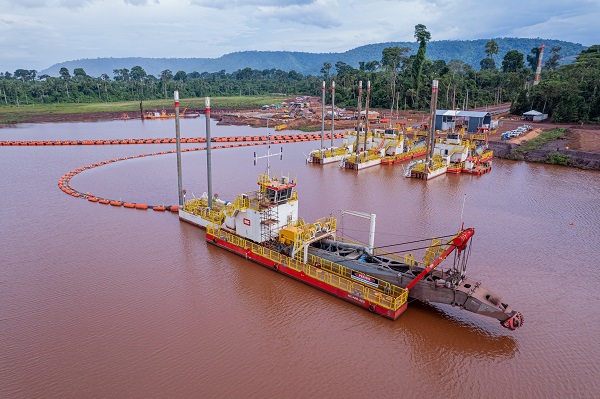
In addition to repurposing tailings, the Gelado Project incorporates fully electric extraction technology to limit greenhouse gas emissions during operations. The system includes electric dredges and electric pumps—chosen in line with Vale’s stated commitment to achieving net-zero emissions across scopes 1 and 2 by 2050.
These technological upgrades eliminate reliance on diesel-powered machinery, contributing to a safer and cleaner operation. The decision to electrify the extraction infrastructure reflects an industry-wide shift toward cleaner energy sources in mining operations. Within Vale’s sustainability framework, electrification is seen as a key enabler in decoupling growth from emissions.
When the Carajás Plant 1 completes its conversion to “natural humidity” processing—a method that eliminates the use of water in ore beneficiation—the Gelado Project’s capacity is expected to double to 10 million tons of pellet feed per year. This processing innovation will not only boost productivity but also further reduce environmental impact by eliminating the need for tailings dams in future mining activity.
Vale forecasts that the Gelado Project will cut an estimated 484,000 tons of CO₂ over the next decade. This reduction is comparable to the annual emissions of roughly 105,000 gasoline-powered passenger cars with 1,000-cc engines, underscoring the scale of the initiative’s carbon mitigation impact.
Why does the Gelado Project matter for the future of sustainable mining in Brazil?
The Gelado Project is more than a waste-reuse operation—it represents a systemic shift in how legacy tailings are perceived in mineral value chains. Rather than being liabilities, these by-products are being repositioned as untapped resources capable of supporting Vale’s pelletizing operations while contributing to environmental stewardship.
Pellet feed, which is a finer and more energy-efficient product for steel mills, is a cornerstone of Vale’s premiumization strategy. Supplying this feedstock from tailings not only reduces the need for fresh mining but also provides a cost-effective and lower-emission alternative for end users, particularly those in Europe and Asia facing stricter carbon compliance frameworks.
From an ESG standpoint, the project also aligns with investor expectations for circular economy practices. Vale’s use of existing deposits, rather than expanding footprint or creating new environmental burdens, improves the company’s standing with stakeholders concerned about dam safety and post-disaster mining reforms. The proactive desilting of the Gelado dam adds a risk-reduction layer by alleviating structural pressure and improving dam integrity.
Institutional sentiment around Vale has gradually improved in the aftermath of Brazil’s past tailings dam tragedies, particularly as it pushes forward with remediation and transition projects. The Gelado Project is viewed by some mining analysts as a concrete step toward restoring trust and reshaping Vale’s environmental narrative.
How does the Gelado Project integrate with Vale’s broader circular economy initiatives?
Beyond Gelado, Vale is developing additional initiatives that utilize sandy tailings for construction and infrastructure purposes. The Brazilian miner has already launched “Sustainable Sand” for the civil construction sector, a by-product that meets Brazil’s regulatory quality standards. Ongoing R&D efforts include experimenting with sandy tailings for road paving and even as partial substitutes for cement.
These efforts tie directly into Vale’s stated objective of eliminating the use of conventional tailings dams by 2035 and replacing traditional beneficiation methods with dry or low-humidity alternatives. As part of its Technology and Innovation roadmap, the company is working to integrate AI, real-time sensors, and material characterization tools to optimize these reuse flows.
These developments could also improve Vale’s competitiveness in the global steel supply chain, where decarbonization premiums and responsible sourcing are becoming critical differentiators. Reusing tailings not only reduces waste and water use but also aligns with regulatory frameworks evolving across the EU, Japan, and the U.S.
What are the long-term environmental and industrial implications of the Gelado Project?
Over the next decade, the Gelado Project is expected to serve as a model for similar tailings recovery and beneficiation initiatives across Brazil and other mineral-producing regions. With pressure mounting on global miners to reduce environmental risks and align with climate goals, projects like Gelado offer a replicable blueprint.
For the Carajás mining complex, one of the largest and most productive iron ore zones in the world, the project signals a shift from extractivism to regeneration. By transforming past waste into future resource, Vale is effectively reshaping how mining legacies are managed.
While immediate benefits center around pellet feed supply and emissions reductions, longer-term impacts include reduced dam risks, improved stakeholder trust, and the potential to reduce Vale’s overall capex requirements for fresh exploration or new tailings management infrastructure.
In global forums, Brazil is increasingly positioning itself as a supplier of low-carbon iron ore and green steel inputs. Projects like Gelado provide the material and reputational backbone for that ambition, especially as steelmakers in Europe and Asia seek raw material partners aligned with their decarbonization paths.
Can tailings recovery projects like Gelado define the future of low-carbon mining?
The launch of the Gelado Project is a milestone in Vale’s environmental transition, highlighting how legacy mining operations can be transformed into engines of sustainability. With its integration of electric dredging, dry beneficiation pathways, and scalable tailings reuse, the project addresses both operational efficiency and environmental accountability.
Vale’s focus on turning waste into premium feedstock while reducing carbon and dam exposure aligns with global ESG imperatives and national economic goals. As the Brazilian mining group scales these technologies across its broader operations, the Gelado Project is poised to be a reference point for sustainable mining practices not only in Latin America, but worldwide.
Discover more from Business-News-Today.com
Subscribe to get the latest posts sent to your email.