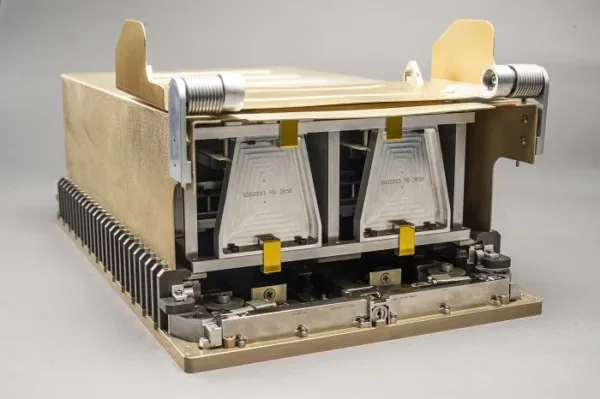
374Water Inc. (NASDAQ: SCWO) surged nearly 7 percent after announcing a $4 million contract with the City of Olathe, Kansas, marking a significant step in the company’s effort to scale its AirSCWO platform across the U.S. municipal market. The agreement is not just about technology deployment—it reflects a deeper shift in how cities are rethinking biosolids disposal, PFAS destruction, and decentralized infrastructure.
Under the terms of the agreement, 374Water Inc. will deliver its AirSCWO 6 system along with a 30 wet-tons-per-day pre-treatment and dewatering module over a two-year period. The goal is to demonstrate end-to-end biosolids and wastewater treatment that is emission-free, energy-efficient, and capable of destroying emerging contaminants including “forever chemicals” like per- and polyfluoroalkyl substances (PFAS).
How does 374Water’s AirSCWO system work and why are municipalities like Olathe adopting it now?
AirSCWO, which stands for air-powered supercritical water oxidation, uses extreme heat and pressure to oxidize organic waste streams into harmless water, carbon dioxide, and inert salts. It mimics a natural geological process, but within a modular, containerized footprint that allows for deployment in urban and industrial environments.
The City of Olathe is adopting this system as part of its long-term strategy to reduce reliance on costly sludge hauling, landfilling, and incineration. For a city balancing operational costs, compliance risks, and growing PFAS liabilities, the opportunity to convert waste into water and minerals on-site, with no secondary pollution, is a game-changing proposition.
Unlike traditional digesters or incinerators, the AirSCWO 6 unit operates in a closed loop, generating heat and clean water while eliminating the need for complex logistics or emissions controls. The solution could position Olathe as a regional leader in sustainable infrastructure while offering a reference case for other municipalities seeking next-generation biosolids treatment.
Why is this $4 million deal a turning point for 374Water’s revenue strategy and commercialization roadmap?
For 374Water Inc., the $4 million value is secondary to the strategic significance. This is the company’s first publicly disclosed municipal contract that bundles a full AirSCWO system with engineering, pretreatment, and deployment services. It’s the first concrete step toward monetizing its Waste Destruction Services (WDS) business model, a service-driven architecture that transforms one-time equipment sales into lifecycle revenue streams.
The Olathe contract also validates 374Water’s move into the municipal vertical—one of three core markets alongside federal and industrial. The municipal sector is notoriously risk-averse and slow-moving, making this contract a key milestone in building commercial credibility. If the six-month evaluation period in Olathe proves successful, the city could convert this pilot into a scaled roll-out, potentially influencing other Kansas municipalities and beyond.
With over $3 million recognized over the initial project timeline, this deal could also set the tone for future orders ranging from wastewater utilities to Department of Defense bases. It serves as a commercial reference, a regulatory test case, and a strategic beachhead for further penetration into the $20+ billion sludge treatment market.
How did the stock market respond to the news and what does this signal about investor sentiment toward PFAS infrastructure?
Shares of 374Water Inc. jumped nearly 7 percent on the Nasdaq following the announcement, reflecting strong investor appetite for proof-of-execution in the clean infrastructure sector. The market has viewed 374Water’s SCWO platform as promising but unproven; this contract begins to change that narrative.
The rise in share price indicates that retail and early-stage institutional investors are interpreting the deal as a de-risking event. It also signals that the company’s pivot from pure-play technology developer to full-service environmental infrastructure provider is gaining traction with Wall Street and sustainability-focused funds.
Importantly, the deal comes at a time when PFAS mitigation is becoming a front-page issue in the United States. The U.S. Environmental Protection Agency has proposed enforceable drinking water limits for PFAS compounds, and municipalities are under increasing legal and regulatory pressure to address the issue. Investors are betting that 374Water’s technology could position the company as a critical player in this unfolding compliance race.
What are the technical, operational, and financial risks associated with the City of Olathe deployment?
While the deal validates 374Water’s business model, it also introduces a new level of operational complexity. The contract includes a six-month technology evaluation period, during which the AirSCWO 6 system must meet specific performance metrics related to throughput, emissions, chemical destruction, and reliability.
Execution risk is real, especially since this is the company’s first major municipal reference. Any underperformance could delay revenue recognition, trigger contractual disputes, or harm its reputation in a tightly regulated market. The company must also prove it can execute the integration of pre-treatment systems, manage site-specific variables, and support ongoing operations without excessive cost overruns.
Financially, investors should monitor 374Water’s cash position and operating expenses closely. The company has taken steps to maintain listing compliance and align executive equity incentives, but the capital intensity of scaling municipal deployments remains high. Margins on this initial deal may be modest due to first-time engineering costs, but future profitability could improve with design standardization and unit volume.
How does 374Water’s strategy compare with other companies in the advanced sludge and PFAS destruction space?
374Water Inc. is entering a competitive and rapidly evolving segment that includes established players in thermal hydrolysis, pyrolysis, and emerging plasma oxidation technologies. Companies like Cambi ASA, BioForceTech, and PyroGenesis are offering alternative pathways for biosolids reduction and PFAS neutralization.
Where 374Water differentiates is in its closed-loop, chemical-free design that claims zero air emissions and complete contaminant destruction in a small-footprint unit. Unlike incineration or digestion systems that require long lead times and large capital outlays, AirSCWO units are designed to be modular, shippable, and deployable with limited civil works.
The company is also bundling hardware with service, positioning itself more like a decentralized utility than a capital equipment vendor. If successful, this asset-light model could enable rapid scaling without taking on the heavy balance sheet risk of infrastructure ownership.
What are the broader market implications of this deal for U.S. municipal infrastructure and climate-tech investment?
At a macro level, this contract signals that municipalities are now ready to pilot and adopt cleantech systems previously viewed as too novel or unproven. As cities grapple with aging infrastructure, sludge disposal crises, and PFAS mandates, demand for turnkey, scalable, low-emission solutions is rising.
374Water’s AirSCWO technology speaks directly to this demand, offering a multi-benefit solution that addresses environmental, economic, and public health concerns in one containerized platform. The fact that Olathe is funding this deployment using local infrastructure capital, rather than relying on a federal grant or innovation pilot, indicates growing mainstream acceptance of SCWO and related technologies.
For climate-tech investors and environmental engineering firms, the message is clear: sludge, biosolids, and PFAS represent a new frontier of decarbonization and circular economy investment. What solar was to energy ten years ago, sludge-to-value could be for municipal utilities in the next five.
What should investors watch next as 374Water moves into full-scale commercialization?
The next phase for 374Water Inc. hinges on execution and repeatability. Investors should watch the Olathe pilot evaluation results, the timing and terms of revenue recognition, and whether the company can secure additional municipal or federal clients in calendar year 2026.
Updates to manufacturing capacity, strategic partnerships, and third-party financing models will also be key. If the company can move toward recurring revenue through service agreements or performance-based contracts, its valuation profile could shift significantly.
Expectations are rising, and so is competition. But if 374Water proves that AirSCWO can meet real-world sludge throughput and PFAS destruction targets at a commercially viable price point, the municipal market could open wide. This contract may just be the beginning of a cleantech inflection point in U.S. wastewater infrastructure.
Key takeaways from 374Water’s $4 million AirSCWO deployment with City of Olathe
- 374Water Inc. has signed a $4 million contract with the City of Olathe, Kansas, marking its first major municipal deployment of the AirSCWO 6 system.
- The system will treat biosolids and destroy PFAS on-site using supercritical water oxidation, potentially replacing legacy hauling and incineration models.
- The stock surged nearly 7 percent on the Nasdaq, as investors viewed the deal as a validation of the company’s go-to-market and service bundling strategy.
- The contract includes a six-month performance evaluation period before further scale-up, introducing execution and operational risk.
- This deployment positions 374Water Inc. as a rising player in cleantech infrastructure, with applications across municipalities, federal agencies, and industrial clients.
- The company’s model could enable long-term recurring revenue if adopted widely, particularly under tightening U.S. Environmental Protection Agency PFAS regulations.
Discover more from Business-News-Today.com
Subscribe to get the latest posts sent to your email.