

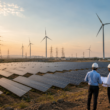




Clean Max Enviro Energy Solutions Limited (NSE: CLEANMAX, BSE: 544717) has announced a renewable energy partnership with Meta Platforms, Inc. (NASDAQ: META) that will support 837 MW of new solar and wind capacity across Rajasthan and Karnataka. The arrangement takes the companies’ India renewable energy partnership above 900 MW when previously announced projects are included. CLEANMAX shares closed at ₹1,335.50 on June 10, 2026, up 8.37%, after touching an intraday and 52-week high of ₹1,421.20. The immediate strategic relevance is clear: CleanMax gains a marquee technology customer at scale, while Meta secures clean energy attributes tied to India’s expanding digital and artificial intelligence infrastructure. For investors, the deal sharpens the debate over whether CleanMax is still a conventional commercial and industrial renewable power developer or is becoming a critical supplier to global technology-driven energy demand.
Why does the CleanMax and Meta renewable energy partnership matter for India’s digital infrastructure growth?
The CleanMax and Meta partnership matters because it connects three powerful themes that are moving at the same time: India’s renewable energy buildout, corporate decarbonisation and the electricity intensity of digital infrastructure. Meta’s demand for clean power is not abstract. Social platforms, cloud-adjacent services, artificial intelligence workloads and data-centre expansion all require large, reliable and increasingly carbon-conscious energy supply. That makes the buyer profile almost as important as the project capacity.
Clean Max Enviro Energy Solutions Limited will develop and operate 837 MW of new renewable energy capacity across Rajasthan and Karnataka, using large-scale solar and wind projects. Meta will purchase all the environmental attributes from these projects. This distinction matters because it positions CleanMax not just as a generator of renewable electricity, but as a supplier of decarbonisation instruments that large global corporations can use to match power consumption with clean energy goals.
The geographic spread is also important. Rajasthan and Karnataka are two of India’s most relevant renewable energy states, but they differ in resource mix, grid conditions, land dynamics and policy execution. A multi-state project portfolio gives CleanMax diversification, but it also introduces execution complexity. Land acquisition, grid connectivity, transmission availability, weather patterns and state-level approvals can all influence timelines. In clean energy, megawatts on paper are exciting. Megawatts connected to the grid are where the hard work starts.
How does the Meta partnership strengthen CleanMax’s position in commercial and industrial renewable energy?
CleanMax has built its business around commercial and industrial renewable energy customers, a segment that differs meaningfully from utility-scale power procurement. Commercial and industrial clients usually want cost savings, decarbonisation credibility, predictable power supply and long-term contractual clarity. Large technology companies add another layer because their electricity needs can grow rapidly as digital infrastructure expands.
The Meta deal strengthens CleanMax’s positioning because it validates the company’s ability to serve sophisticated multinational customers with large-scale clean energy requirements. CleanMax already serves customers across technology, digital infrastructure, manufacturing and industrial sectors, and its contracted renewable energy portfolio reached 5.7 GW in FY2025-26. The company has also highlighted that data centres and artificial intelligence infrastructure customers account for 42% of its contracted renewable energy power sales portfolio, which is a major strategic signal.
That customer mix matters for future growth. If data-centre and artificial intelligence workloads continue rising in India, renewable energy suppliers with proven execution credentials and large corporate relationships could gain pricing power, stronger repeat business and better financing access. However, this also raises concentration risk. A renewable energy company that becomes increasingly tied to data-centre power demand may benefit from high growth, but it also becomes exposed to the investment cycles of global technology companies. When Big Tech sneezes, power developers may want to check the grid temperature.
Why did #CLEANMAX stock rally after the Meta renewable energy announcement?
The CLEANMAX rally reflects a direct market response to a deal that investors can easily understand: a large renewable energy partnership with one of the world’s most influential technology companies. CleanMax shares touched ₹1,421.20 during the session, marking a fresh 52-week high, before closing at ₹1,335.50. The stock’s move suggests investors viewed the announcement as more than a routine customer win.
The market reaction also reflects a broader reassessment of CleanMax after a difficult start to its listed life. The company’s March 2026 market debut was weak, with the stock listing below its issue price amid soft retail demand and broader caution around primary market valuations. That backdrop makes the Meta partnership more significant. It gives investors a concrete operating catalyst after an IPO that initially struggled to win retail enthusiasm.
Still, the stock move requires balance. A one-day jump does not automatically prove that the full economic value of the partnership will be captured by shareholders. Investors still need to assess project-level returns, capital expenditure requirements, financing costs, execution timelines and the structure of the environmental attribute purchase. The headline capacity is large, but equity value will depend on whether CleanMax can deliver the projects on schedule, at acceptable returns, and without adding excessive balance-sheet strain.
What does the deal reveal about Meta’s energy strategy as artificial intelligence spending rises?
Meta Platforms is under increasing investor scrutiny because artificial intelligence infrastructure requires major capital spending, data-centre expansion and long-term access to power. The renewable energy partnership with CleanMax fits that strategic reality. Meta needs to secure clean energy pathways in markets where user growth, digital services and infrastructure investment are converging. India is one of those markets.
For Meta, purchasing environmental attributes from CleanMax’s projects helps align regional power needs with its clean energy commitments. This does not mean Meta is directly building and operating the projects itself. Instead, the company is using a procurement model that allows new renewable energy capacity to be developed while supporting its electricity matching goals. That makes the structure attractive for technology companies that want scale without owning every physical asset.
The timing is sensitive because Meta’s stock has been pressured by debate around artificial intelligence infrastructure funding. The company traded near $575.65 on June 10, 2026 and remained well below its 52-week high. Investors are watching whether Meta can fund artificial intelligence growth without diluting returns or overextending capital expenditure. In that context, the CleanMax partnership is strategically consistent with Meta’s infrastructure needs, but it also underscores a wider point: artificial intelligence is not only a software story. It is increasingly a power, land, grid and capital allocation story.
What execution risks could affect CleanMax’s 837 MW solar and wind buildout?
The biggest execution risk is project delivery. Developing 837 MW across two Indian states requires land access, permitting, transmission connectivity, equipment procurement, construction discipline and operational coordination. Delays in any of these areas can affect returns, especially when projects are tied to corporate procurement timelines. Renewable energy developers do not get paid for intentions; they get paid for operational assets and contracted performance.
The second risk is financial. CleanMax recently raised about $575 million to support renewable energy projects, which strengthens its ability to fund expansion. However, rapid growth still requires careful capital allocation. Solar and wind projects are capital-intensive, and developers must balance debt, equity, internal cash generation and project-level financing. A stronger order book is positive only if the company can finance it without weakening returns or stretching the balance sheet.
The third risk is contract economics. Large technology customers are attractive because they bring scale, visibility and credibility. They are also sophisticated buyers. CleanMax must ensure that contract pricing, environmental attribute structures and operational obligations protect long-term profitability. If competitive bidding compresses returns, the partnership may deliver reputation value faster than financial value. For investors, the key question is not only how much capacity CleanMax builds, but how much economic value CleanMax retains.
How could this partnership reshape renewable energy competition for India’s data-centre sector?
The CleanMax and Meta partnership is likely to intensify competition among renewable energy developers targeting data centres, artificial intelligence infrastructure and large commercial power users. India’s data-centre market is expanding as global technology companies, telecom operators, cloud providers and enterprise customers increase local capacity. That growth creates a parallel requirement for renewable power procurement, grid planning and sustainability-linked energy solutions.
CleanMax’s advantage lies in its established commercial and industrial renewable platform, customer relationships and portfolio scale. The company has positioned itself as a partner for corporations seeking large-scale decarbonisation rather than only as a merchant or utility-linked developer. That gives it relevance in sectors where energy procurement is directly tied to brand, regulation, investor expectations and supply-chain emissions.
Competitors will not stand still. Other renewable developers, independent power producers, storage providers and energy management platforms will try to capture the same demand. The next phase of competition may be less about who can announce the largest capacity and more about who can offer hybrid power, better reliability, storage integration, stronger grid access and credible environmental accounting. For data-centre customers, renewable procurement is becoming a core infrastructure decision, not a sustainability side project.
What should investors watch after CleanMax’s fresh 52-week high?
Investors should first watch whether CleanMax provides more detail on project timelines, commissioning phases and capital expenditure linked to the Meta partnership. Capacity announcements are useful, but staged execution matters. If the projects are commissioned smoothly, CleanMax can strengthen revenue visibility and reinforce customer confidence. If delays emerge, the market may reassess how quickly the partnership can support earnings.
The second area to track is CleanMax’s customer concentration and repeat business. The company has indicated that existing customers drove a large share of new contracted capacity in FY2025-26. That is a good sign because repeat customers usually reduce origination risk and support long-term visibility. However, investors should also watch whether the company remains diversified across technology, manufacturing, pharmaceuticals, cement, steel and other industrial segments.
The third area is valuation discipline. CLEANMAX has moved sharply from its post-listing weakness and now trades near its fresh high. Momentum investors may like the chart, but long-term investors need project returns, cash-flow conversion, debt discipline and margin visibility. The Meta partnership improves the strategic story substantially. The next test is whether CleanMax can turn that story into durable earnings growth, not just a louder stock-market cheer.
What are the key takeaways from CleanMax’s Meta partnership for investors and India’s renewable energy market?
- Clean Max Enviro Energy Solutions Limited has secured a strategically important partnership with Meta Platforms that supports 837 MW of new solar and wind capacity across Rajasthan and Karnataka.
- The partnership now represents more than 900 MW of renewable energy capacity when combined with earlier projects, giving CleanMax a stronger position in large-scale corporate clean energy procurement.
- Meta is purchasing all environmental attributes from the new projects, making the arrangement highly relevant to corporate decarbonisation, clean electricity matching and technology-sector sustainability goals.
- CLEANMAX shares rallied sharply after the announcement, touching a fresh 52-week high before closing higher, showing that investors treated the Meta partnership as a meaningful strategic catalyst.
- The deal strengthens CleanMax’s exposure to data centres and artificial intelligence infrastructure, a segment that already contributes a significant share of its contracted renewable energy power sales portfolio.
- Execution risk remains important because 837 MW of new capacity requires land access, grid connectivity, equipment procurement, financing discipline and timely project commissioning across two states.
- The partnership reinforces the idea that artificial intelligence infrastructure growth in India will depend not only on data centres and chips, but also on reliable renewable energy procurement.
- Meta’s own stock context shows that investors remain sensitive to the capital intensity of artificial intelligence, making clean energy procurement a strategic necessity rather than a public relations accessory.
- CleanMax gains credibility from serving a global technology company, but the long-term shareholder benefit depends on project returns, contract economics and cash-flow conversion.
- India’s commercial and industrial renewable energy market is likely to become more competitive as data-centre operators, manufacturers and global capability centres demand cleaner and more reliable power.
Share this:
Discover more from Business-News-Today.com
Subscribe to get the latest posts sent to your email.