


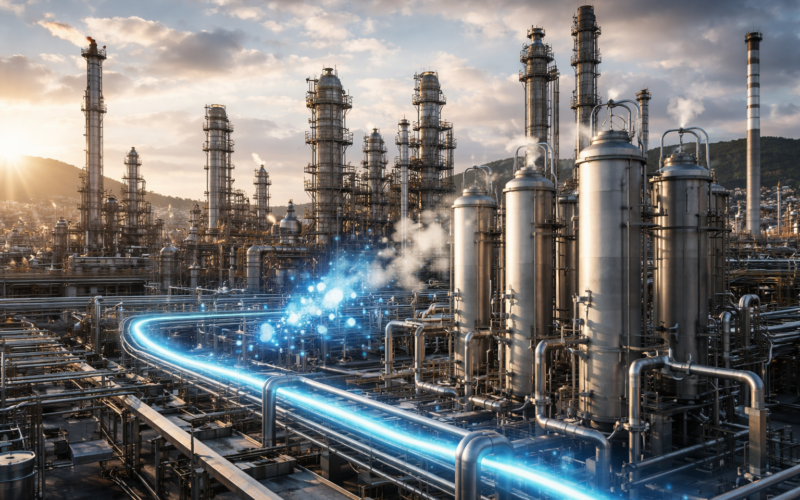
Petronor and H2SITE have signed a strategic agreement to deploy hydrogen separation technology at the Petronor refinery in Bilbao, a move aimed at improving hydrogen recovery inside existing refining operations while opening a more practical path to lower-carbon industrial production. The project will center on a First-of-a-Kind unit that integrates H2SITE’s membrane technology into the Steam Methane Reforming process, one of the refinery sector’s main hydrogen production routes. At a time when European industry is being pushed to cut emissions without wrecking cost competitiveness, the partnership matters less as a simple pilot and more as a test of whether old refining assets can be upgraded into more efficient hydrogen platforms. That makes the announcement relevant not only for Petronor and H2SITE, but also for a broader refining sector trying to decarbonise without pretending legacy infrastructure does not exist.
Why does the Petronor and H2SITE hydrogen membrane project matter for refinery decarbonisation now?
The timing of this partnership is not accidental. Refineries are under pressure from multiple directions at once, including tighter emissions expectations, volatile energy costs, investor scrutiny around transition spending, and the need to protect industrial relevance in a Europe that wants cleaner molecules but still runs on hard economics. In that context, hydrogen is both a solution and a headache. It is essential to refining operations, but conventional hydrogen production through Steam Methane Reforming remains carbon-intensive unless efficiency improves and carbon capture becomes more viable.
That is where the Petronor and H2SITE tie-up becomes strategically interesting. Instead of pitching a greenfield dream that takes years to permit, fund, and build, the project is focused on improving hydrogen management inside an existing industrial process. That matters because many industrial decarbonisation strategies look wonderful in conference decks and considerably less wonderful when they meet capex committees. A membrane-based solution that can recover more hydrogen downstream of existing reformers offers something executives actually care about: incremental improvement with potentially measurable operating benefits.
The emphasis on CO2 capture opportunity is equally important. Better hydrogen separation does not automatically solve refinery emissions, but it can make the overall process more capture-friendly by improving stream purity and process efficiency. In other words, this is not the whole decarbonisation puzzle, but it could make other pieces fit better. That makes the pilot relevant beyond hydrogen purity alone.
There is also a competitiveness angle. European refining is often caught between expensive transition requirements and global rivals with lower structural costs. Technologies that improve yield, lower net energy demand, and make existing assets cleaner can help narrow that gap. No, a membrane will not single-handedly save the continent’s industrial base, but in heavy industry, small efficiency gains have a habit of becoming very serious boardroom topics when multiplied across large plants.
How could H2SITE’s membrane technology change hydrogen recovery economics inside existing refining assets?
The real appeal of H2SITE’s proposition is that it targets a stubborn industrial problem with a potentially modular answer. Refineries already produce and consume hydrogen at scale, and any technology that improves recovery from existing units can affect energy use, output efficiency, and emissions intensity all at once. That is a better conversation to have with industrial operators than asking them to tear up the entire plant and start behaving like a startup.
By integrating membrane separation into the Steam Methane Reforming chain, the project is designed to recover additional hydrogen that might otherwise be lost or less efficiently used. If the technology performs as intended at refinery scale, it could improve process yields without requiring a wholesale redesign of the facility. That is the industrial equivalent of finding extra value in a machine you already own, which usually gets more attention than futuristic concepts with a ten-year payoff horizon.
The First-of-a-Kind label matters here, not as a branding flourish but as a commercial reality check. Early-stage industrial technologies often look promising at pilot scale and then run into ugly truths when exposed to real operating conditions, integration complexity, maintenance requirements, or plant uptime expectations. A refinery is not a laboratory, and it has very little patience for elegant theories that interrupt throughput. If H2SITE can prove repeatability, reliability, and performance in that environment, the commercial case becomes much stronger.
That also explains why the company is framing this installation as a scale-up route rather than a one-off science project. The real prize is not a single deployment in Bilbao. It is the possibility that similar retrofits could be applied across other refining and industrial hydrogen assets where operators want better economics and lower emissions without waiting for a total system overhaul. If successful, the project could shift H2SITE from interesting technology provider to credible infrastructure partner, which is a much more valuable position in industrial markets.
What does this partnership signal about Petronor’s industrial strategy and its decarbonisation roadmap?
For Petronor, the announcement fits a wider pattern of trying to modernise refining operations while staying economically relevant in a rapidly changing energy system. The company is not walking away from refining overnight, because no serious operator with large physical assets and employment commitments can do that with a straight face. Instead, it is pursuing a more pragmatic path that uses hydrogen, efficiency upgrades, and innovation spending to reshape what a refinery can be in a lower-carbon industrial model.
That matters because transition strategies in refining are increasingly being judged on credibility rather than rhetoric. Grand net-zero aspirations are easy to publish and much harder to engineer. By partnering on a technology that seeks to improve existing processes, Petronor is signaling that decarbonisation will have to be operational, not merely symbolic. It also suggests the company sees hydrogen management as a competitive lever, not just an environmental compliance issue.
The broader industrial footprint described around Petronor adds another layer of significance. A company with deep regional economic importance, large tax contributions, and a major role in port traffic cannot afford a transition strategy detached from industrial productivity. That makes projects like this one politically and economically relevant. Policymakers want emissions reductions, but they also want jobs, tax revenues, and functioning industrial hubs. Technologies that promise both cleaner output and stronger competitiveness tend to get a warmer reception than projects that deliver moral satisfaction and commercial pain.
There is also an execution message in the announcement. Petronor is bringing engineering and operations teams into direct collaboration with H2SITE’s technical experts, which indicates this is being treated as an industrial integration exercise rather than a passive vendor procurement. That can improve the odds of meaningful deployment because the hardest part of industrial innovation is often not the invention itself, but getting it to behave inside existing plant realities.
Could this First-of-a-Kind refinery unit become a template for wider hydrogen deployment across Europe?
It could, but only if the project clears the three hurdles that always matter in industrial scale-up: performance, economics, and replicability. A First-of-a-Kind unit attracts attention precisely because it sits at the uncomfortable border between promise and proof. If the Bilbao deployment shows that membrane integration can reliably increase hydrogen recovery, reduce energy intensity, and support better carbon management, it could become a reference case for other refineries and hydrogen-intensive industrial sites.
Europe would be a natural proving ground. The region has an unusually strong combination of emissions pressure, policy support for hydrogen and carbon management, and a large installed base of industrial assets that cannot simply be replaced overnight. That creates demand for retrofit-friendly technologies that can upgrade legacy systems. In that sense, the Petronor and H2SITE project is part of a wider industrial trend toward decarbonisation through adaptation rather than demolition.
Still, the risk factors are real. First-of-a-Kind projects can stumble on integration costs, maintenance burdens, scaling bottlenecks, and underwhelming real-world returns. Refinery operators will want evidence that the membrane system does more than work technically. They will want proof that it improves economics enough to justify deployment decisions in a margin-sensitive sector. If the answer is yes, replication becomes plausible. If the answer is only sort of, the project may remain a useful demonstration without triggering a broader rollout.
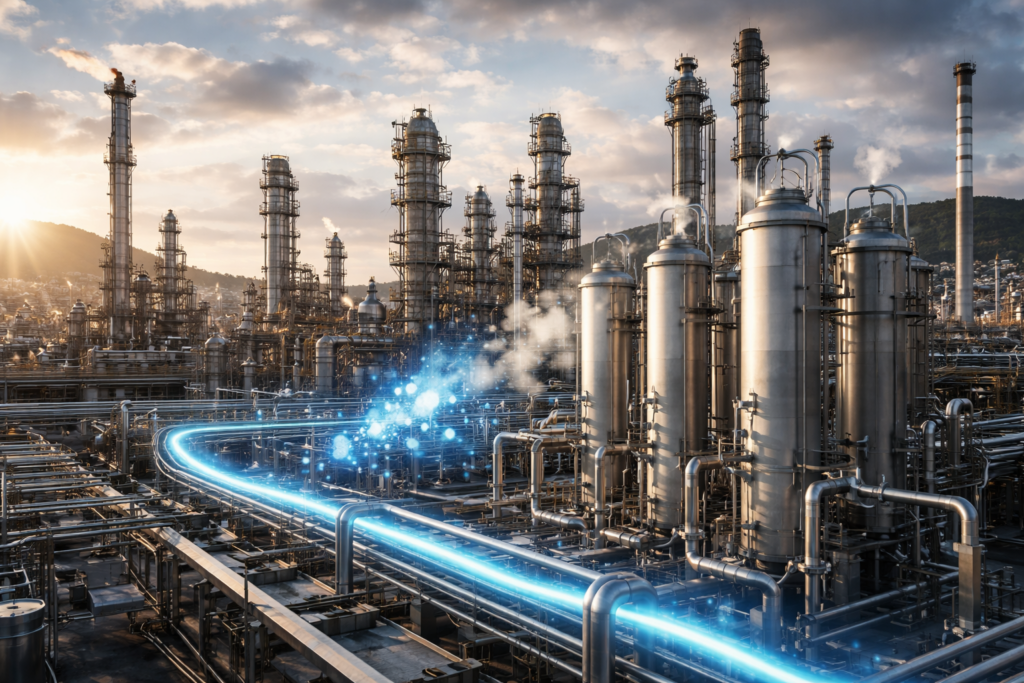
Commercialisation speed will also matter. Industrial buyers tend to prefer standardised, bankable systems, and H2SITE is clearly trying to position its technology in those terms. That is smart because heavy industry does not like bespoke science experiments when lenders, insurers, and plant managers are involved. The more standardised the offering becomes, the easier it is to move from pilot success to actual procurement.
Why are refinery hydrogen upgrades becoming central to the next phase of industrial decarbonisation?
One reason is simple: industry has run out of easy wins. The next stage of decarbonisation will not come only from renewable power headlines or theoretical hydrogen demand curves. It will come from hard, process-level improvements in sectors that already consume huge amounts of energy and molecules. Refining sits squarely in that category.
Hydrogen upgrades matter because hydrogen is already embedded in refining and chemicals. Improving how it is produced, recovered, separated, and used can deliver compound benefits across cost, emissions, and plant efficiency. That makes it one of the more practical levers available to operators who cannot pause production for a grand reinvention. It is not glamorous, but then neither is most of industrial progress. Pipes, membranes, compressors, and process engineering rarely trend on social media, yet they decide whether decarbonisation survives first contact with reality.
The Petronor and H2SITE partnership also highlights a growing middle ground in the energy transition. On one side sit fully greenfield visions of future hydrogen ecosystems. On the other sit incumbent assets often dismissed as yesterday’s infrastructure. The middle ground is about upgrading what already exists so it can perform better in a lower-carbon system. That may not satisfy absolutists, but it tends to be where actual industrial transformation happens.
For the refining sector, that is likely to be the defining theme of the next several years. The winners may not be the companies with the loudest transition slogans, but the ones that find credible ways to reduce emissions intensity, protect margins, and extend the strategic relevance of their assets. On that measure, the Petronor and H2SITE agreement is worth watching closely.
Key takeaways on what the Petronor and H2SITE refinery hydrogen project means for European industry
- Petronor and H2SITE are testing whether membrane-based hydrogen recovery can improve refining efficiency without requiring a full asset overhaul.
- The project matters because it targets existing Steam Methane Reforming infrastructure, where practical upgrades often beat greenfield ambition on speed and cost.
- Better hydrogen separation could support stronger CO2 capture economics, making the decarbonisation value broader than hydrogen purity alone.
- For Petronor, the deal signals a transition strategy built around operational modernization rather than headline-heavy symbolism.
- For H2SITE, refinery-scale deployment is a commercial credibility test that could determine whether its technology becomes repeatable industrial infrastructure.
- If the First-of-a-Kind unit performs well, other European refineries may view similar retrofits as a lower-risk decarbonisation pathway.
- The broader strategic theme is that industrial decarbonisation is shifting toward asset adaptation, not just asset replacement.
- Execution risk remains high because industrial pilots often struggle when moving from controlled demonstrations to live operating environments.
- Refinery hydrogen management is becoming a serious competitiveness issue, especially in Europe where emissions pressure and industrial cost pressure collide.
- The partnership shows that some of the most important transition bets are not flashy new energy systems, but smarter ways to upgrade the heavy infrastructure already in place.
Discover more from Business-News-Today.com
Subscribe to get the latest posts sent to your email.

