




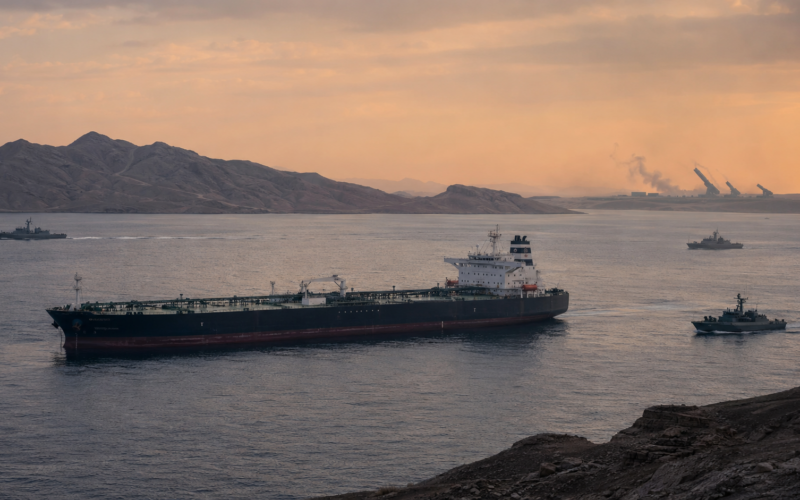
The United States military carried out self-defense strikes in southern Iran against missile-related targets and boats suspected of laying naval mines, adding a new layer of risk to an already fragile ceasefire process involving the United States, Iran, Israel, and the wider Middle East.
The strikes came as United States officials and Iranian officials were still engaged in efforts to preserve a ceasefire framework and reduce the risk of a wider regional confrontation. United States Central Command described the military action as defensive and linked the strikes to threats against United States forces. The targets included missile launch-related infrastructure and vessels connected to mine-laying activity near southern Iranian waters.
The Strait of Hormuz remains central to the crisis because it is one of the world’s most important energy corridors. Any threat to navigation through the Strait of Hormuz directly affects oil flows, shipping insurance, global energy pricing, and the security calculations of Gulf states. The latest United States action therefore carries consequences well beyond the military exchange itself.
The development also complicates diplomatic efforts tied to Iran’s nuclear programme, regional militia activity, maritime security, and the future of the Abraham Accords. The United States government has been seeking a broader regional arrangement that could reduce hostilities while preserving pressure on Iran. Iran, meanwhile, has continued to signal that any durable settlement must protect Iranian sovereignty and avoid terms seen in Tehran as unilateral concessions.
Why did the United States strike Iranian targets during ceasefire talks over the Strait of Hormuz?
The United States military action was framed as a response to immediate threats against United States forces in the region. United States Central Command said the strikes were intended to protect American personnel while maintaining restraint during the ceasefire process.
That institutional framing matters because Washington is trying to separate tactical military action from strategic diplomatic collapse. The United States is attempting to show that it can respond to threats without abandoning ceasefire negotiations. This is a difficult balance in the Persian Gulf, where a single maritime incident can quickly produce wider economic and military consequences.
The suspected mine-laying activity is especially sensitive because mines in or near the Strait of Hormuz would threaten commercial vessels, naval assets, and energy shipments. Mine warfare has long been viewed as a low-cost but high-impact tool in maritime chokepoints. In the current crisis, even limited mine-laying activity can raise fears of shipping disruption and trigger higher oil prices.
For Iran, the United States strikes create a political and military dilemma. Iran can absorb the strikes and continue talks, which may preserve diplomatic space. Iran can also retaliate directly or indirectly, which may strengthen hardline domestic narratives but risk a broader confrontation with the United States and Israel. That tension is why the latest episode is more than a military footnote.

How does the Strait of Hormuz shape the global importance of the United States and Iran confrontation?
The Strait of Hormuz gives the United States and Iran crisis global economic significance. The waterway links Gulf oil and gas exporters to global markets, making maritime security in the Strait of Hormuz a direct concern for Asian economies, European consumers, Gulf monarchies, and global energy traders.
The immediate military facts involve United States strikes, Iranian targets, suspected mine-laying boats, and missile sites. The broader institutional issue is freedom of navigation. The United States has long treated Gulf maritime security as a core interest because commercial shipping through the Strait of Hormuz is tied to energy stability and allied security.
For Gulf states, the latest incident reinforces the risk that local military exchanges can become system-level energy shocks. Saudi Arabia, the United Arab Emirates, Qatar, Kuwait, Bahrain, and Oman all have strong reasons to avoid disruption in the Strait of Hormuz. Even states not directly involved in the fighting must account for shipping delays, insurance costs, investor anxiety, and possible pressure on government budgets if energy flows are interrupted.
For India, China, Japan, and South Korea, the Strait of Hormuz remains a vital external energy artery. That makes the United States and Iran confrontation relevant to Asian energy security, not only Middle Eastern diplomacy. Any prolonged disruption would affect crude prices, refined fuel costs, inflation management, and fiscal planning in energy-importing economies.
What does the latest United States action mean for Iran ceasefire diplomacy and nuclear negotiations?
The United States strikes create a more complicated environment for ceasefire diplomacy because the military and diplomatic tracks are now moving at the same time. United States officials are attempting to keep negotiations alive while using force against what Washington sees as direct threats. Iran must decide whether to treat the strikes as limited battlefield activity or as evidence that the United States is negotiating under military pressure.
The nuclear dimension remains central because Washington continues to seek limits on Iran’s nuclear activity, including concerns over enriched uranium. Iran has resisted arrangements that would be seen domestically as surrendering strategic leverage without credible sanctions relief or security guarantees.
This creates a sequencing problem. The United States wants reduced Iranian military risk, limits on nuclear activity, and regional de-escalation. Iran wants sanctions relief, protection from further attacks, and recognition of its right to national security. Israel wants constraints on Iran’s nuclear and regional military capacity. Gulf states want maritime stability and economic predictability.
The result is a narrow diplomatic corridor. If the United States strikes are treated as contained self-defense action, talks may continue. If Iran treats the strikes as escalation, the ceasefire process could weaken. If shipping threats in the Strait of Hormuz grow, global pressure for a maritime security response could increase quickly.
Why is the Abraham Accords debate now part of the wider United States Iran strategy?
The Abraham Accords have returned to the centre of regional diplomacy because the United States is trying to link Iran de-escalation with a broader Middle East political architecture. The United States has pushed for expanded normalisation between Israel and more Muslim-majority countries, while also trying to contain Iran’s regional influence.
This strategy reflects a wider United States objective. Washington wants a regional order in which Israel is more integrated, Gulf states have stronger security assurances, and Iran faces diplomatic pressure to reduce hostile activity. That framework, however, faces major obstacles because several states remain constrained by the unresolved Palestinian issue, domestic political opinion, and fear of appearing to endorse Israeli military conduct without concessions.
The current crisis shows why the Abraham Accords are not just a diplomatic branding exercise. Any expansion of the Abraham Accords would affect how regional states coordinate security, trade, intelligence, energy policy, and technology partnerships. It could also reshape how states balance relations with the United States, China, Russia, Iran, and Israel.
Iran is unlikely to view an expanded Abraham Accords framework as neutral. Tehran would see deeper Israel-Gulf or Israel-Muslim world integration as part of a containment architecture. That perception could make Iran more cautious in negotiations or more willing to use pressure tactics through maritime activity and allied regional networks.
How could the United States Iran confrontation affect oil prices and global economic stability?
The economic risk from the United States and Iran confrontation comes from uncertainty around energy flows. Even without a full closure of the Strait of Hormuz, mine-laying fears, missile threats, naval deployments, and insurance concerns can raise costs for shipping and energy markets.
Oil prices respond not only to actual supply disruption but also to perceived risk. If traders believe the Strait of Hormuz could become less secure, the market may price in a geopolitical risk premium. That can push up crude prices, increase fuel costs, and complicate inflation management for major importing countries.
For the United States, the economic stakes are domestic as well as strategic. Higher fuel prices can affect consumers, logistics companies, airlines, manufacturers, and political sentiment. For European governments, energy volatility comes at a time when defence spending, fiscal pressure, and industrial competitiveness remain major policy concerns. For Asian importers, a Gulf shipping shock would affect currency balances, trade deficits, and household energy costs.
The latest United States strikes therefore have a dual impact. Militarily, the strikes signal that Washington will respond to threats against its forces. Economically, the strikes underline that the Gulf remains a flashpoint where tactical incidents can carry global consequences.
What happens next if the United States, Iran, and regional powers fail to stabilise the ceasefire?
The next phase depends on whether the United States and Iran can prevent tactical confrontations from overwhelming diplomacy. If both sides keep military activity limited, the ceasefire framework may survive long enough for more detailed negotiations. If further maritime incidents occur, the ceasefire could become harder to defend politically and militarily.
Israel’s posture will also matter. If Israel intensifies operations against Iran-linked targets in Lebanon, Syria, Iraq, or elsewhere, Iran may face pressure to respond through regional partners. That would widen the crisis beyond the United States and Iran track.
Gulf states will likely prioritise maritime stability and energy continuity. Their diplomatic preference is likely to favour de-escalation, but their security planning will assume the possibility of renewed disruption. The United States will also face pressure to keep naval routes open without triggering a larger conflict.
The most important question is whether the Strait of Hormuz remains open and commercially viable. If ships continue to move without sustained disruption, diplomacy can continue under pressure. If mining threats, missile threats, or naval clashes escalate, the United States and Iran confrontation could quickly become a global energy security crisis.
What are the key takeaways from the United States strikes on Iranian targets near the Strait of Hormuz?
- The United States military carried out self-defense strikes in southern Iran against missile-related targets and boats suspected of mine-laying activity. The strikes were presented by United States Central Command as defensive action linked to threats against American forces.
- The Strait of Hormuz remains the most important geographic pressure point in the crisis between the United States and Iran. Any threat to shipping through the Strait of Hormuz can affect oil flows, insurance costs, fuel prices, and global economic stability.
- The strikes came while ceasefire diplomacy involving the United States and Iran remained active. That timing creates a difficult distinction between limited military response and broader escalation risk.
- Iran’s nuclear programme remains a central issue in the wider diplomatic track.
The United States continues to seek constraints on Iranian nuclear activity while Iran seeks terms that protect sovereignty and reduce sanctions pressure. - The Abraham Accords have become part of the broader United States regional strategy. Washington is trying to connect Iran de-escalation with a larger Middle East security and normalisation framework involving Israel and Muslim-majority states.
- The next phase depends on whether military incidents remain contained around the Strait of Hormuz. Further maritime threats, missile activity, or regional proxy escalation could weaken the ceasefire framework and raise global energy risk.
Discover more from Business-News-Today.com
Subscribe to get the latest posts sent to your email.