

Rainbow Rare Earths (AIM: RBW) is a London-listed developer trying to pull rare earth elements out of industrial waste rather than digging them out of the ground. Its flagship is the Phalaborwa project in South Africa, where it plans to recover neodymium, praseodymium and a basket of heavier rare earths from decades-old phosphogypsum stacks left behind by fertiliser production. The reason the ticker keeps moving through 2026 is a cluster of near-term catalysts, led by a definitive feasibility study due this year and a freshly disclosed evaluation of a possible listing in the United States. For a sub-30p small-cap sitting in the middle of the West’s scramble to loosen China’s grip on critical minerals, that combination is why retail investors keep circling RBW.
What does Rainbow Rare Earths actually do at its Phalaborwa project in South Africa?
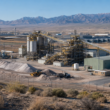
The core idea is unusual enough that it does most of the marketing on its own. At Phalaborwa, rare earths sit inside enormous gypsum stacks that are a by-product of historic phosphate fertiliser production. Rainbow Rare Earths plans to mechanically reclaim that material and run it through a chemical process, with no hard-rock mining, crushing or milling involved. Because the most expensive parts of a conventional mine are skipped entirely, the company argues Phalaborwa can sit near the bottom of the global cost curve.
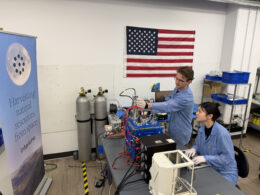
The differentiation runs deeper than just avoiding a pit. Rainbow Rare Earths has built a flowsheet around its own intellectual property, using a continuous ion exchange circuit and a far smaller solvent extraction setup than a traditional separation plant would need. The output is a high-purity mixed rare earth product that the company then aims to split into neodymium-praseodymium oxide, the key ingredient in permanent magnets, plus a heavier basket that includes terbium, dysprosium and yttrium. That heavy exposure matters, because the heavier elements are scarcer and sit at the centre of current trade tensions.
The catch for a retail investor is that this is still a development story, not a producing business. The process has been demonstrated at pilot scale in Johannesburg, but it has not yet run commercially, and Phalaborwa remains a single flagship asset that is pre-construction. Waste-to-value narratives are compelling precisely because they sound like found money, but the scale-up risk between a successful pilot and a steady-state plant is real. Anyone buying RBW today is buying execution potential, not cash flow.
Why is the 2026 definitive feasibility study the catalyst that RBW shareholders are watching?
The single most important event on the calendar is the definitive feasibility study for Phalaborwa. The DFS is the document that converts an interesting process into a financeable project, setting out hard numbers on capital cost, operating cost and economics that lenders and equity partners can underwrite. Rainbow Rare Earths has guided that the study will be finalised during 2026, after which permitting and project financing are expected to run in parallel, positioning construction to begin in 2027.
The reason the market is so focused on it is that the DFS is the gate to everything else. A robust, low-cost study would validate the bottom-of-the-cost-curve claim and de-risk the path to first production. Management has framed the timing as largely within its own control, and has said the additional trade-off and separation studies feeding into the DFS should ultimately deliver a more proven flowsheet with lower capital and operating costs.
The risk sits in that same sentence. The DFS has already slipped, having previously been guided for the first half of 2025, then the end of 2025, before landing in the current 2026 window. Each delay pushes back financing and first revenue, and for a pre-revenue developer time is expensive. If the study lands late, or arrives with weaker economics than the pilot work implied, the re-rating that retail investors are positioning for could stall or reverse.
How would a potential US stock listing change the story for Rainbow Rare Earths shareholders?
The newest twist is a regulatory announcement on 5 May 2026, in which Rainbow Rare Earths confirmed it is evaluating a listing in the United States. For a critical-minerals developer this is a significant strategic signal rather than routine housekeeping. US capital markets currently attach rich valuations to companies positioned in the rare earth supply chain, and a US presence would broaden Rainbow’s investor base well beyond the AIM retail and small-cap institutional pool it draws on today.
The logic fits the company’s existing backing. Phalaborwa already carries a proposed US$50 million equity commitment from the U.S. International Development Finance Corporation, channelled through TechMet, and the project has been flagged by Washington as relevant to American supply-chain independence. A listing that puts the shares in front of US investors who are actively hunting ex-China rare earth exposure could close some of the valuation gap that an AIM listing has not.
For now, though, this is an evaluation and nothing more. No structure, venue or timetable has been confirmed, and a US listing can be expensive to maintain and is sometimes paired with a capital raise. Retail investors treating a re-rating as a done deal are getting ahead of what the company has actually committed to. The optionality is genuine, but it is optionality, not an outcome.
What do China’s rare earth export controls mean for a non-Chinese supplier like Rainbow?
The entire bull case for Rainbow Rare Earths rests on geopolitics, so the China backdrop is central. China controls an estimated 85 to 90 percent of global rare earth refining capacity, which gives Beijing extraordinary leverage over prices and availability. Export controls introduced in April 2025 placed seven medium and heavy rare earth categories under licensing requirements, and those controls remain in force. A further escalation announced in October 2025 was suspended as part of a diplomatic arrangement, but that suspension is time-limited, with November 2026 emerging as the date the market is watching.
This is why a Western-backed, ex-China heavy rare earth project attracts attention. The controlled basket overlaps closely with the heavier elements Rainbow Rare Earths intends to produce, and the funding it has drawn from the U.S. development finance system reflects a deliberate policy push to build supply outside Chinese control. Rare earth prices have stayed historically elevated through 2026, with China’s own price index well above its long-run baseline even after coming off an earlier peak, which supports the economics of new entrants.
The same dependence cuts the other way, and experienced retail investors know it. Beijing has a long record of using its scale to flood the market and undercut emerging competitors before they reach production, a dynamic that circulates widely in the forum commentary around this stock. A diplomatic thaw could also soften the urgency that is currently inflating Western critical-minerals valuations. Rainbow Rare Earths benefits from the tension, but it is exposed to a price environment it does not control.
How is the market pricing RBW shares against the newsflow on the AIM and what do brokers expect?
On the tape, Rainbow Rare Earths has been one of the better-performing names in its corner of the AIM. The shares have traded in the high-20s pence in recent weeks, against a 52-week range of roughly 10.75p to 29.25p, giving a market capitalisation of around £189 million on close to 700 million shares in issue. Over the past six months the stock has comfortably outpaced the broader UK market and trades well above its 200-day moving average, reflecting how much the rare-earth narrative and the catalyst calendar have pulled in buyers.
Broker sentiment leans positive but coverage is thin. Berenberg lifted its price target to 49p in March 2026, and the small consensus sits around 34.5p, above the current share price. With only a couple of analysts formally covering the name, however, the price is being set far more by newsflow and retail flow than by a deep institutional model. The market is clearly pricing in optionality on the DFS, the US listing and the macro theme rather than current fundamentals.
That is the vulnerability. Rainbow Rare Earths is pre-revenue with negative earnings, so there is no profit base to cushion a setback. The shares have already run hard, which raises the bar for the next catalyst. A delayed or underwhelming DFS, a dilutive raise, or a softening in the rare-earth price environment could unwind a meaningful chunk of the re-rating quickly, precisely because so much of the current price is expectation.
What are the funding and dilution risks before Phalaborwa reaches a construction decision?
Funding is the issue that sits underneath everything else, and the company has been candid about it. Rainbow Rare Earths has stated that it will need to raise additional funds before 31 December 2026 under all scenarios, with the timing tied closely to how quickly the Phalaborwa DFS is completed. In March 2026 it raised £11.1 million from strategic investors, which buys runway, but it does not remove the need for further capital ahead of a construction decision.
This is normal for a developer, and context matters. Pre-production mining and processing companies fund themselves through equity until project finance arrives, and Rainbow has assembled a credible group of backers, including the U.S. development finance commitment via TechMet and royalty support from Ecora Resources, which selected Phalaborwa as its first rare earth royalty investment. That backing improves the odds that financing gets done.
The implication for a retail holder is dilution. With close to 700 million shares already in issue, further raises at or below the current price would expand the count and cap upside per share, and any funding gap that opens before the DFS lands would arrive at an awkward moment. The path to construction is plausible, but it runs through at least one more call on shareholders’ wallets.
Why are retail investors on the London Stock Exchange watching the RBW ticker right now?
Rainbow Rare Earths ticks almost every box that draws a retail crowd to AIM. It is a sub-30p stock attached to one of the hottest macro themes on the market, with a story that is easy to grasp and a string of catalysts to trade around. The London Stock Exchange share chat for RBW is active, sentiment skews bullish, and members have been circulating the 5 May US-listing announcement alongside commentary on China’s dominance of the rare-earth supply chain.
The structural setup helps explain the interest. Institutional coverage is thin, which leaves space for retail investors to own the narrative and for fresh newsflow to move the price more than it would in a heavily-researched large cap. Combine a credible ex-China supply story, US government-linked backing and a low headline share price, and you get a textbook speculative magnet for the AIM community.
The flip side is the behaviour that comes with that profile. Sentiment-driven small caps are volatile and can be illiquid relative to the attention they attract, so single RNS releases can produce outsized swings in either direction. Retail enthusiasm has a habit of front-running fundamentals, and a stock that has already re-rated on expectation is exposed if the next catalyst disappoints. The interest is real, and so is the fragility that comes with it.
Key takeaways for retail investors weighing Rainbow Rare Earths (AIM: RBW)
- Rainbow Rare Earths is developing Phalaborwa in South Africa, recovering rare earths from phosphogypsum waste with no mining involved, which it argues places the project near the bottom of the global cost curve.
- The defining 2026 catalyst is the Phalaborwa definitive feasibility study, the gate to financing, permitting and a targeted 2027 construction start, though the study has already slipped more than once.
- A newly disclosed evaluation of a US listing could broaden the investor base and re-rate the shares, but it remains an evaluation with no confirmed structure or timing.
- The bull thesis rests on China’s 85 to 90 percent grip on rare earth refining and live export controls, with November 2026 a key date for the suspended escalation; the same dependence exposes Rainbow to prices Beijing can influence.
- The shares trade in the high-20s pence for a market capitalisation near £189 million, below a Berenberg target of 49p, but coverage is thin and the price reflects optionality rather than fundamentals.
- Funding is the central risk: the company has said it must raise further capital before 31 December 2026 under all scenarios, which points to additional dilution on top of a share count already near 700 million.
- This is a speculative development-stage holding where the upside narrative and the execution, funding and price-volatility risks are unusually tightly linked.
Discover more from Business-News-Today.com
Subscribe to get the latest posts sent to your email.