




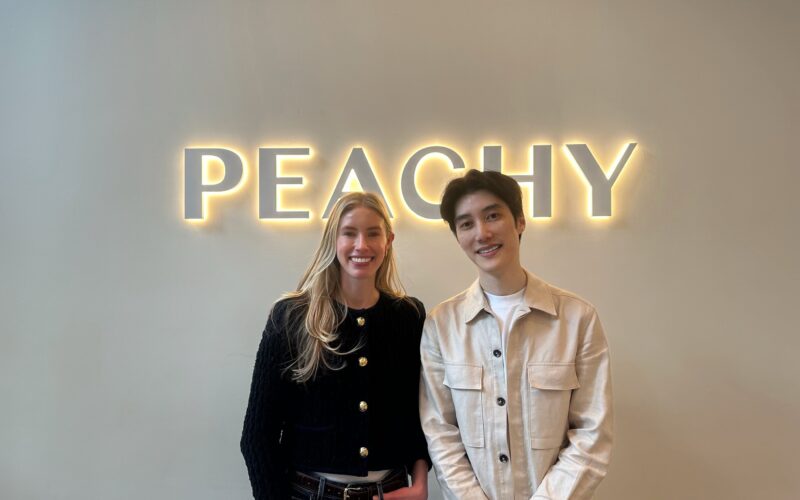
Peachy, the aesthetics services brand focused on neuromodulator treatments, has taken a minority investment from growth-equity firm Stride Consumer Partners in a deal aimed at accelerating studio expansion, brand development, and hiring. The move matters because Peachy is not trying to be a broad med-spa operator. It is doubling down on a specialized, multi-unit model built around flat-fee injectable treatments, standardized delivery, and consumer-friendly access at a time when the beauty services market is rewarding brands that look more like scalable retail platforms than traditional clinics. Peachy said it grew revenue by more than 60% last year and expanded from 12 to 15 studios, while Stride positioned the company as a founder-led brand with room for a larger national footprint.
Why is Peachy’s minority investment from Stride Consumer Partners strategically important now?
What changed here is not just that Peachy raised capital. Plenty of beauty and wellness brands raise money. What stands out is the kind of capital Peachy chose and the operating story it is trying to validate. Stride Consumer Partners focuses on consumer products and multi-unit services, which suggests Peachy is now being underwritten less as a niche injectable business and more as a repeatable consumer services platform. That distinction matters because private equity and growth-equity investors tend to pay up for businesses that can replicate the same experience, price logic, and unit economics across geographies without losing brand trust.
Peachy’s model is unusually narrow by med-spa standards. Rather than offering a buffet of aesthetic treatments, Peachy has built its identity around neuromodulator services, flat-rate pricing, and a studio environment designed to feel efficient and modern. On its website, Peachy currently markets wrinkle treatment at a $425 flat fee, masseter treatment at a $525 flat fee, and Botox Facial with Aquagold at a $375 flat fee, while emphasizing board-certified nurse practitioners, complimentary touch-ups, and AI-driven treatment mapping. That kind of focused offer can be commercially powerful because it reduces consumer confusion, simplifies marketing, and supports repeat purchase behavior. In plain English, Peachy is trying to make injectables feel less like a luxury medical detour and more like a trusted branded service with predictable pricing.
How does Peachy’s studio model compare with broader med-spa and aesthetics market trends?
The wider aesthetics market has been pulled in two directions for years. On one side are premium medical aesthetics providers emphasizing physician branding, bespoke consultation, and broad treatment menus. On the other are more consumerized platforms trying to simplify the category with standardized offers, better design, and clearer pricing. Peachy clearly belongs to the second camp, and that is precisely why this deal is worth watching.
Consumers in beauty services increasingly reward convenience, transparent pricing, and social proof. The old med-spa formula often leaves room for sticker shock, inconsistent outcomes, and location-by-location variability. Peachy’s bet is that specialization can reduce those pain points. By concentrating around a narrower treatment category and operationally standardizing the experience, it may be able to drive stronger repeat business and more efficient customer acquisition than a generalist operator. Stride’s interest suggests investors believe that a tightly defined service can be easier to scale than a broad treatment menu that depends heavily on star practitioners and local market quirks.
That said, specialization is also a double-edged syringe. It sharpens the brand, but it also narrows revenue diversification. If consumer preferences shift, regulations tighten, or pricing pressure rises in neuromodulators, Peachy has fewer buffers than a diversified aesthetic platform. Focus makes the model cleaner. It does not automatically make it safer.
What does Peachy’s growth say about the economics of specialized aesthetic services?
The company said revenue grew by more than 60% last year while its studio count increased from 12 to 15, and it now operates 15 locations across New York, Chicago, Washington, D.C., Atlanta, Austin, and Charlotte. Those figures suggest Peachy is not simply opening locations and hoping demand appears later. The stronger signal is the claim that growth has been supported by both new-client visits and repeat customers, because the economics of a beauty services platform live or die on retention, frequency, and customer trust.
For investors, the key question is whether Peachy’s unit economics improve as density builds in existing cities, or whether growth becomes more expensive as it enters new metros. Multi-unit consumer services businesses can look fantastic during early clustering stages, when marketing, staffing, and logistics benefit from concentration. They often get much harder when they start stretching into less obvious markets. The real test will be whether Peachy can maintain provider quality, consistent outcomes, and customer loyalty as it scales beyond the current six-city footprint.
Why could Stride Consumer Partners be a logical fit for Peachy’s next expansion phase?
Stride’s existing positioning helps explain the match. The firm describes its focus areas as including beauty and personal care plus multi-unit consumer services, and Peachy now appears among its current brand roster. That tells us this is not a tourist investment. It sits close to Stride’s stated playbook.
For Peachy, the appeal of a minority investor rather than a full buyout is equally telling. Management gets capital and strategic support without giving up operational control at a stage when founder vision likely still matters. In beauty and services, that can be critical. Once the consumer senses that a brand has turned into a spreadsheet wearing moisturizer, the magic tends to fade quickly. A minority structure gives Peachy room to scale while preserving the brand voice and clinical positioning that helped it grow.
For Stride, Peachy offers exposure to a category where consumer demand can be resilient, frequency can be attractive, and brand trust can deepen over time. In a fragmented aesthetics landscape, a brand that can make medical-grade services feel standardized, safe, and frictionless starts to resemble a category platform rather than just another local operator.
What execution risks could derail Peachy’s national expansion strategy?
The biggest risk is consistency. Peachy’s model is built on the promise that consumers can walk into different studios and get a reliable experience, pricing structure, and clinical outcome. That is easy to claim and brutally hard to maintain. Talent recruitment is one of the uses of proceeds, and that is no small footnote. In businesses where outcomes depend heavily on practitioner skill, expansion can quickly expose quality-control gaps.
Another risk is competitive response. If Peachy’s transparent pricing and focused model continue to resonate, incumbents may copy elements of the playbook. Large med-spa chains and local injectables providers can respond with promotional pricing, membership structures, or simplified offers. Peachy’s early-mover advantage in branded specialization may not stay unique forever.
There is also the reputational sensitivity of aesthetics itself. A consumer brand can survive mediocre packaging or a slow shipment. An aesthetics services brand has much less room for error because every poor experience risks becoming a visible social-media warning label. In that sense, Peachy is scaling in a category where brand equity can compound nicely, but can also crack very publicly.
What does the Peachy deal signal about where beauty services investing is heading next?
The broader message is that beauty investing is still moving toward businesses that combine strong consumer branding with operational repeatability. Investors are not only looking for product brands on shelves anymore. They are also looking for service brands that behave like modern retail systems, with standardized offerings, recognizable pricing, and data-informed operations.
Peachy’s website emphasis on AI treatment mapping and standardized provider workflows reinforces that point. Whether that technology becomes a true moat is still debatable, but its role in the narrative is clear. Peachy wants to be seen not just as a beauty brand, but as a precision services platform that can produce predictable outcomes at scale. In an industry crowded with promises, predictability is often the premium product.
The investment therefore says as much about the category as it does about Peachy itself. Capital is still available for consumer services platforms that can convert fragmented demand into branded habit. The market is effectively asking whether aesthetics can be packaged with the same clarity and repeatability that helped other consumer service chains expand nationally. Peachy now has capital to try answering that question. The next few city launches will show whether the thesis travels as well as the branding does.
What are the key takeaways from Peachy’s minority investment and expansion strategy in 2026?
- Peachy’s deal with Stride Consumer Partners is a scale-up signal, not just a funding event.
- The company is being positioned as a branded multi-unit services platform rather than a typical med-spa operator.
- Peachy’s flat-fee neuromodulator model is designed to reduce pricing friction and simplify consumer choice.
- Specialization may help operational consistency, brand recall, and repeat visitation.
- The same specialization also increases dependence on one core treatment category.
- Revenue growth of more than 60% and expansion to 15 studios suggest early model traction, but national replication remains unproven.
- Talent recruitment and quality control will be central to whether Peachy can preserve trust while growing.
- Stride’s category focus in beauty and multi-unit services makes the investment strategically coherent.
- Competitive imitation is a real risk if transparent pricing and standardized aesthetics delivery keep gaining traction.
- The deal signals continued investor appetite for beauty services brands that look scalable, tech-enabled, and habit-forming.
Discover more from Business-News-Today.com
Subscribe to get the latest posts sent to your email.
